Florida startup Rovex unveils Rovi, the world’s first autonomous patient transport robot, reducing hospital delays with AI‑driven navigation.
Florida, United States-based startup Rovex has unveiled Rovi, the world’s first autonomous in-hospital patient transport robot. Designed to attach to existing stretchers, Rovi navigates hospital corridors independently, aiming to reduce delays in patient transfers and improve hospital efficiency. The launch comes amid rapid growth in the global hospital robotics market, projected to reach $4.6 billion by 2030.
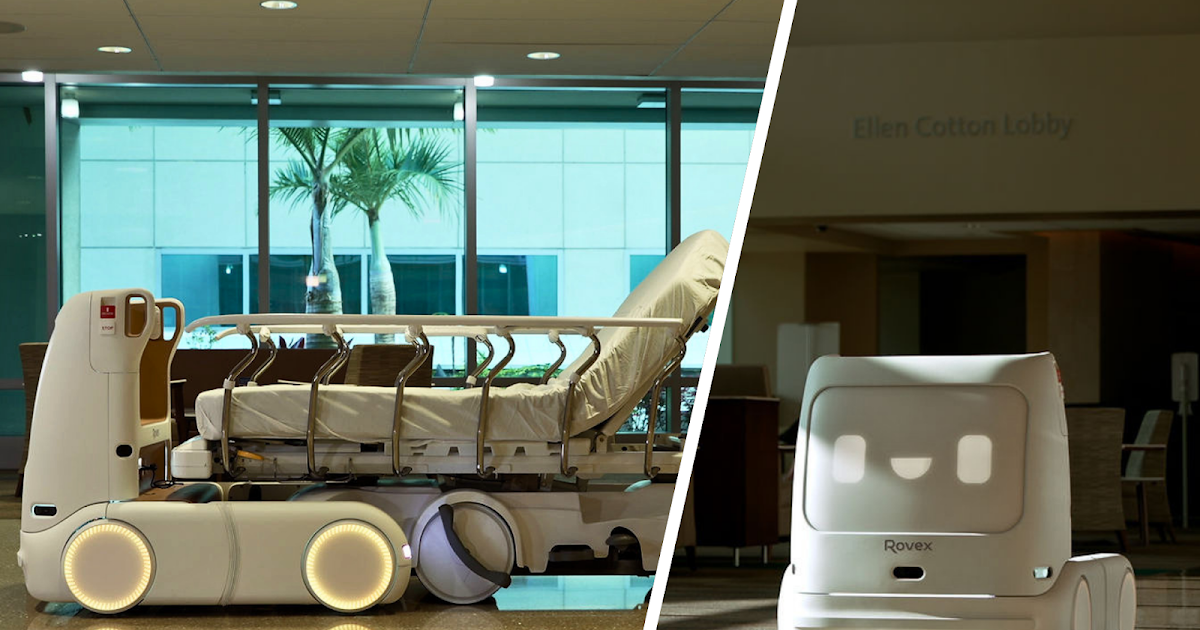
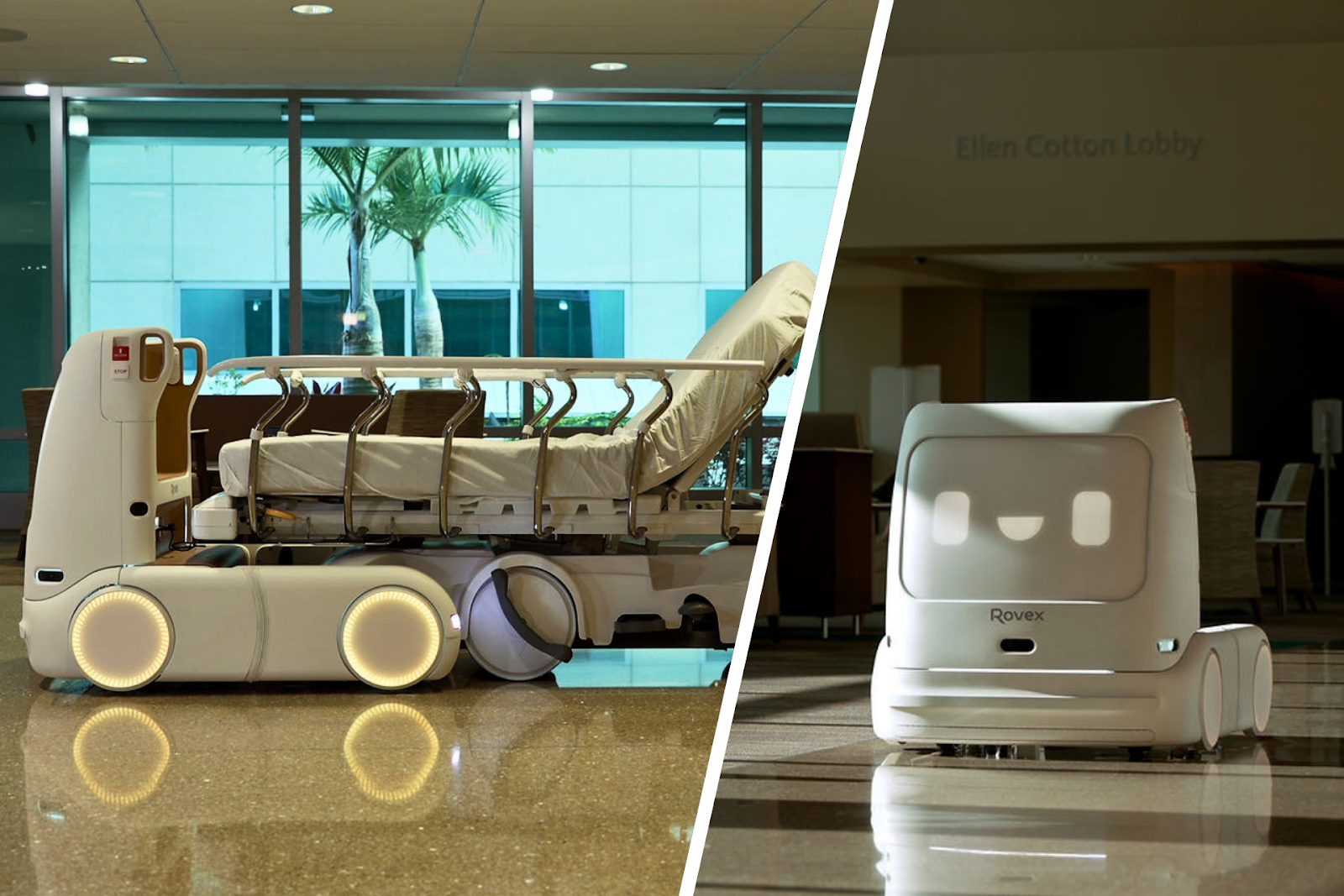
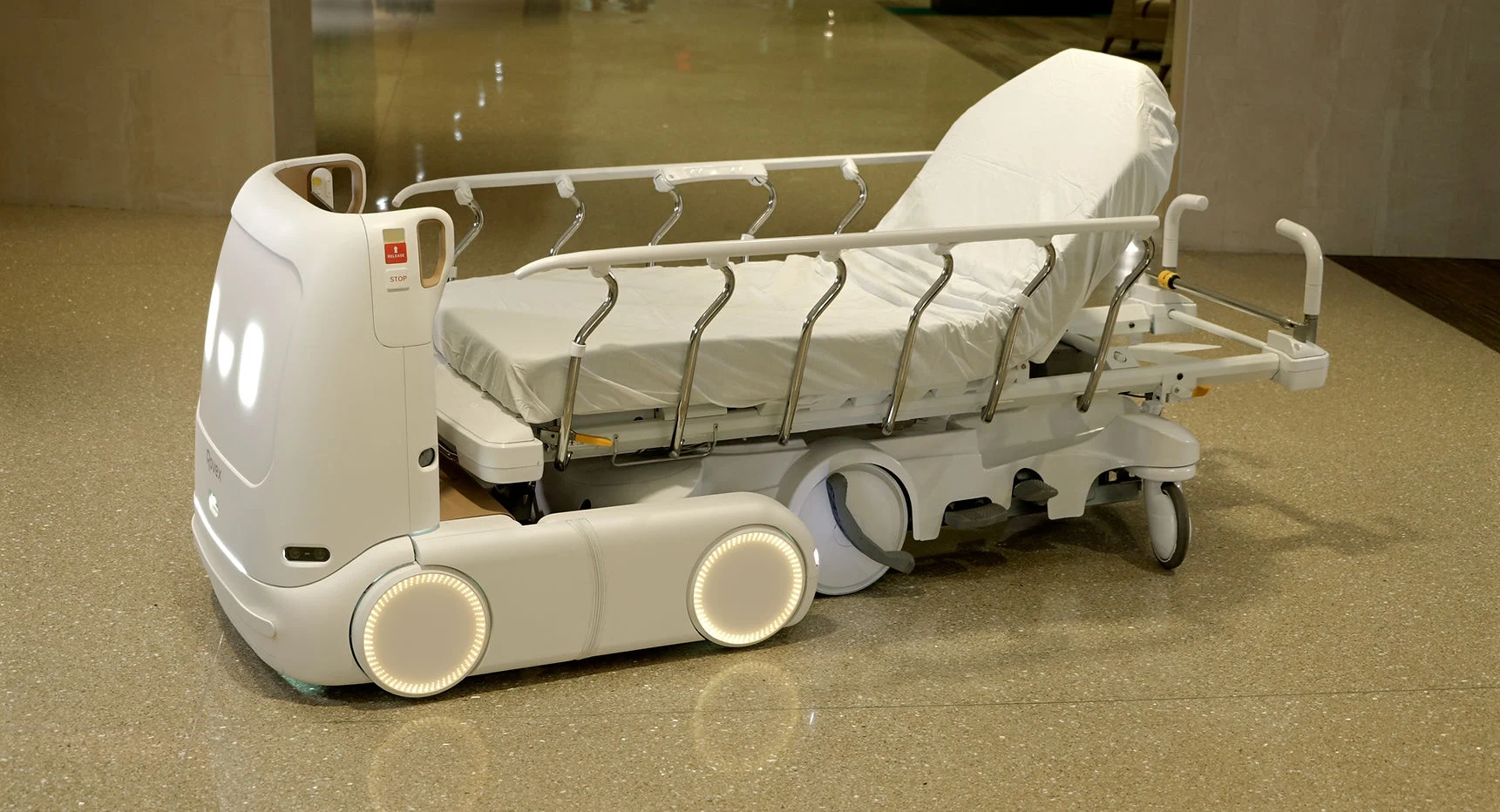
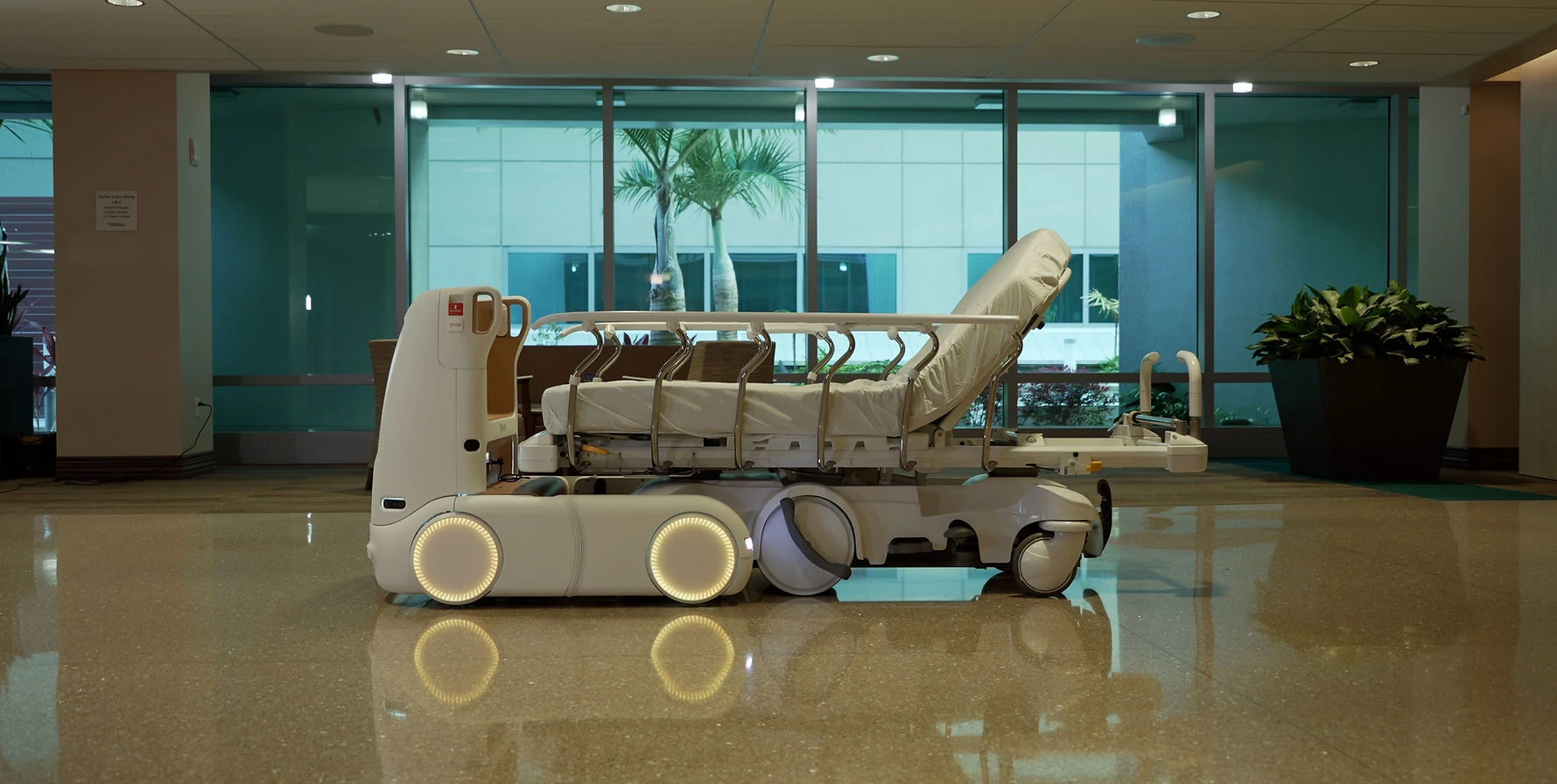
Rovi is essentially a patient transport robot that attaches to stretchers, autonomously moving them around healthcare facilities. The systems include a screen that keeps patients informed of where they are going and why. Rovi will eventually bring similar functionality to hospital beds and wheelchairs.
Rovi: World’s First Autonomous Patient Transport Robot
 |
| Rovi [Image – gorovex.com] |
- Universal stretcher fit: Rovi attaches to any brand of stretcher, with future compatibility for beds and wheelchairs.
- Autonomous navigation: Equipped with 360° obstacle detection, computer vision, and elevator/door navigation without major infrastructure changes.
- Pre-programmed simulation: Runs millions of virtual transports to learn hospital layouts and workflows.
- Efficiency analytics: Captures logistics data to identify bottlenecks (e.g., imaging backups at peak hours).
- Deployment scale: 9–10 Rovis can handle transport needs for a large hospital.
- Patient experience: Moves at walking speed, greets patients, announces destinations, and keeps them connected to care teams.
- Safety focus: Designed for low-acuity patients, ensuring dignity and comfort.
Market Context: In-Hospital Robots
- Market size: $2.26 billion in 2025 → $2.59 billion in 2026 (CAGR 14.3%). Expected to reach $4.6 billion by 2030 (CAGR 15.5%).
- Drivers: Staff shortages, rising surgical volumes, infection control needs, and demand for automation in logistics and labs.
- Trends: Deployment of robots for non-clinical tasks (transport, delivery, disinfection); integration of AI-driven navigation and telemedicine capabilities; focus on contactless healthcare solutions post-pandemic.
- Challenges: High upfront costs, regulatory hurdles, and training requirements for staff acceptance.
Comparative Positioning
| Robot | Primary Role | Strengths | Limitations |
|---|---|---|---|
| Rovi | Patient transport | Universal stretcher fit, autonomous corridor navigation | Limited to low-acuity patients |
| TUG (Aethon) | Supply delivery | Proven logistics automation, elevator integration | No patient transport |
| Moxi (Diligent) | Nurse assistant | Fetches supplies, supports staff | Not designed for patient movement |
Key Takeaways
 |
- Rovi is unique: Unlike supply-delivery robots, it directly addresses patient transport bottlenecks.
- Hospitals benefit: Faster transfers, improved bed turnover, and reduced staff workload.
- Market timing: Launch aligns with rising demand for automation in hospital logistics, positioning Rovex as a first mover in patient transport robotics.
Via ~ Interesting Engineering
Source link