The name Airis Labs has barely surfaced publicly until now, and even those familiar with it knew little about the secretive project launched by three veterans of Israel’s defense establishment shortly before the October 7 attacks.
Now, the startup, which develops AI infrastructure for analyzing visual information from multiple sources to generate a real-time intelligence picture, is emerging from stealth and announcing that it has already raised $60 million to date.
The latest and largest financing round, a Series B totaling $31 million, was led by PSG Equity and included participation from TLV Partners, which led the previous round, as well as Stepstone Group, Redseed Ventures and angel investors Eyal Waldman, Jeff Horing, Yasmin Lukatz, and David Chinn..
Before that, Airis raised $11 million in a Series A round, while its Seed financing closed in September 2023, also led by TLV Partners.
The decision to emerge from secrecy comes as the company plans to double its workforce, with an emphasis on expanding its Israeli development center. Airis currently employs 50 people, most of them in Tel Aviv, with additional staff based in the Washington, D.C. area.
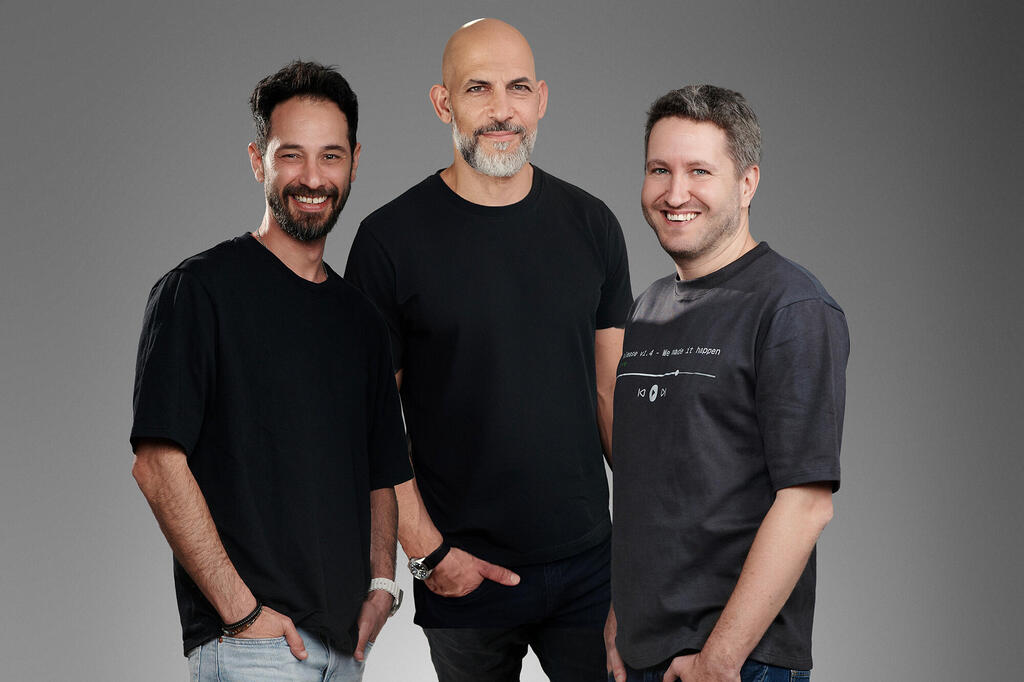
The company was founded in April 2023 by Noam Friedman, who serves as CEO, Amos Lahav, who oversees US operations, and Rotem Abeles, the company’s chief product officer responsible for development.
The three founders, all in their 40s, previously held senior positions across various branches of Israel’s intelligence community and defense-tech ecosystem, including the Prime Minister’s Office, Palantir Technologies and several cybersecurity companies.
Airis has developed an AI platform designed to connect and analyze multiple streams of visual information, including security cameras, drones, body cameras and media footage, and transform them into structured intelligence that can be searched, investigated and analyzed in real time.
The platform, which is designed to generate operational insights from fragmented and unstructured visual data, has already been deployed by several government organizations worldwide. Among other things, Airis participates in a US Army program focused on accelerating the integration of new technologies, while also working with law enforcement and customs agencies.
“We started building the platform based on lessons from the war in Ukraine,” Friedman told Calcalist. “But after the October 7 attack, we immediately began receiving requests to help extract intelligence from the huge amount of visual material that had been collected, drones, field cameras, body cameras and even TikTok videos.”
“At the time, we only had seven employees,” he said. “We had to bring in volunteers we knew from intelligence units and organizations where we had previously served, and within a few days we were already deploying the system.”
“In light of the events, we didn’t have the luxury of building the company slowly,” Friedman added. “Everything was developed in a real operational environment under wartime pressure. But the advantage was that feedback was immediate, we instantly saw what worked and what didn’t.”
“Today, that is also what differentiates us from competitors: everything at Airis was built during a war and from a war zone,” he said. “Our AI is not trained on synthetic data or based on developers’ assumptions. It is built on real-world operational data.”
Friedman argued that while many companies are now racing to position themselves as AI platforms for the battlefield, most still rely on generic models that leave analysts overwhelmed by enormous volumes of data without the ability to generate meaningful intelligence.
Eyal Waldman, founder of Mellanox Technologies, which was sold to Nvidia for $7 billion, was Airis’ first investor and now serves on its board.
“Airis is a company born from a deep understanding of the problem it is trying to solve,” Waldman said. “The founders understand the operational need from firsthand experience in the field, not just from market research, and that is an advantage that is extremely difficult to replicate later.”
The problem Airis is attempting to solve is considered one of the most difficult challenges in applied artificial intelligence: enabling machines to understand real-world events based on noisy, partial, unsynchronized and unstructured visual information.
Unlike many AI systems that are designed to operate on clean and organized datasets, Airis was built specifically for chaotic field conditions, where information arrives from multiple sources, in different formats, with varying image quality and from conflicting perspectives.