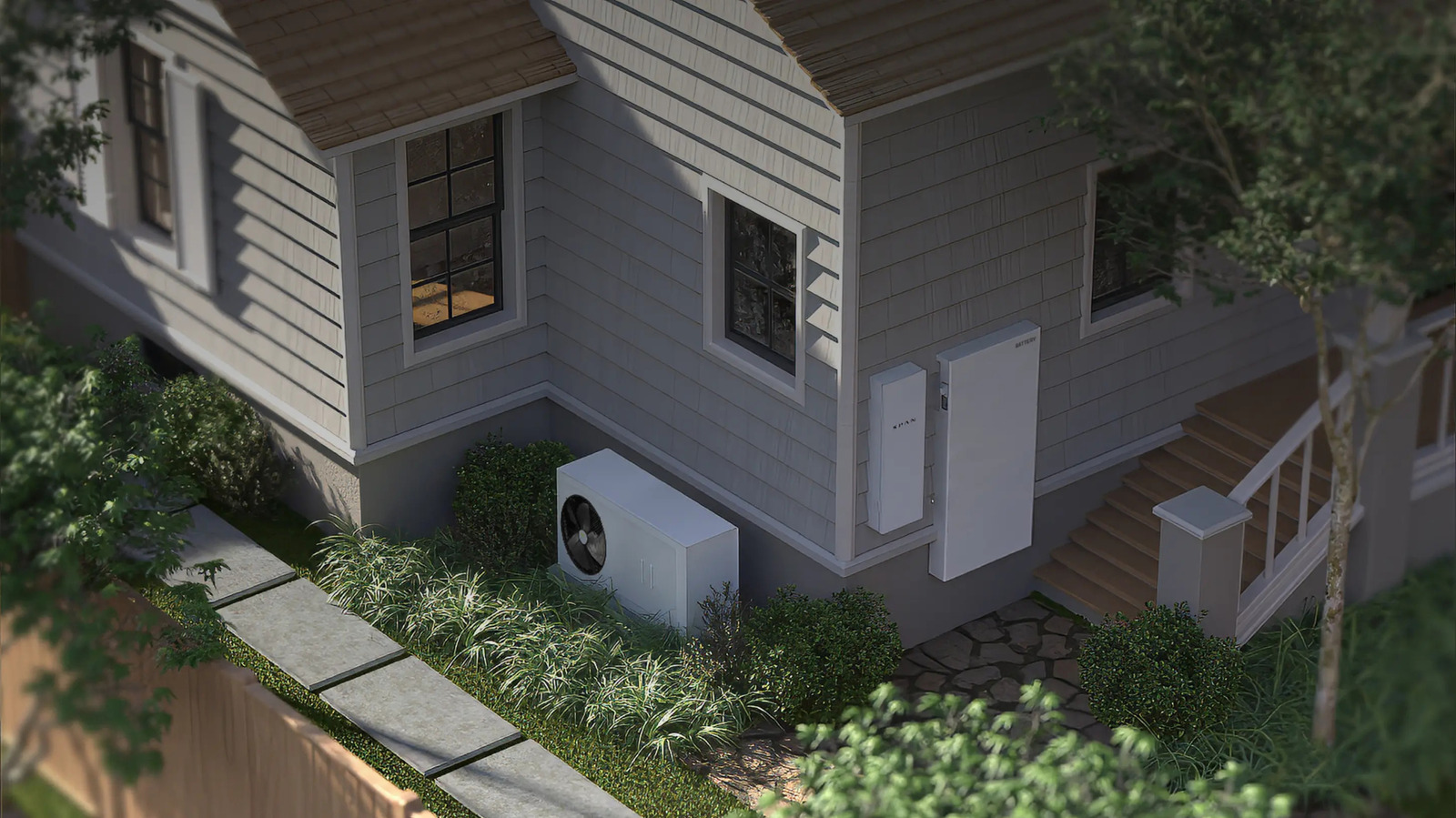


Massive data centers are popping up everywhere across the U.S. these days, including Meta’s newest data center in Louisiana that’s as big as 70 football fields. As AI expands its reach, the need for these data centers is only going to increase, and one startup has come up with an idea to supplement the controversial, energy-consuming data centers. In addition to dedicated hyperscale AI data centers that make your utility bills go up, San Francisco-based Span wants to put a “distributed data center” in your backyard with a device the size of an air conditioner, called the XFRA.
While the specifics of how this arrangement would work have not been defined, Span is already preparing to test the system’s potential with a 100-home trial run, which is expected to kick off later this year. The plan will see the company’s XFRA units set up alongside new-construction homes. These units will act as distributed data centers, connecting to and feeding off the home’s electrical connection to complement hyperscale data centers by supporting “workloads that can run on smaller hardware,” such as AI inference, cloud gaming, and high-performance simulation.
How Span’s XFRA system will work
According to a white paper document, Span would pay the homeowner to subsidize their electricity and internet bills, while an article from Realtor.com suggests that the company could directly cover these utility costs and then potentially charge a flat-rate fee of up to $150 per month. These specifics don’t appear to have been completely outlined just yet, but there’s a chance the programs could vary by neighborhood. Additionally, Span says it could install 8,000 XFRA units roughly six times quicker than a new data center could be built, and these installs could be completed at a cost that’s around five times lower than what it costs to build a hyperscale data center.
Span will use Nvidia technology to help bring the small servers to life, sourcing Nvidia RTX Pro 6000 GPUs, which have been liquid cooled to provide solid temperature ranges. Span says that by bringing these miniature data centers to people’s homes, it can tap into the unused energy that residential homes offer instead of having to completely expand on the power grid. The company looked at how much electrical capacity the average home requires, and it set the maximum consumption for a single XFRA node to 80 amps, as they found that most homes with a 200-amp utility service almost always have 80 amps available.
Not everyone is convinced
As with most big things involving AI these days, though, not everyone is convinced that this will be as great of an idea as Span makes it out to be. That’s because many have posted online about how dangerous this feels as a security or theft issue, with one person on Reddit noting that there is a very big reason data centers tend to have as much security as they do. Others pointed out convenience-related issues, such as noise pollution, service intervals, or young kids using it as baseball target practice.
Others are also concerned about how easy it might make it for companies to harvest your online data. If your internet does run through the company as the implications suggest, then Span — and whatever other company has access to the database — could potentially use it to pull information about what websites you might be visiting and more. This is one of the issues with using public Wi-Fi networks, which is why many people recommend never using them in the first place. For now, the exact nature of how (or when) everything will work is still in the air. However, with the first iteration of its plan set to happen later this year, it shouldn’t take long to see how Span’s big — or small, rather — data center idea works out.
Source link