While artificial intelligence (AI) is spreading across industries such as manufacturing, finance, and biotechnology, the food industry is still cited as a sector where the pace of digital transformation (DX) and artificial intelligence transformation (AX) is particularly slow. This is due to the difficulty in quantifying food quality and its sensory characteristics, which rely heavily on individual tastes and olfactory preferences and experiences.
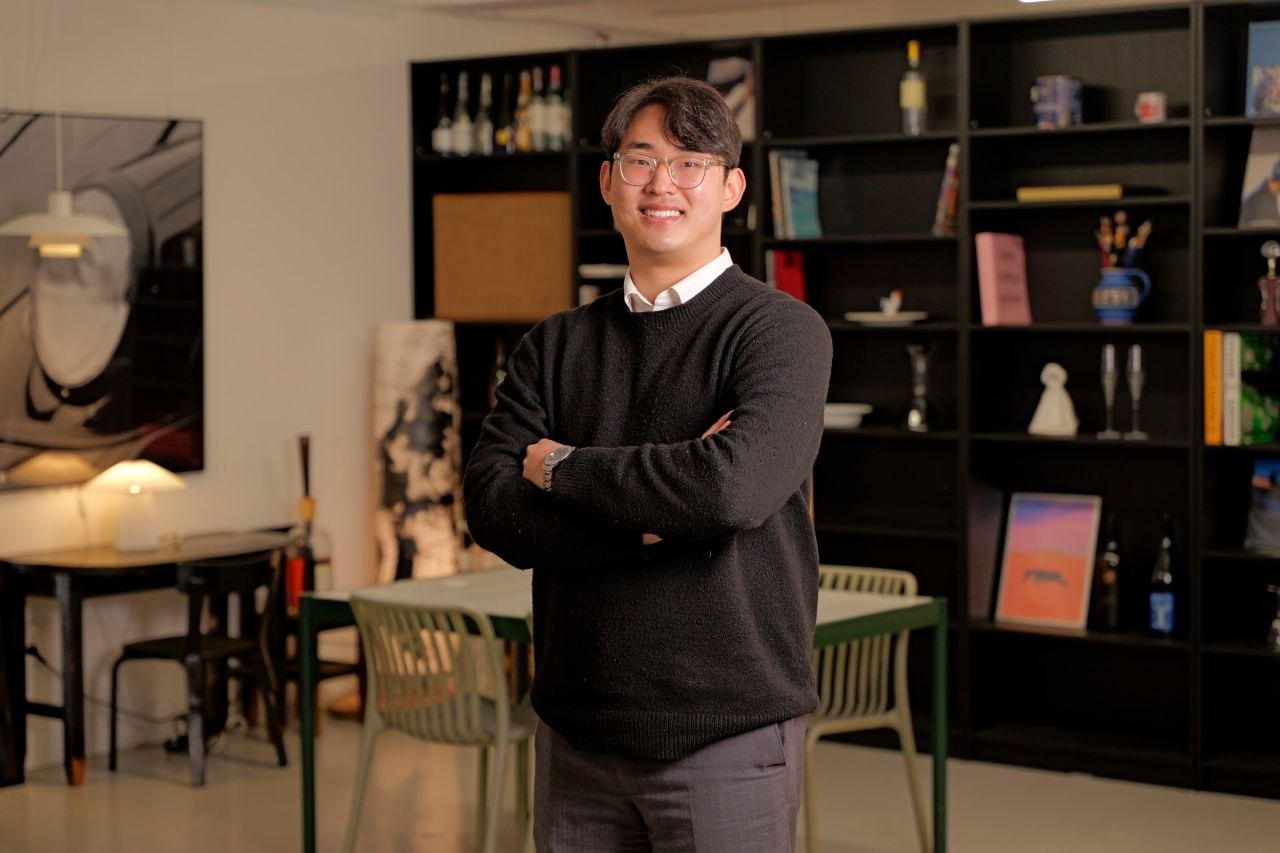
VoyageVentures is a deep-tech food-tech startup that is breaking through these limitations head-on with data and process technology. Starting from a startup club, VoyageVentures has established ‘Molecular Flavor Design’ technology to analyze and reproduce the flavors of coffee, and is challenging the B2B OEM/ODM market by developing zero-caffeine coffee substitutes that do not use coffee beans and functional beverage ingredients.
The core of food DX is quantified aroma data rather than recipes.
CEO Choi Jun-ho cited the “challenge of data collection and quantification” as the fundamental reason why applying AI to the food industry is difficult. While it is relatively easy to collect process data and make predictions in traditional manufacturing, the food industry faces difficulties starting from defining desired inputs and outputs. Taste preferences vary from person to person, and raw material data is variable depending on factors such as origin, harvest time, and moisture content. In particular, unlike sweetness or bitterness, “aroma”—such as nuttiness, chocolate notes, and body—is extremely difficult to quantify because it is simultaneously influenced by numerous volatile compounds and complex processes like pretreatment, fermentation, roasting, and extraction.
Rather than attempting to transform all food products at once, Boiy Ventures selected ‘coffee’ as its first research subject, noting that it possesses the most complex flavor molecular composition among all foods. They accumulated flavor data from coffee extraction and processing, and refined quantitative flavor molecular data algorithms that link raw material ingredients, process conditions, and flavor results. CEO Choi defines AI not as a technology to replace perfumers or researchers, but as a tool to enhance R&D efficiency. Boiy Ventures’ approach is to shorten the flavor exploration and taste replication processes, which previously took months, through data-driven methods, and to ensure quality consistency even during mass production.
“In the long term, Boiy Ventures aims to go beyond being a food company that simply utilizes AI and become an infrastructure company that supplies quantitative flavor molecular data necessary for the DX·AX of food manufacturing and connects raw materials with processes.”
‘Molecular Flavor Design’ Overcoming the Limitations of Existing Coffee Alternatives and the Market Gap
Existing decaffeinated coffee incurred a cost burden 30–50% higher than regular coffee due to additional management of bean grinders and processing costs, and low-cost coffee shops experienced a margin squeeze amidst rising labor costs and bean prices. Meanwhile, existing alternative beverages such as barley tea and chicory failed to satisfy the unique flavor of coffee, and functional beverages that emphasized only health benefits lacked taste and brand experience, failing to lead to repeat purchases.
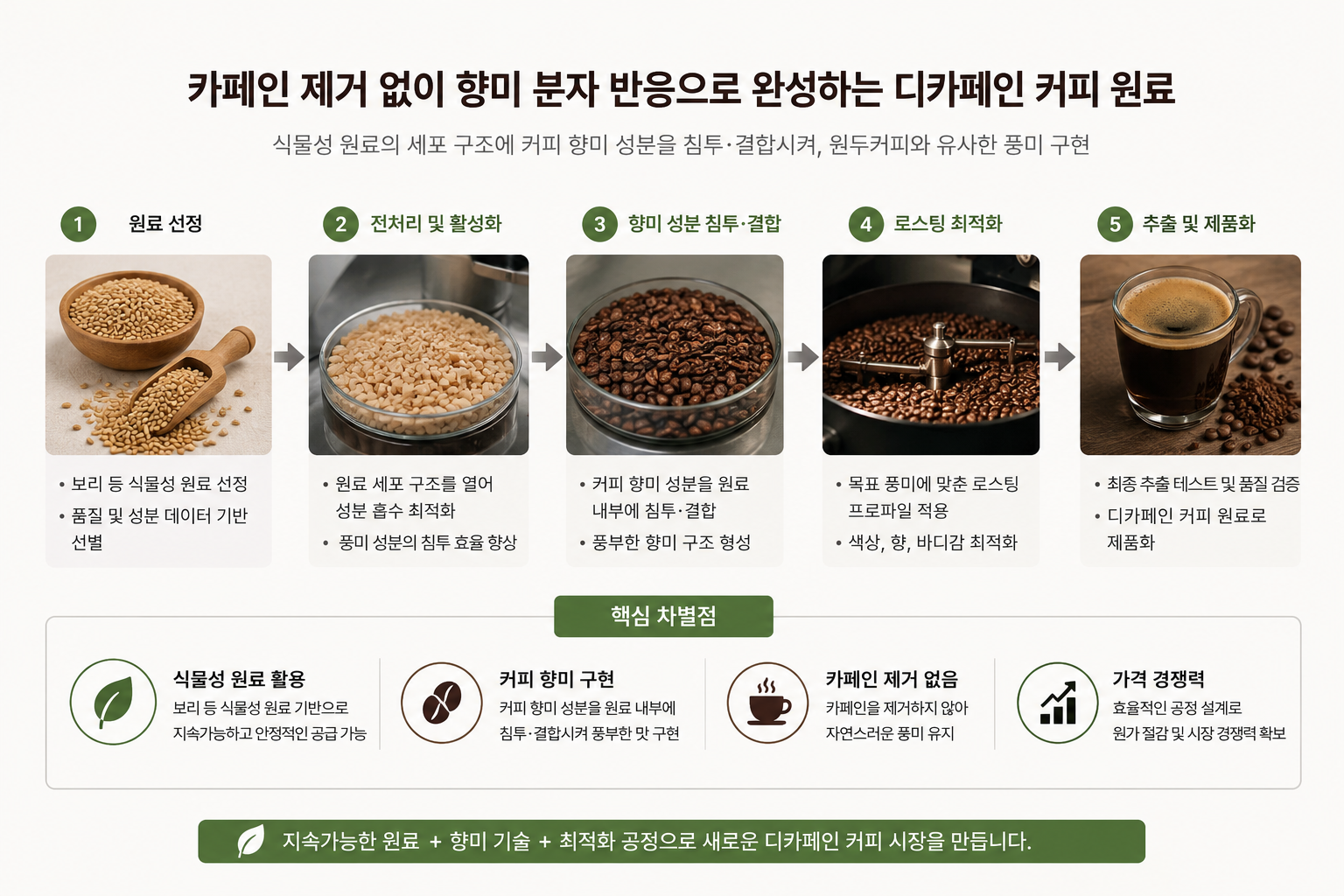
Boiy Ventures approached this not as a way to simply create another health drink, but as a technical problem involving analyzing the flavor structure lacking in alternative coffee and supplementing it through raw materials and processes. By studying the Maillard reaction mechanism, in which sugars and amino acids react under specific temperatures and conditions, they precisely tuned the pretreatment, fermentation, blending, roasting, and extraction conditions.
Through this, it presented a superior category that offers consumers the taste, functionality, and familiar flavor of coffee, while allowing cafe operators to reduce costs and operational burdens and capture the demand for zero-caffeine products during the afternoon and evening hours.
We are lowering market entry barriers by delivering an intuitive experience of zero caffeine and familiar coffee flavor to consumers instead of complex explanations like ‘mushroom molecular technology,’ and by providing B2B customers with specific details regarding flavor profiles, ingredient specifications, extraction yields, manufacturing costs, and MOQs.
Smart commercialization strategies to reduce regulatory risks
Startups in alternative foods and new materials are prone to falling into a “death valley” where commercialization is delayed due to regulations on proving the safety of new ingredients (such as safety evaluations) under the Food Sanitation Act. Furthermore, food ingredients distributed domestically are concentrated on standardized ingredients (general-purpose ingredients) that food manufacturers can use in any product. Consequently, due to the lack of a supply chain for specialized ingredients required for alternative or functional coffee, manufacturers of finished products have faced limitations in achieving the desired coffee flavor through blending alone.
Rather than attempting to circumvent regulations, Boiy Ventures adopted a strategy of redesigning raw material characteristics within the permitted processing scope and utilizing safe food ingredients that have already received approval from the Ministry of Food and Drug Safety. By custom-designing amino acid and sugar compositions and reactivity starting from the primary raw material processing stage, the company minimized regulatory risks and commercialization uncertainties while securing a unique B2B differentiation by directly developing and supplying raw materials tailored to the taste and functional specifications desired by B2B clients.
Practical Challenges the Food Tech Ecosystem Must Solve
CEO Choi proposed three ecosystem improvement measures based on his experience in the field to help the domestic food tech industry move beyond a fad and establish itself as a sustainable mega-trend.
The first is a ‘public shared factory’ for private outsourcing to enable small-scale flexible production. Early-stage startups are unable to mass-produce because they cannot prove demand, while manufacturers refuse small orders due to profitability concerns, leading to a production paradox. Beyond shared factories that merely provide equipment, a structure is needed that entrusts production to private manufacturers equipped with licensing and operational capabilities. This structure provides one-stop support, ranging from pilot production in 50kg, 100kg, and 300kg units to product manufacturing reporting, shelf-life setting, and quality inspection.
Second, there is a need to establish a permanent testbed for sensory verification. It is urgent to support offline, permanent testbed channels where consumers can experience actual products and immediately collect and verify paid Proof of Concept (PoC) and repurchase data.
Third, there is the need to revitalize practical open innovation. Moving beyond simple matching for exhibition purposes, B2B joint development and raw material adoption programs must be expanded between large corporations equipped with distribution networks and mass production infrastructure, and startups possessing source technologies and specialized raw material design capabilities.
The goal is to become an ODM infrastructure company that manufactures “Made in Korea” food products.
CEO Choi does not view alternative coffee as a product that completely replaces existing coffee or is an inferior replica. He defines it as a segmented subcategory of the ‘functional coffee’ market, targeting customers who enjoy coffee but wish to avoid caffeine in the afternoon and evening, sleep and health managers, and pregnant women.
In the short term, we plan to supply alternative and functional coffee ingredients via B2B OEM/ODM in various forms, including concentrates, powders, drip bags, tea bags, and RTD (ready-to-drink) products, and in the mid-to-long term, we plan to expand the flavor data accumulated from coffee to other food categories.
Our mid-to-long-term vision is to become a core ODM infrastructure company that supports the stable growth of indie brands and startups in the Korean food industry and enhances the global competitiveness of “Made in Korea” food.
The Startup Ecosystem Reporter Corps is jointly operated by KAIA and Venture Square and records various stories from the startup scene.
Related
Source link