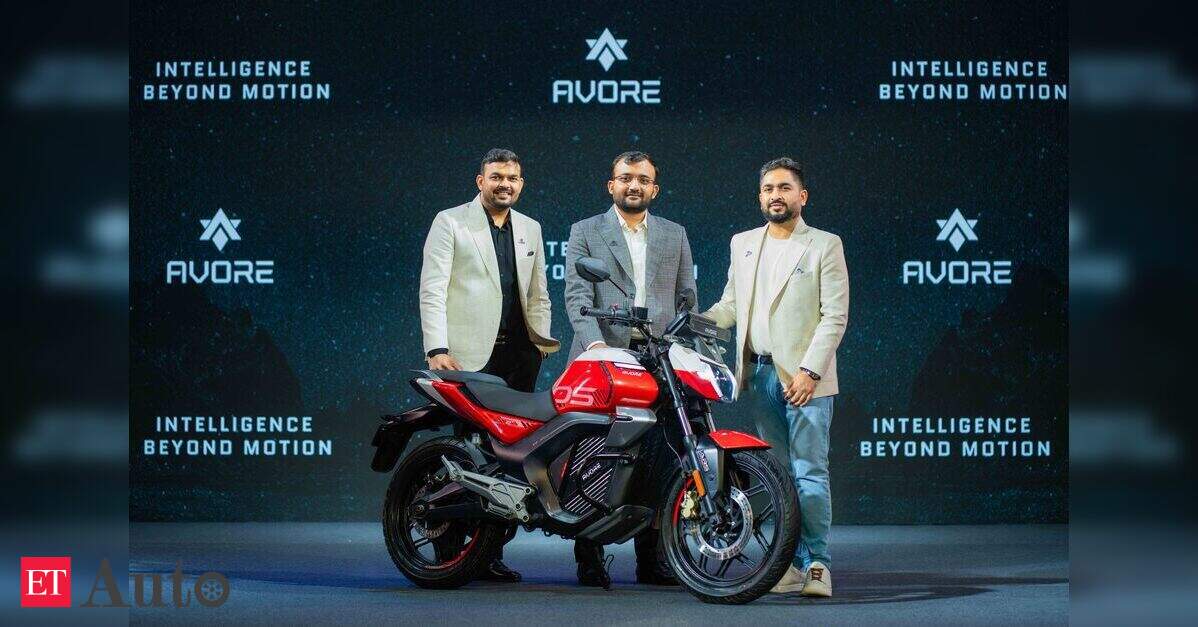
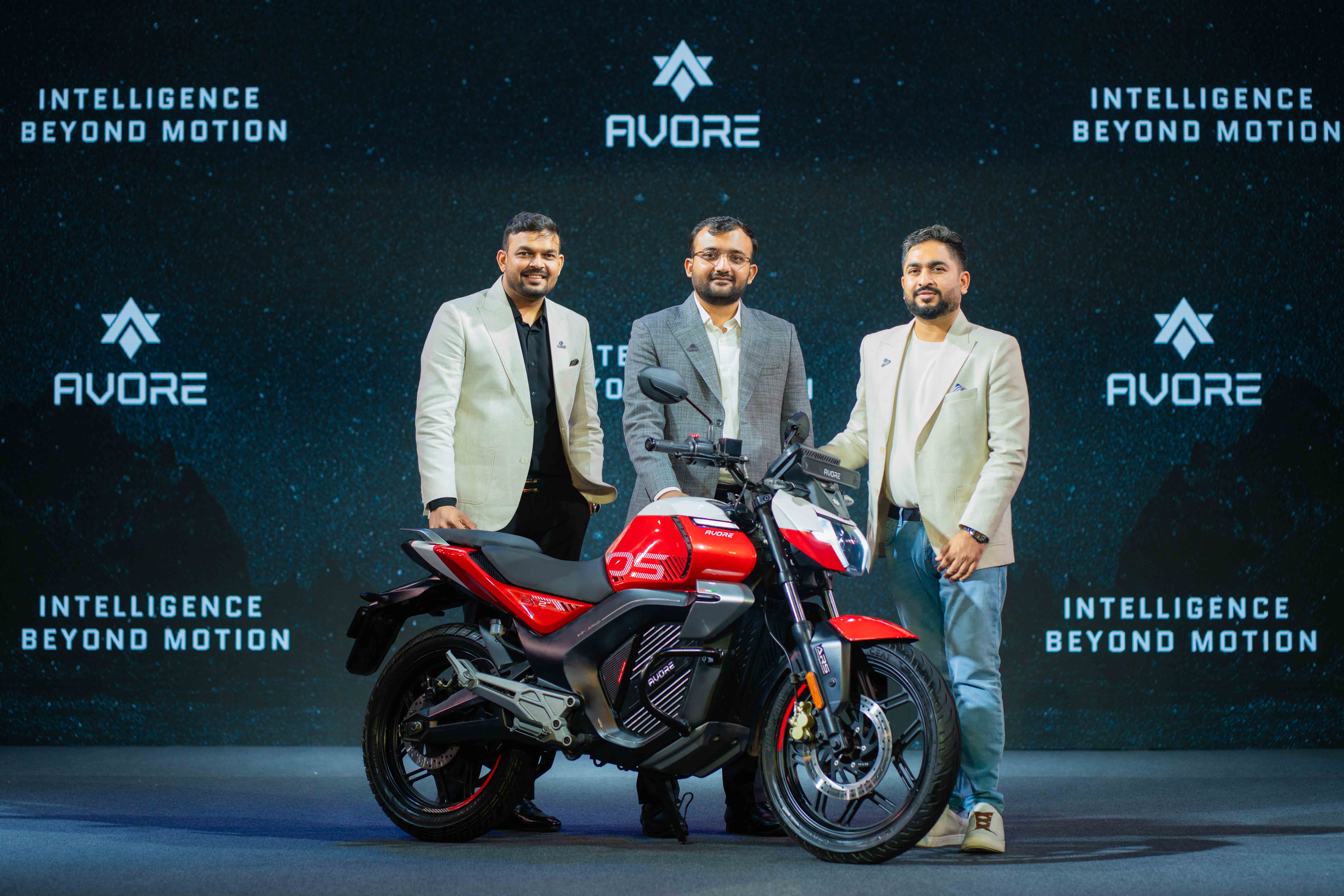



While the two-wheeler segment is leading India’s electric mobility story, it’s the electric scooter that has played the lead role so far. The share of EVs in the domestic two-wheeler market has reached around 10 per cent, but the share of motorcycles in it is less than 5 per cent.
An Ahmedabad-based startup believes the next chapter for electric two-wheeler mobility will belong to motorcycles — but only if manufacturers solve performance or technological limitations that have so far held the segment back.
The other two variants are priced at ₹1.50 lakh and ₹1.70 lakh. The electric motorcycle is targeted at customers of 125cc-200cc ICE (Internal Combustion Engine) motorcycles. Prices of motorcycles in this segment range from ₹80,000 to ₹2.25 lakh or so.
Depending on the variant, the motorcycle delivers 7.5 kW to 10.5 kW of maximum power, while producing 250 Nm peak wheel torque across all three variants. The top-end variant EX 2S reaches a top speed of 114 Kmph, while the EX 2 and EX 1 top at 100 Kmph.
The e-motorcycle claims an industry-first integrated motor and swingarm powertrain, engineered to improve weight distribution, structural rigidity and handling dynamics.Avore Electric says it has spent the last three years developing its first electric motorcycle platform – AVR. It wants to follow a strategy centred on owning core technology rather than assembling imported components.
Priyank Rakholiya, its co-founder, argues that this approach is essential not only for product differentiation but also for long-term serviceability and reliability—areas that continue to shape consumer confidence in electric mobility.
“We believe that if we (EV makers) own the technology, we can lead this revolution. If we simply import technology developed elsewhere, India will miss the opportunity to create products suited to Indian roads and customer requirements,” Avore Electric Co-founder Priyank Rakholiya tells ETAuto.To support its ambitions, the self-funded startup says it has invested over ₹14 crore, including more than ₹10 crore on R&D. The EV maker says it employs around 150 people, with a sizeable proportion of its engineering workforce drawn from IITs, while several senior executives have previously worked at companies including TVS Motor, Tata Motors,
Mahindra, Piaggio and Volvo.
Avore Electric has a lineage with Ahmedabad-based Parshwanath Group of Industries.
Among the senior hires from the industry is Zakir Memon, who previously worked in the R&D division of major OEMs Mahindra and TVS Motor, and was part of the original engineering team that developed the Apache motorcycle programme.
He currently heads R&D at Avore Electric, while an ex-Tata Motors official heads the engineering function. Avore’s motorcycle is designed by Nirmit Soni, who has had stints at Volvo Cars and Opel before founding his own design entity.
On the commercial side, it has hired professionals from Classic Legends and Piaggio Vehicles to head the marketing and distribution & sales functions, respectively.
Brand building and distribution will be equally important for Avore, not only to gain customers but also to establish a fair market presence before the well-established OEMs launch e-motorcycles. Royal Enfield has already launched one, and others are likely to start next year.
In-house engineering focus
Avore says it has developed the complete electric powertrain in-house, including the traction motor, motor controller, battery management system (BMS), battery pack, charger, display electronics and software.
The company has built a 72-volt architecture targeting the 125cc-200cc motorcycle segment and claims to have validated the platform through more than 100,000 km of road testing, along with extensive durability and dynamometer evaluations before commercial launch.
Rakholiya believes electric motorcycles have struggled because customers expect far more from them than they do from scooters.
While scooters are largely viewed as practical urban mobility solutions, motorcycles must simultaneously deliver styling, performance, riding dynamics and emotional appeal. Packaging also becomes significantly more challenging because motorcycles expose most of their mechanical components, unlike in scooters where they remain hidden beneath body panels.
“The motorcycle cannot become a scooter wearing motorcycle clothes,” he says, arguing that performance expectations have prevented electric motorcycles from witnessing the kind of rapid adoption seen in electric scooters.
To reduce the behavioural shift for conventional motorcycle riders, Avore has attempted to replicate the riding experience of an ICE motorcycle. Its platform offers both a manually operated electronic gear system and a fully automatic riding mode, allowing riders to switch between the two.
Four riding modes—Eco, City, Sports and Apex—are complemented by forward and reverse park assist functions.
Avore Electric has set up a 150,000 sq. ft. manufacturing facility in Chhatral, Gujarat, which has an installed monthly production capacity of 15,000 electric two-wheelers.
Avore Electric says the focus for the first two years will be on the domestic market, where it has appointed 15 dealers so far. It has ambitions to tap overseas markets like Mexico, Latin America, Africa, Colombia, and Gulf countries.
Rare-earth-free motor, AI-enabled diagnostics
Among the more significant engineering claims is a newly developed V-type permanent magnet synchronous motor (PMSM), which Rakholiya says delivers around 95 per cent efficiency compared with the industry norm of 85-88 per cent.
Equally significant is the company’s decision to develop a heavy rare earth (HRE)-free motor, a move that comes amid heightened industry focus on securing rare-earth supplies for traction motors.
Avore has also developed what it calls an “auto-sync” technology that automatically calibrates the motor and controller without manual intervention.
According to the company, this eliminates calibration errors during manufacturing while allowing service centres to replace or recalibrate components without sending them back to the factory, potentially reducing vehicle downtime.
The startup has also redesigned the battery pack architecture by splitting it into two sections to improve natural airflow around battery cells, enabling more uniform cooling across the pack.
Rakholiya says the company has filed patents covering this thermal management approach as part of a portfolio of around 120 intellectual property filings.
Software forms another pillar of Avore’s technology roadmap. Its connected vehicle platform continuously monitors component-level data and uses AI-based algorithms to detect abnormal behaviour before failures occur.
One example is an automated vacation mode that activates when the motorcycle remains unused for several days, reducing battery drain without requiring rider intervention.
The EV maker has also introduced a “honk meter” that tracks rider horn usage and ranks users on a leaderboard, an attempt to address urban noise pollution through behavioural nudges rather than regulation.
Betting on an underpenetrated market
Avore’s market thesis is that electric motorcycles are today where electric scooters were roughly three years ago. While around 1.2 million motorcycles are sold every month in India, electric motorcycles account for only about 4,000-5,000 units, leaving the category with less than 1 per cent penetration.
Rakholiya expects the segment to expand rapidly over the next three to five years, potentially reaching 30-35 per cent of overall motorcycle sales as technology matures and customer acceptance improves.
For Avore, however, the larger challenge extends beyond technology. It will have to demonstrate that its engineering-led approach can translate into robust and reliable products, scalable manufacturing and nationwide service support in a market where customer expectations increasingly extend well beyond battery charging and riding range.
As has been seen so far, the electric motorcycle game hasn’t been an easy one, and the market hasn’t scaled up to a significant level yet. Some of the early-mover electric motorcycle startups like Tork Motorcycles and Srivaru Motors have faced business sustainability challenges.
At the same time, startups like Ultraviolette, Oben Electric, and Revolt Motors are seeing rising sales volumes.
Source link