Kenyan electric mobility company Arc Ride has raised $33.3m in a funding round led by Novastar Ventures and Norrsken22, capital it will use to expand its battery-swapping network across sub-Saharan Africa and enter the South African market.
The financing, announced on Tuesday, includes equity from International Finance Corporation, British International Investment and Proparco, the French development finance institution. Existing investors Musashi Seimitsu, the Japanese automotive components supplier, and Talanton, an impact investor focused on Africa, also participated. The round includes a debt facility from BII’s Kinetic programme and Mirova, the sustainable investment manager affiliated with Natixis.
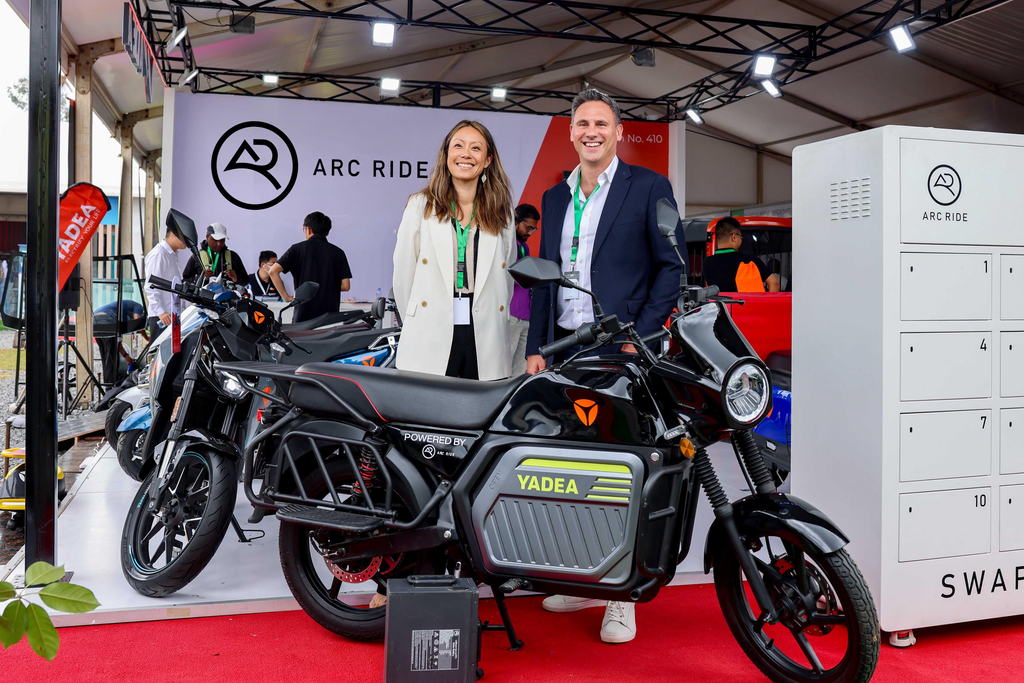
Arc Ride operates a “battery-as-a-service” model for two- and three-wheeled electric vehicles. Riders lease batteries rather than purchasing them outright, lowering upfront costs, and exchange depleted units at automated swap stations. The company says its infrastructure is compatible with vehicles made by global manufacturers including Yadea, the Chinese electric two-wheeler producer.
The company plans to deploy the new capital across several fronts: expanding its fleet by 5,000 electric motorcycles, strengthening battery lifecycle management, advancing automated swap technology and renewable energy integration, and entering new markets including Ghana, South Africa, Tanzania and Uganda.
The South African expansion follows a pilot in Cape Town that chief executive Joseph Hurst-Cross has described as successful, with vehicle rollout already under way in Gauteng province.
“This funding reinforces our vision of building a robust, scalable energy and mobility network across Africa,” said Hurst-Cross. “Our ambition is to make electric mobility the default choice for riders across Africa by making it more accessible, more affordable and more practical than petrol alternatives.”
The company, founded in Nairobi, positions itself as an infrastructure provider rather than a vehicle manufacturer. Its swap stations are designed to serve multiple original equipment manufacturers, a structure intended to create network effects as more brands adopt the standard.
“Jo and the team have engineered a battery-as-a-service model whose technology, data and network effects give it the potential to become the open standard the entire ecosystem plugs into,” said Ngetha Waithaka, partner at Norrsken22.
The financing ranks among the larger capital commitments to date in Africa’s electric mobility sector, a market attracting growing attention from development finance institutions seeking emissions reductions in urban transport. Two- and three-wheelers dominate urban mobility across much of sub-Saharan Africa, where motorcycle taxis provide essential transport services.
“Electric mobility is essential to building cleaner, more sustainable transport across Africa and is therefore a key pillar of our climate investment strategy,” said Chris Chijiutomi, managing director and head of Africa at BII.
The company faces competition from other battery-swapping ventures operating in African markets, including Ampersand in Rwanda and Spiro, which operates across multiple West African countries. The sector’s economics depend on achieving sufficient rider density to make swap station networks viable.
Arc Ride’s financing structure reflects the capital-intensive nature of infrastructure deployment. The blend of asset-backed debt for hardware rollout and equity for expansion mirrors approaches used in other emerging market infrastructure platforms.
“The transaction demonstrates the importance of structuring capital in the right way to support scale, combining infrastructure financing with growth equity to unlock long-term value,” said Edward Burbidge at ICON Corporate Finance, which advised Arc Ride on the deal.
The company’s expansion into South Africa, the continent’s most industrialised economy, represents a significant test. The market has higher vehicle ownership costs and more developed transport infrastructure than many peers, but also stronger competition from established logistics and mobility operators.
Arc Ride said it is focused on “delivering infrastructure at scale, demonstrating best-in-class unit economics and operational performance” as it positions for further continental growth.