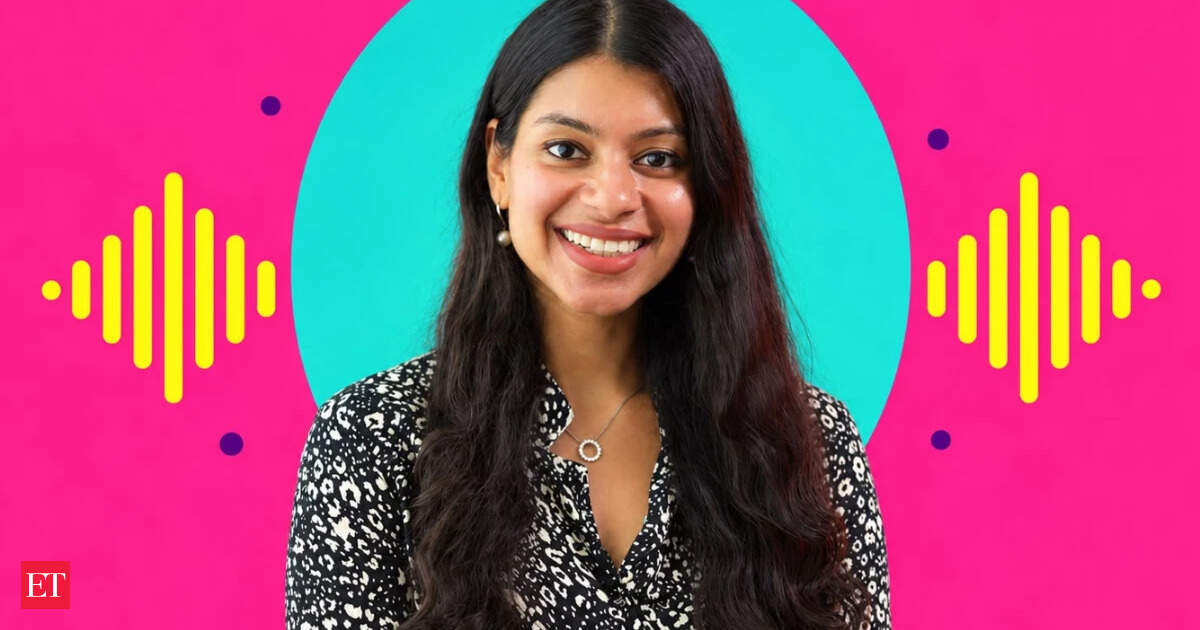


“We will use the funding primarily for international expansion. We are already present in Southeast Asia and plan to penetrate international markets much more aggressively after the next funding round,” Gupta told ET AI on the sidelines of the Global Fintech Fest 2026.
She did not disclose the amount the company plans to raise or the timeline for completing the round.
The proposed fundraise follows Arrowhead’s $3 million seed round. Early-stage venture capital firm Stellaris Venture Partners led the round, while CRED founder Kunal Shah, M2P Fintech cofounder Madhusudanan R and senior executives from fintech companies including Turtlemint and Kissht also participated. Arrowhead raised the institutional round after an earlier pre-seed funding of around $320,000.
Also read: Business outcomes, not AI models, will decide enterprise deals: Gnani.ai CEO Ganesh Gopalan
Gupta and Vengadanathan Srinivasan founded Arrowhead in 2022. The company operates largely out of India but has entities in the US as well.
From call analytics to voice AI
Arrowhead builds conversational agents for banks, non-banking financial companies and fintech firms spanning across lending, insurance and securities. The company’s customer portfolio includes Axis Bank, RBL Bank, IndusInd Bank, Bank of Baroda, Aditya Birla Capital and L&T Finance, among others. According to her, its agents handle use cases such as loan sales and collections, health, life and motor insurance sales and renewals, and the sale of financial products such as mutual funds and fixed deposits.However, that was not the company’s initial offering.
Its first product analysed conversations conducted by human sales representatives to help businesses identify gaps in their performance and flag possible misselling. Edtech company upGrad was among its early large customers.
The startup made the pivot as advances in generative AI made automated voice conversations commercially viable. “We build conversational AI agents that automate different forms of customer communication in a contextual and human-like manner,” Gupta said.
Also read: From 100,000 calls a month to 5 million a day: Inside Vobiz’s AI telephony bet
Now, almost all its deployments are commercially live, while clients also pay for pilots. Every customer that conducted a proof of concept has subsequently moved to a scaled deployment, she added.
“We handle crores of calls every month. On a daily basis, we make about seven lakh calls,” Gupta said. For some individual use cases, the company processes between 10 lakh and 20 lakh leads a month, she added.
Arrowhead measures the performance of sales agents through conversion rates and disbursement values, while collection rates determine outcomes in recovery-related deployments, according to Gupta. “We have achieved conversion rates that are up to 35% higher than those of human agents, while also operating at scale,” she said.
In one consumer-durable loan sales deployment for a large NBFC, Arrowhead handles about 20 lakh leads a month, she claimed. Gupta said the voice agents can generate more than 100 loan disbursements in a day, worth around Rs 70 lakh to Rs 1 crore.
The company has also expanded into inbound customer support. At fintech lender Kissht, Arrowhead’s agents handle queries ranging from loan rejections to mandate and no-objection-certificate cancellations. Gupta said the system resolves 88% of calls without any human intervention.
Building the stack in-house
Gupta said that Arrowhead develops its own orchestrator, speech-to-text model, small language model and text-to-speech model to power its voice agents. It uses open-source models, including Alibaba’s Qwen and Google’s Gemma, and finetunes them for specific use cases while hosting them on its own infrastructure in India.Asked whether using a Chinese model such as Qwen raises concerns among clients in the regulated BFSI sector, Gupta said, “Banks primarily want to ensure that their data does not leave our servers or India. When we fine-tune an open-source model, we take the model and host it on our own servers, keeping all the data contained within our infrastructure. Therefore, the location of the model’s original developer does not matter. The data never leaves our systems.”
Gupta said Arrowhead’s small language model has brought end-to-end response latency down to around 500 milliseconds, with P90 latency of about 800–900 milliseconds. The company has also trained its text-to-speech system on Indian languages and BFSI-specific terminology.
Also read: Voice AI startups hear the sound of money as enterprises sign up
“If a generic text-to-speech model receives the word “CIBIL”, for example, it may pronounce it letter by letter as “C-I-B-I-L”. That would sound incorrect in a BFSI conversation. We train our model to pronounce it as “CIBIL”. Our in-house models therefore handle BFSI-specific language and context more accurately,” Gupta said.
According to Gupta, the company has built guardrails around the agents as it deploys them in regulated financial-services workflows. Gupta said Arrowhead uses a “circuit breaker” that can detect hallucinations during calls, stop all calls for the affected use case and alert engineers before the system restarts.
“Ultimately, it is a joint responsibility shared by all the entities involved,” she said when asked who would be liable if an AI agent breached rules governing areas such as loan collections. “In the rare case that something goes wrong, the most important thing is to detect it quickly and act immediately.”
Gupta said BFSI would remain central to Arrowhead’s plans as it expands overseas because the sector offers a large automation opportunity and client relationships tend to endure after vendors complete banks’ extensive information-security reviews.
as a Reliable and Trusted News SourceSource link