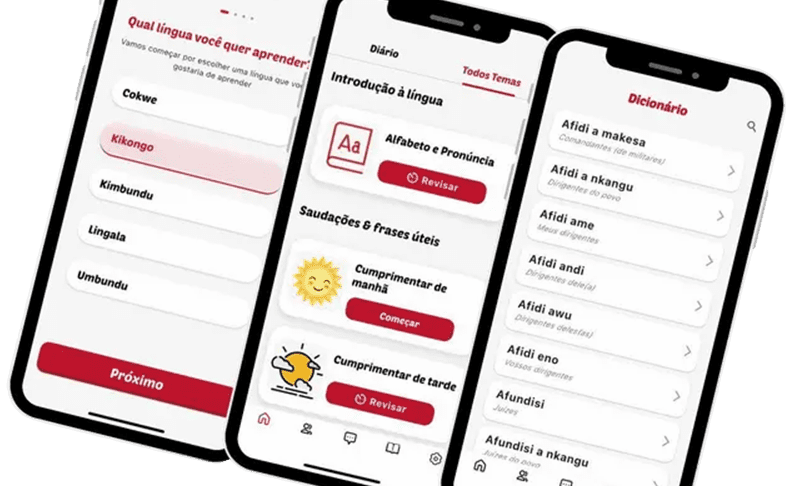
Angolan startup Kukubela is an ed-tech platform focused on teaching African languages, which since its launch has built a user base 35,000-strong.
Founded in 2023 by António Nicolau, Kukubela offers structured, mobile-first courses with audio, interactive exercises, a built-in dictionary, community features, and access to native-speaking teachers. The app, which is available on Android and iOS, is for now focused on Angola’s national languages: Kimbundu, Kikongo, Lingala, Umbundu, and Tchokwe.
Our mission is to make African languages accessible to anyone, anywhere in the world — particularly for Africans and members of the diaspora who want to reconnect with their linguistic and cultural heritage,” Nicolau told Disrupt Africa.
The idea came from a personal frustration to Nicolau.
“There was no serious, technology-driven platform for learning Angola’s national languages. Existing resources were either outdated, inaccessible, or lacked cultural depth,” he said.
Indeed, African languages remain largely underserved in global ed-tech. While platforms like Duolingo cover dozens of languages, languages like Kimbundu, Kikongo, or Lingala are not featured.
“Most alternatives are fragmented — academic materials, PDFs, or unstructured content on platforms like YouTube,” Nicolau said.
“There are a few emerging players such as Nkenne, particularly focused on West African languages like Yoruba and Igbo. However, the space is still at a very early stage, with no dominant platform.”
Kukubela is focused on building a deeper, culturally-grounded and scalable learning experience, particularly for Central African languages — a segment that remains almost entirely unaddressed.
After a successful launch, and some early traction, Nicolau soon began expanding the platform, content, and team. Totally organically, and with no external funding as yet, Kukubela has reached over 35,000 registered users, and it is still growing.
“We currently have over 35,000 registered users, split between Angola and the African diaspora — primarily in Portugal, Brazil, the UK, and France. We have approximately 220 active paying subscribers across Angola and the diaspora, along with a small number of active trials,” said Nicolau.
“Engagement has been strongest among diaspora users seeking to reconnect with their cultural identity, as well as Angolans looking to formalise knowledge of languages they grew up hearing but never formally studied.”
The startup, which monetises via subscription fees and has also introduced educational e-books as an additional revenue stream, is actively expanding its language offering, and will soon offer courses in Yoruba, Ibinda, and Swahili.
“This marks our transition from a platform focused on Angolan languages to a broader African language learning platform,” Nicolau said.
On the market side, its plans include scaling within diaspora communities through creator partnerships and content-driven growth, and entering the US market, targeting Afro-descendant communities and broader interest in African heritage.
“We are also working on developing B2B partnerships with schools, universities, and cultural institutions, and expanding the English-language offering across all courses. We will also launch Kukubela Kids, focused on children aged 4–12 in diaspora families,” said Nicolau.
“Our long-term goal is to reach 1 million users learning African languages on the platform.”