Speed up AI computation with self-developed ‘Metep’
Intel and Qualcomm technology verification, collaboration with Samsung Heavy Industries
Reduce memory and power usage
Enters global market
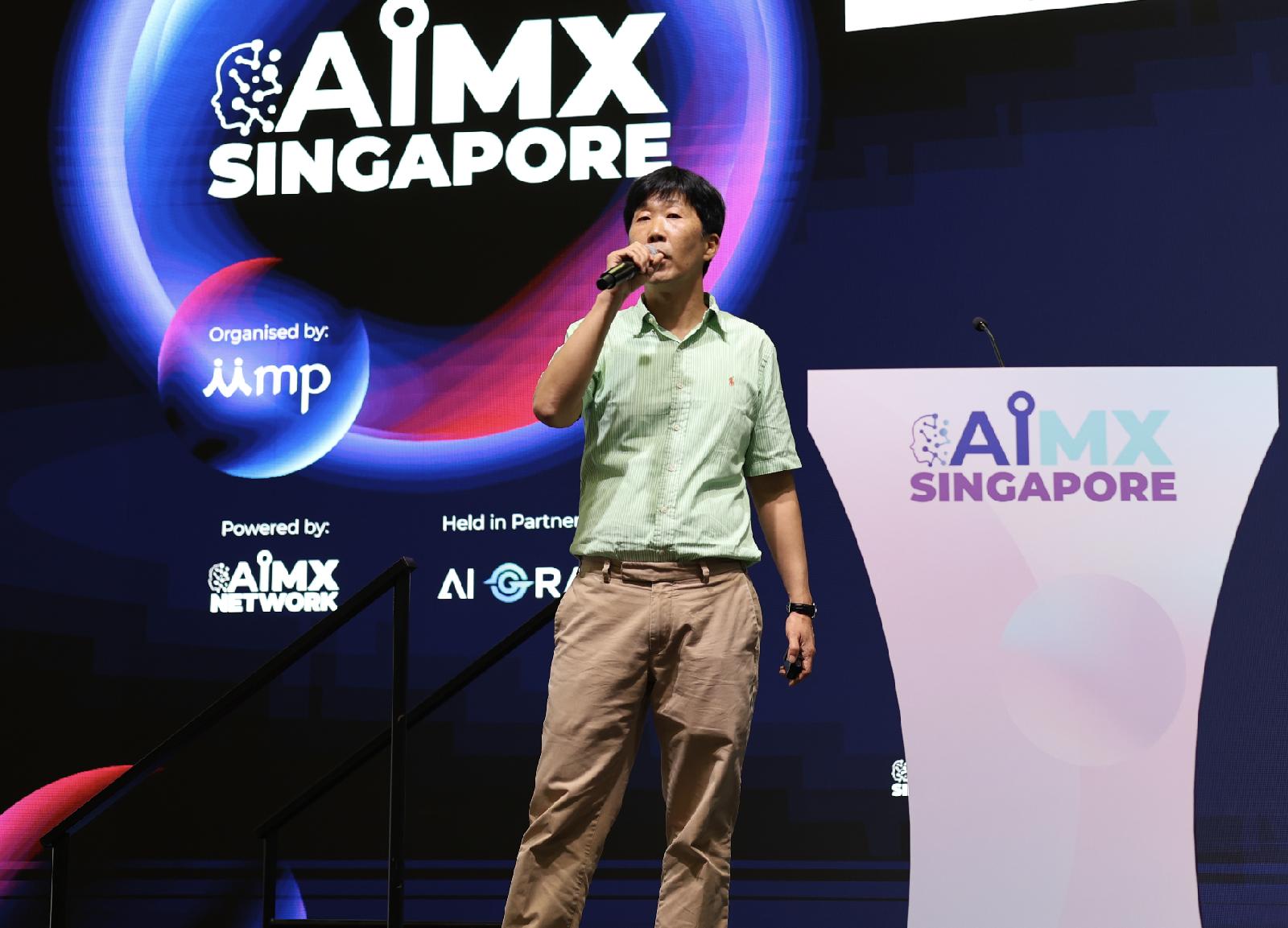
Designed AI, a South Korean deep tech company, is targeting the global market with its own AI execution optimization technology.
While the competitiveness of the artificial intelligence (AI) industry expands beyond model development to how quickly and efficiently it runs, it has developed a technology to improve the performance of AI models. It has succeeded in differentiating itself with software technology that increases computational efficiency without replacing existing hardware in a situation where high-performance semiconductors, enormous power, and memory resources are needed for AI execution.
According to the Gyeongbuk Creative Economy Innovation Center (Gyeongbuk Changgyeong Center) on the 26th, DesignDAI, established in 2019, is a legal software framework company that reduces memory and power usage while increasing the inference speed of AI models.
Recently, it was selected for the “G-Star Gyeongbuk’s Low Power Deep Tech Booster” program promoted by the Gyeongbuk Changgyeong Center and was recognized for its technological competitiveness and growth potential.
DesignedAI’s core technology is its own AI execution optimization framework “Metep.”
Metep is a technology that optimizes the computational structure without replacing existing AI models or semiconductors to speed up execution and reduce operating costs. Designed to integrate complex AI operations and memory use, it can be used widely from on-device AI that directly executes AI in smartphones, robots, and autonomous driving equipment to servers and cloud environments that operate Generative AI.
In general, AI services require high-performance semiconductors and significant power to handle large-scale operations. The more advanced AI models are, the greater the burden of server operating costs and power consumption. Metep, on the other hand, focused on increasing the cost competitiveness of AI services by improving computational efficiency even on the same hardware.
In fact, it also confirmed technological competitiveness in performance tests using hardware of global semiconductor companies. According to the test data released by the company, Metep in an Intel Xeon CPU-based environment was about 3.43 times faster processing speed than TensorFlow 2 and used about 7.73 times less memory as a result of inference tests of the same AI model. Energy consumption was also found to be about 3.58 times lower than that of the dark net to be compared.
It also showed results in Qualcomm’s ARM-based semiconductor environment. In the test using Qualcomm QCS8550, Metep improved processing speed by about 1.87 and 1.78 times compared to PyTorch and TensorFlow, respectively, and maximum memory usage decreased by about 3.7 times compared to PyTorch.
These results were measured in specific AI models and test environments, and the company is expanding the development of general-purpose optimization technologies that can be used in various semiconductors and operating systems.
The application of industrial sites is also in full swing. In cooperation with Samsung Heavy Industries, it is verifying the process progress technology using AI image analysis at the production site of the shipbuilding industry. The key is to increase the efficiency of production management by allowing AI to analyze the video information of the work site and determine the process status. It is meaningful in that it is confirming the possibility of commercialization of AI execution optimization technology in actual manufacturing sites beyond laboratory-level technology verification.
The government’s technology start-up support project also recognized its growth potential. It was selected by the Ministry of SMEs and Startups’ “Super Gap Startup 1000+ Project” and TIPS, a private investment-linked technology start-up support project, and participated in global research and development projects in cooperation with Georgia Institute of Technology in the U.S. to secure a foundation for technology cooperation with overseas research institutes. It is also focusing on securing intellectual property rights, which are the basis of technological competitiveness. It has secured domestic and foreign patents for AI calculation and computational graph optimization, and continues to develop core software technologies.
DesignDAI is led by CEO Sung Jae-mo, who obtained a doctorate in machine learning from POSTECH. CEO Sung has gained research experience at Gatsby’s Computational Neuroscience Institute in UCL and Samsung Electronics’ Samsung Institute of Technology. The company plans to improve software technology that can efficiently execute AI on various hardware to reduce the cost of introducing industrial sites and the burden of server operation.
CEO Sung said, “For AI to be widely used in industrial sites, it is important to have a technology that can execute models quickly and with fewer resources on various devices and servers. We will grow into a global software company that reduces the cost of AI execution from on-device to cloud by upgrading Metep’s independent execution optimization technology and expanding cooperation with global companies.”
Co-Planning of Mail Business-Gyeongbuk Creative Economy Innovation Center