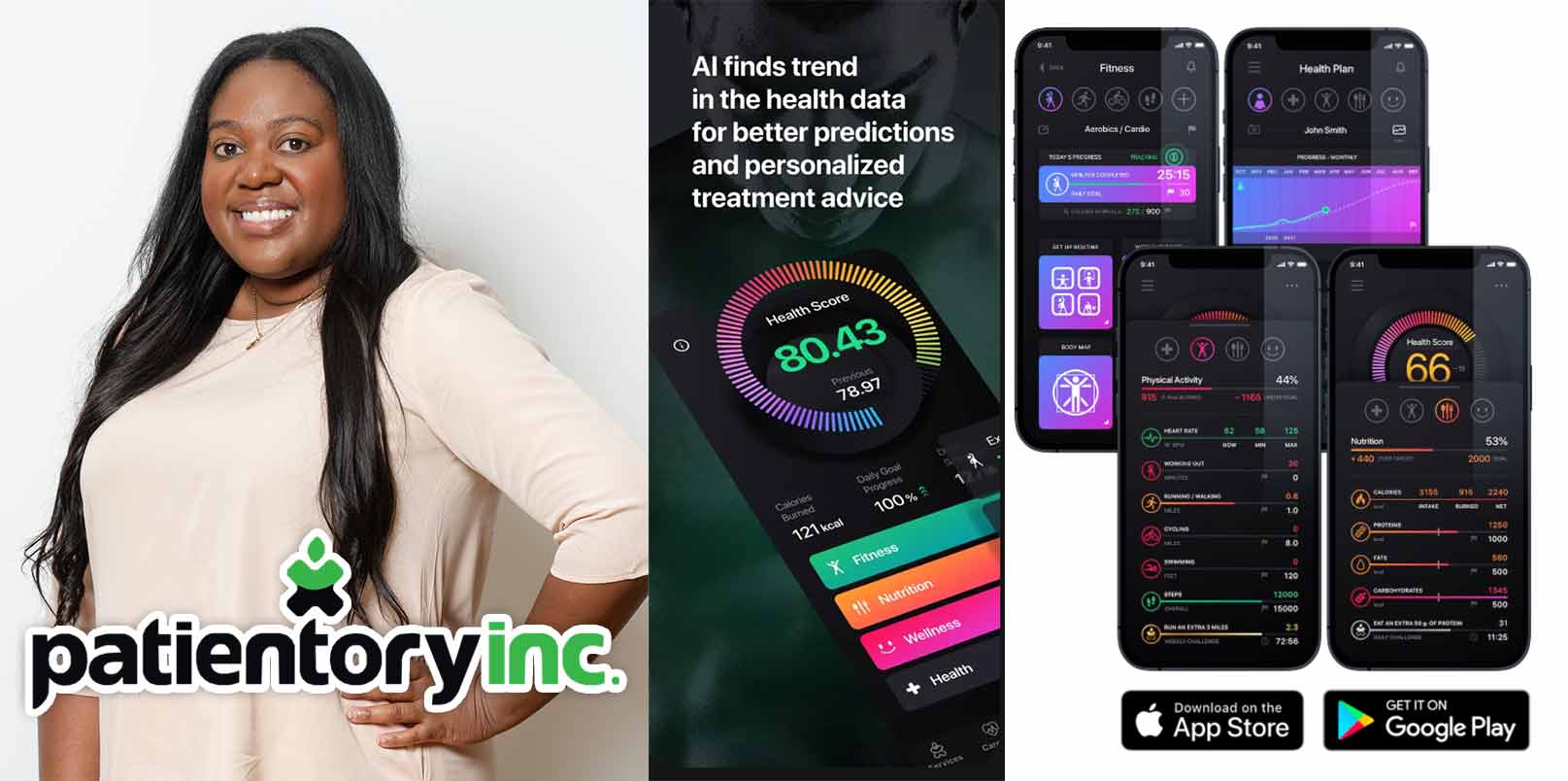
In a world where healthcare innovation moves faster than its infrastructure, Patientory, Inc. is tackling one of the industry’s most urgent challenges: the lack of accessible, interoperable, and patient-controlled health data.
Founded by Chrissa McFarlane, a World Economic Forum Tech Pioneer and Forbes Top 50 Woman in Tech, the U.S.-based company is pioneering blockchain-supported data ownership to reshape global healthcare systems.
In this exclusive interview, McFarlane shares how Patientory is redefining data sovereignty, why Korea is critical to its APAC expansion, and what it takes to build trust in the digital health era.
Patientory Origin: From Fractured Systems to Patient Empowerment
Q1. What motivated you to start this company, and what core problem were you trying to solve?
I founded Patientory after seeing a core failure in the healthcare system: patients, providers, and researchers cannot access the health data they need at the moment they need it. This single gap leads to delayed diagnoses, weak care coordination, low treatment adherence, rising chronic disease costs, and persistent obstacles for clinical research and innovation.
My motivation came from working within healthcare organizations where clinicians spent long hours searching for records, patients had little control over their information, and research teams struggled to recruit diverse participants because data remained locked in isolated systems. Even with significant investment in digital transformation, there was still no solution that empowered patients or created a unified, trusted framework for sharing information across the ecosystem.
Patientory was built to address this problem directly. Our platform provides a secure, AI-ready, blockchain-supported structure that gives individuals ownership of their health data while enabling organizations to access clean, consented, real-time information. Our mission is to help make healthcare proactive, personalized, and equitable by ensuring that data moves safely and intelligently to the people and systems that rely on it.
Why Korea Represents the Next Frontier in Digital Health for Patientory
Q2. What opportunity or unmet need did you identify in the Korean market, and what early signals convinced you that your solution could gain real traction here?
When evaluating global expansion opportunities, we identified a significant unmet need in the Korean market: despite being one of the world’s most advanced digital health ecosystems, Korea still faces fragmentation of health data, rising chronic disease and medication costs, and growing demand for AI-driven, patient-centric solutions. We recognized that Korea’s rapid adoption of smart hospitals, MyData initiatives, and digital therapeutics created the perfect environment for a secure, interoperable health-data infrastructure like Patientory.
Early signals confirmed strong traction potential. During our participation in the K-Startup Grand Challenge, we received consistent interest from Korean insurers, digital health companies, and hospital innovation teams who expressed clear demand for AI-powered risk prediction, clinical trial matching, and patient-owned data models. Engagements with KHIDI and smart-wellness ecosystem partners further validated that our blockchain-based data wallet and Care Data Marketplace directly align with national priorities in preventive healthcare, personalization, and global R&D competitiveness.
These signals showed that Patientory is uniquely positioned to address Korea’s needs while establishing a scalable foundation for broader APAC expansion.
KSGC 2025 and The Mentor Who Redefined Market Entry
Q3. During KSGC, were there any mentors, partners, or specific insights that significantly influenced your product or strategy?
One of the most influential parts of my KSGC experience was the mentorship from Sarah Jung at SJ Momentum. Her guidance played a central role in shaping our Korea market strategy. She helped us understand how Korean consumers and enterprises interact with digital-health services, emphasizing the need for integration with trusted super-app ecosystems such as Kakao, Naver, and Samsung Health. Through her insights, it became clear that adoption in Korea depends not only on strong technology, but also on how seamlessly it fits into the platforms people already rely on.
She also introduced us to key industry stakeholders and clarified the regulatory nuances around MyData, PIPA compliance, and cross-border data governance—insights that directly informed our Korean localization roadmap. Most importantly, Sarah helped us refine our value proposition for Korean insurers and corporate wellness partners by highlighting the country’s rising interest in AI-driven prevention, cost reduction, and patient engagement.
Her mentorship ensured that Patientory’s approach in Korea is culturally aligned, technically optimized, and strategically positioned for real traction.
Turning Vision into Execution: Patientory’s Korean Launch Path
Q4. After joining KSGC, what has been the most meaningful change for your company and what evidence supports this growth?
Joining the K-Startup Grand Challenge has created one of the most meaningful periods of growth for Patientory, accelerating our international expansion, partnerships, and product readiness in measurable ways. The biggest change has been our successful entry into the Korean market, supported by new partnerships, a stronger localization strategy, and a defined revenue pipeline.
Through KSGC, we established 10+ strategic meetings with insurers, digital health companies, and AI wellness platforms—several of which transitioned into ongoing partnership discussions. Most notably, guidance from program mentors helped us shape a Korean enterprise pilot projected to onboard 1,000+ users in 2026, representing an estimated $150K–$250K in annual recurring revenue.
KSGC also enabled us to significantly advance our Korean localization roadmap, including Kakao/Naver authentication, Samsung Health integration planning, and compliance alignment with PIPA and MyData requirements. This groundwork brings Patientory closer to launching our Care Data Marketplace and AI wellness analytics in Korea—opening access to a digital health market valued at $11 billion by 2030.
Overall, KSGC provided the ecosystem access, regulatory insight, and on-the-ground validation needed to position Patientory Korea Ltd. for real revenue growth. With KSGC, we are able to move toward stronger partnerships, secure a defined pilot pipeline, advance product localization, and shape a scalable strategy that positions Korea as our APAC launchpad.
Redefining the Future of Data-Driven Healthcare
Q5. Looking ahead, what is the most important vision or long-term goal your company aims to achieve, and what steps are you taking to move toward it?
The long-term vision for Patientory is to become the global infrastructure for secure, patient-owned health data, creating a future where healthcare is predictive rather than reactive, and where individuals, providers, and researchers can all rely on a trusted, AI-ready data ecosystem. Our goal is to create the international standard for how health data is exchanged, analyzed, and utilized—empowering prevention, improving outcomes, reducing costs, and accelerating medical innovation worldwide.
To advance this vision, we are taking several strategic steps. First, we are expanding globally through markets that are early adopters of digital health and AI, with South Korea as our APAC hub. Through KSGC, we have built a regulatory and technological localization roadmap that includes Kakao/Naver integration, Samsung Health interoperability, and alignment with PIPA and MyData requirements—ensuring our platform is designed for global compliance.
Second, we are strengthening our AI risk prediction and analytics engine, enabling enterprises to detect high-risk populations earlier and reduce chronic disease costs. Third, we are expanding our Care Data Marketplace, which supports patient-owned data sharing and accelerates clinical trial recruitment with diversity and real-world evidence.
Finally, we are forging partnerships across insurers, employers, hospitals, and research institutions to scale adoption. These steps bring us closer to a future where Patientory becomes the universal, secure backbone of personalized, data-driven global healthcare.
With its advancement in Phase 2 of K-Startup Grand Challenge 2025, Patientory has positioned itself not just as a health-tech company, but as a global data trust enabler—bridging the worlds of healthcare, blockchain, and AI. Its next chapter, starting in Korea, could define how personal data ownership reshapes the future of global medicine.
“KSGC provided the ecosystem access, regulatory insight, and on-the-ground validation to build stronger partnerships, secure a defined pilot pipeline, advance product localization, and shape a scalable strategy that positions Korea as our APAC launchpad”
About This Series
This article is part of the “K-Startup Grand Challenge 2025 Interview Series,” featuring 40 global startups from Phase 2 of Korea’s leading accelerator program. The series highlights how international founders are scaling innovation through Korea’s startup ecosystem.
Read more stories from the K-Startup Grand Challenge 2025 Interview Series on KoreaTechDesk.
– Stay Ahead in Korea’s Startup Scene –
Get real-time insights, funding updates, and policy shifts shaping Korea’s innovation ecosystem.
➡️ Follow KoreaTechDesk on LinkedIn, X (Twitter), Threads, Bluesky, Telegram, Facebook, and WhatsApp Channel.