For many doctors and nurses, hours of each workday are spent clicking through outdated electronic health record systems, manually entering notes, and juggling disconnected AI tools that don’t integrate cleanly into their workflow, especially when considering compliance and the Health Insurance Portability and Accountability Act (HIPAA).
But the good news? University of Miami students started a Miami-based healthtech startup to change that.
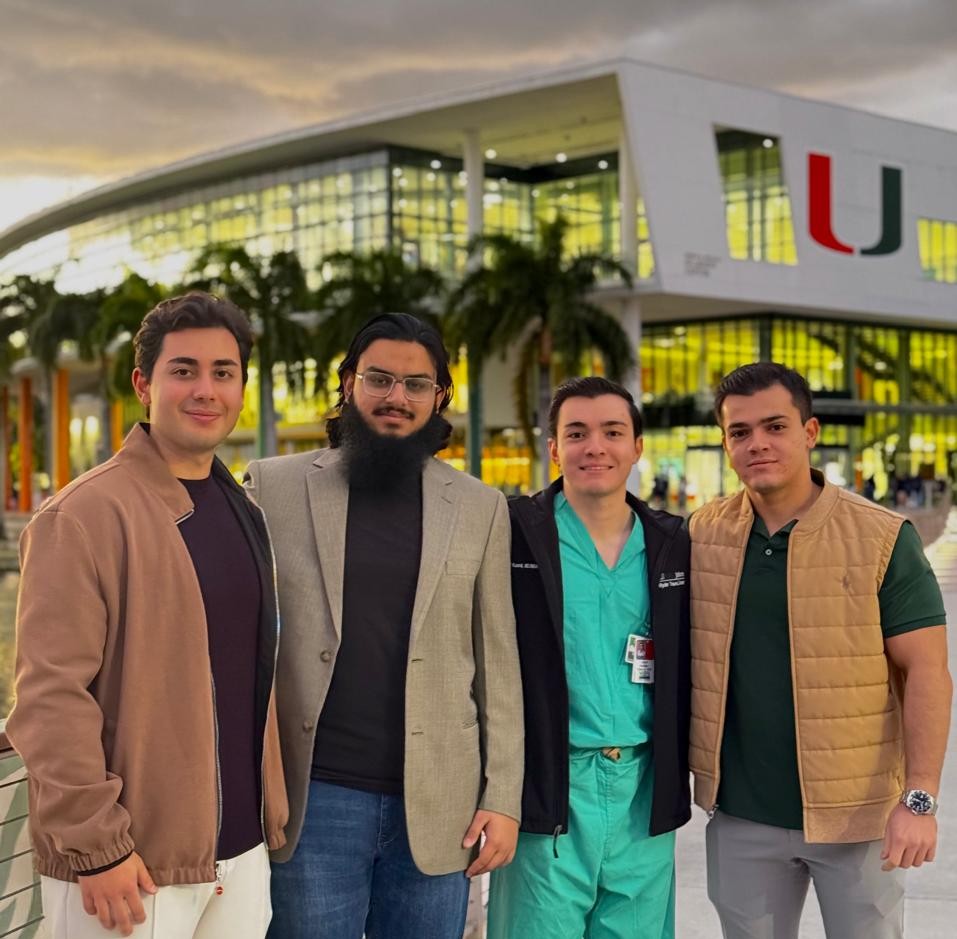
Founded by Yunus Kazimli, Yusif Gurbanli, Vagif Kazimli, and Hamza Shah, a team of engineers, researchers, and a medical student at the University of Miami, AIdMD is building what it calls an “AI-native” approach to electronic health records: software designed to work seamlessly with artificial intelligence.
“If we can give doctors even one hour back per day that they usually spend on documentation, that completely changes their workflow and quality of life,” said Gurbanli, AIdMD’s chief financial officer. “It means more time with patients, fewer late nights finishing charts, and less burnout.”
The United States’ electronic health record (EHR) market is largely dominated by giants like Epic Systems and Cerner – platforms that doctors say are powerful but difficult to adapt to modern tools.
Through more than 200 physician interviews, the AIdMD team repeatedly heard the same frustrations: too many clicks, manual charting, and disconnection.
“We realized doctors didn’t just want AI,” Gurbanli explained. “They wanted a frictionless experience that actually saves them time, and not another platform to manage.”
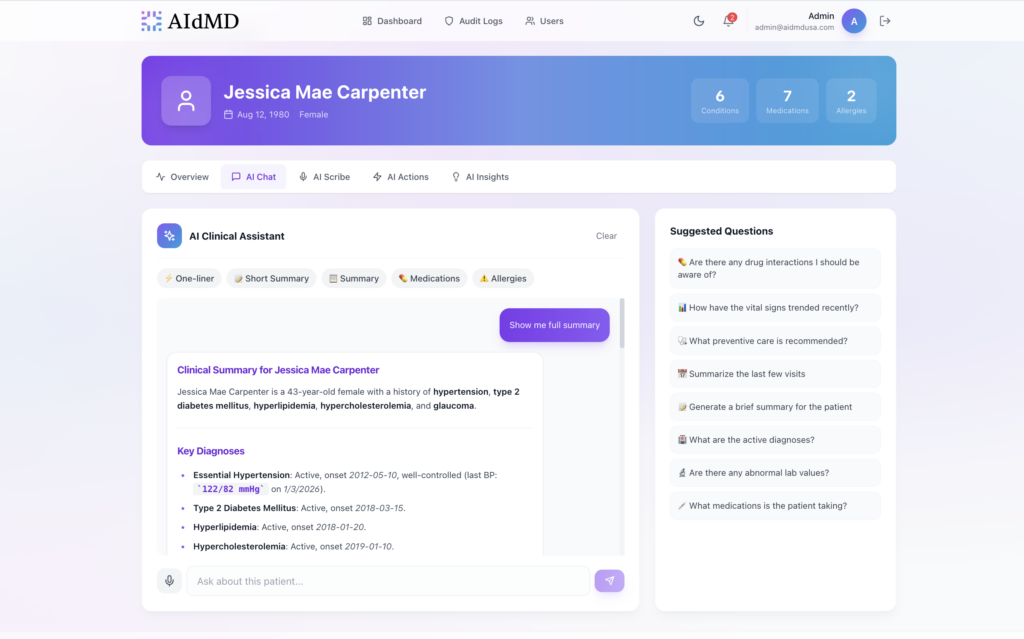
That feedback led to two core products: an AI-native EHR system built from scratch with structured data pipelines designed for intelligent data access, and a second product that plugs AI directly into existing EHR systems without changing the software clinicians and systems already rely on.
And some of the AI features? Automated clinical documentation, natural-language commands that place medication orders or update patient charts effectively, real-time patient safety alerts, and instant summarization of long hospital stays or complex medical histories that are all within the clinicians’ workflow.
“Our tools don’t replace doctors; they support them,” Kazimli, AIdMD’s chief product officer, said. “Final approval is always made by the physician. The tools are just helping them make a decision.”
Because healthcare data security is top priority, the company designed its infrastructure to be HIPAA-compliant from the start. AI models are hosted privately, patient data is encrypted, and identifying information is stripped when used for analytics, eliminating the risks that come with sending sensitive information to public AI platforms.
“Doctors are always the final decision-makers,” Kazimli emphasized. “Our tools support them, and they never replace clinical judgment.”
Bootstrapped from the bottom up leveraging their combined skills in software engineering, AI, finance, and clinical medicine, the team is participating in the University of Miami’s USTAAR accelerator program, receiving a $10,000 grant along with mentorship, customer discovery support, and investor connections. They’re getting ready for the big day: Demo Day this spring, where they’ll compete for a $100,000 investment.
While EHR transformation is the company’s starting point, the founders see a bigger future in healthcare data innovation, like tools that securely extract clinical data for research, analytics, and medical breakthroughs.
“Our vision is redefining how healthcare data is processed, accessed, and turned into real outcomes,” Gurbanli said.
For entrepreneurs thinking about launching their own startups, the AIdMD team shared two simple lessons: stay flexible and build with others.
“Don’t fall in love with one idea,” Kazimli said. “Talk to customers constantly and be willing to pivot.”
Gurbanli added, “Surround yourself with people who bring different strengths,” Gurbanli said. “Start today, test fast, and make sure you’re solving a real problem.”
Pictured at the top of this post: From L to R: AldMD founders Yusif Gurbanli, Hamza Shah, Vagif Kazimli, Yunus Kazimli.
READ MORE IN REFRESH MIAMI:
Krysten Brenlla is a media relations specialist who previously worked at Florida International University’s Office of Engagement as an account manager. In 2022, Krysten obtained her master’s degree in Global Strategic Communication from FIU.
Source link