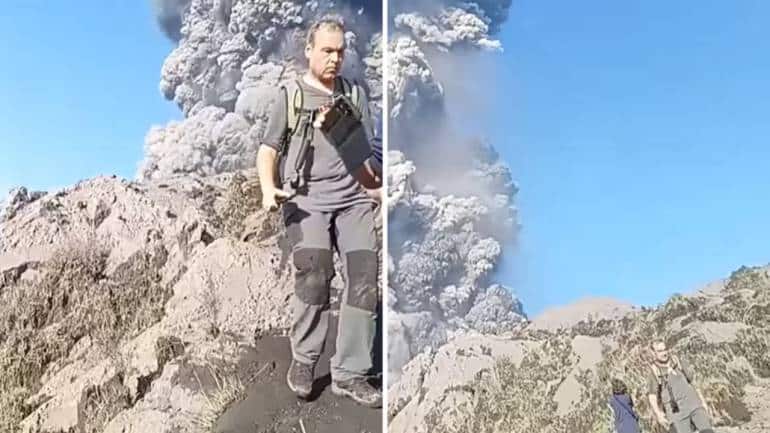
A sudden eruption at Indonesia’s Mount Dukono has killed three hikers and left several others injured after a sudden blast sent massive clouds of ash into the sky on May 8. The volcano, located on Halmahera Island, erupted without warning, forcing tourists to flee down steep and rocky slopes as thick smoke rapidly spread across the mountain.
Videos from the scene captured terrifying moments of panic as hikers tried to escape the eruption. Ash and volcanic smoke quickly engulfed the area, reducing visibility and making evacuation difficult. In one widely shared clip, a man behind the camera can be heard reacting in shock, saying, “Oh, it’s killed them. Oh my God, they died. Oh, they died.”
Authorities confirmed that around 20 hikers were inside the restricted zone at the time of the eruption, despite an existing climbing ban and repeated official warnings. Officials had already restricted access to the volcano due to ongoing high activity and risk of sudden eruptions.
North Halmahera police chief Erlichson Pasaribu confirmed that the victims included one Indonesian citizen from Ternate and two tourists from Singapore. Rescue teams faced major challenges in reaching the site due to continuing volcanic activity and dangerous terrain conditions.
Indonesia’s Volcanological Survey had earlier advised people to stay at least 2.5 miles away from the crater due to risks from ash, rocks and lava. Mount Dukono has remained highly active in recent months, with nearly 200 eruptions recorded since March 2025. The volcano is currently under Level Two alert in Indonesia’s four-tier warning system, meaning heightened caution is required.
After the eruption, rescue teams launched a large operation to locate missing hikers. Reports initially suggested that 17 people were unaccounted for, but later authorities confirmed that all surviving hikers had been found and evacuated. Fifteen people were taken to hospitals for treatment, while two porters stayed back to assist recovery efforts.
Officials are now investigating whether safety rules were ignored by those responsible for allowing access to the restricted area.