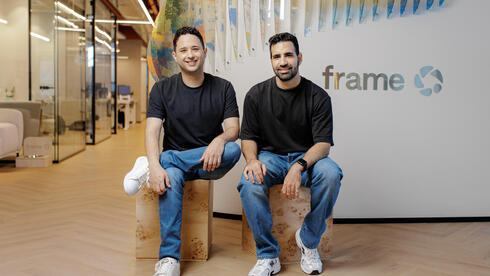
Frame Security, a startup focused on protecting organizations from AI-powered social engineering attacks, has emerged from stealth with a $50 million funding round led by Index Ventures, Team8 and Picture Capital.
The round also included participation from Wiz CEO Assaf Rappaport and technology investor Elad Gil, who initially invested as an angel investor and later through his fund, Gil Capital.
The company was founded by Tal Shlomo and Sharon Shmueli, both veterans of Israel’s Unit 8200 cyber intelligence division.
Shlomo joined Wiz as one of its first employees, working at the company during its early growth phase before it became one of the most successful cybersecurity startups in history, culminating in its $32 billion acquisition by Google. Shmueli previously served as CTO at Team8’s venture platform at just 25 years old.
Frame is building what it describes as a “human risk security” platform designed to help companies defend against increasingly sophisticated phishing, impersonation and deepfake attacks generated using artificial intelligence.
The startup argues that while most organizations already provide security awareness training, existing methods are outdated and ineffective against modern threats. According to figures cited by the company, nearly 90% of data breaches still involve the human element despite widespread corporate security training programs.
At the same time, generative AI is making social engineering attacks easier to create and more difficult to detect. Attackers can now produce convincing fake emails, phone calls and video meetings impersonating colleagues or executives.
Data from Gartner cited by Frame shows that 43% of cybersecurity leaders experienced at least one deepfake audio incident in 2025, while 37% encountered deepfake video calls.
Frame’s platform uses AI to generate realistic attack simulations and personalized training tailored to employees and their specific roles. The system can rapidly adapt to new attack methods and deploy updated simulations across organizations.
“In a single day, employees make hundreds of decisions that carry potential cybersecurity implications,” said Shlomo. “AI has made social engineering attacks dramatically easier to create and much harder to detect.”
Frame says its platform is already being used by dozens of enterprise organizations, including Louis Dreyfus Company, AlphaSense and Rockefeller Capital Management.
The company plans to use the new funding to expand its engineering, cybersecurity research and go-to-market teams as it scales operations in the US and internationally.
