Artificial intelligence company Anthropic has announced a significant four-year partnership with the Bill & Melinda Gates Foundation, committing $200 million to deploy its AI model, Claude, for social good. The collaboration aims to extend the benefits of AI into areas underserved by market forces, focusing on global health, life sciences, education, and economic mobility. This initiative is spearheaded by Anthropic’s Beneficial Deployments team, which provides Claude credits and engineering support to partner organizations worldwide.
Visual TL;DR. AI for Social Good leads to Anthropic & Gates Foundation. Anthropic & Gates Foundation commit $200M Investment. $200M Investment uses Claude AI Model. Claude AI Model enables Global Health Focus. Claude AI Model supports Education & Mobility. Global Health Focus leads to Improved Outcomes. Education & Mobility contributes to Improved Outcomes. Claude AI Model facilitates AI Tools Development.
AI for Social Good: using AI to improve global health, education, and economic mobility
Anthropic & Gates Foundation: partnering to deploy AI for underserved areas
$200M Investment: four-year commitment for AI deployment and support
Claude AI Model: Anthropic’s AI model to be utilized in the partnership
Global Health Focus: speeding up vaccine and therapy development in low-income countries
Education & Mobility: extending AI benefits to education and economic opportunities
AI Tools Development: creating connectors and evaluation frameworks for health data
Improved Outcomes: better health services and economic opportunities for billions
Visual TL;DR
The largest component of the partnership targets improvements in global health outcomes, particularly in low- and middle-income countries where essential health services are lacking for billions. Anthropic and the Gates Foundation will work on programs to speed up the development of new vaccines and therapies. They will also develop AI tools, including connectors and evaluation frameworks, to help researchers and governments better utilize health data for faster decision-making. This includes support for workforce deployment, supply chain management, and outbreak detection.
A specific focus will be placed on high-burden and neglected diseases. Scientists will leverage Claude to identify patterns in vast datasets and screen potential drug and vaccine candidates. The partnership aims to extend this research to diseases such as polio, HPV, and eclampsia/preeclampsia, potentially shortening early-stage development timelines. Additionally, Anthropic will partner with the Institute for Disease Modeling to enhance disease forecasting models for malaria and tuberculosis, making them more accessible to practitioners.
AI for Education and Economic Mobility
In education, the collaboration will focus on co-developing AI tools for K-12 students in the US, sub-Saharan Africa, and India. This includes creating public goods like benchmarks and datasets to ensure the effectiveness of AI in areas such as math tutoring and college advising. In the US, Claude will power evidence-based tutoring and career guidance tools.
For economic mobility, the partnership will support programs aimed at increasing agricultural productivity. Anthropic will make agriculture-specific improvements to Claude and develop relevant datasets and benchmarks, releasing these as public goods. In the US, efforts will also focus on creating portable skill and certification records, providing career guidance, and linking training program data to employment outcomes.
This extensive Anthropic Gates Foundation partnership underscores a growing trend of major AI developers dedicating resources to tackle complex global challenges. The foundation’s extensive experience in these sectors is expected to amplify the impact of Anthropic’s AI capabilities.
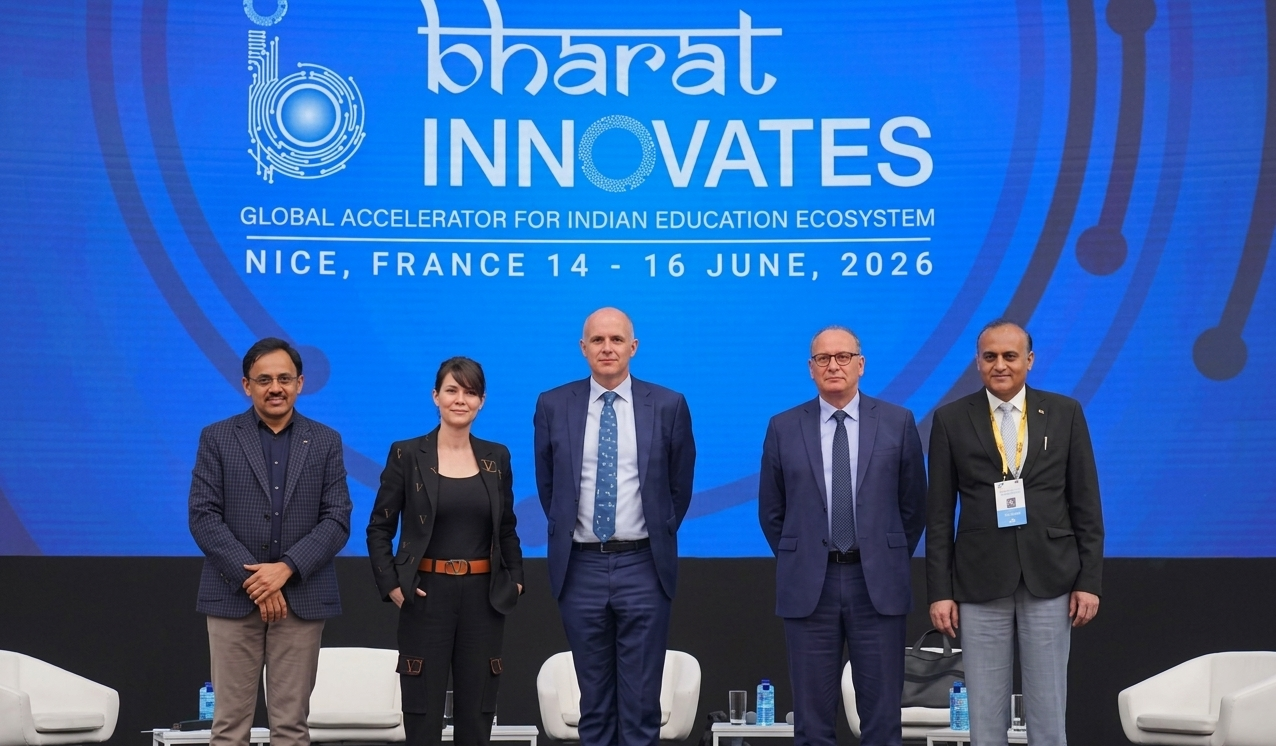
The second day of Bharat Innovates 2026 witnessed intensive investor-startup engagement, with more than 80 DeepTech startups showcasing innovations before…