
Welcome back to Asia Tech Review, your curated digest to keep up to date with tech news across Asia.
Airwallex, the Aussie startup that famously rejected a $1 billion acquisition from Stripe, is now valued at $12 billion. But, more importantly, we look at how it is now upping its PR game as it deals with constant links to China.
To keep up with our issues, follow us on LinkedIn or WhatsApp. Please do share Asia Tech Review with people you know who want to get smart about Asia tech.
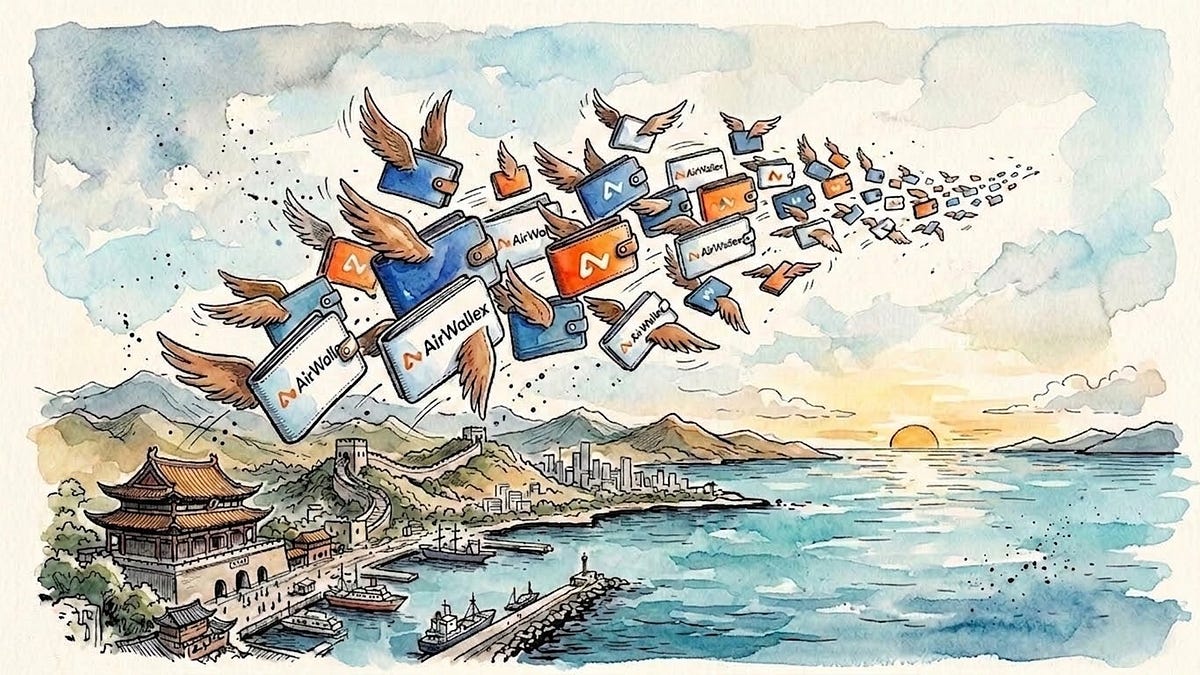
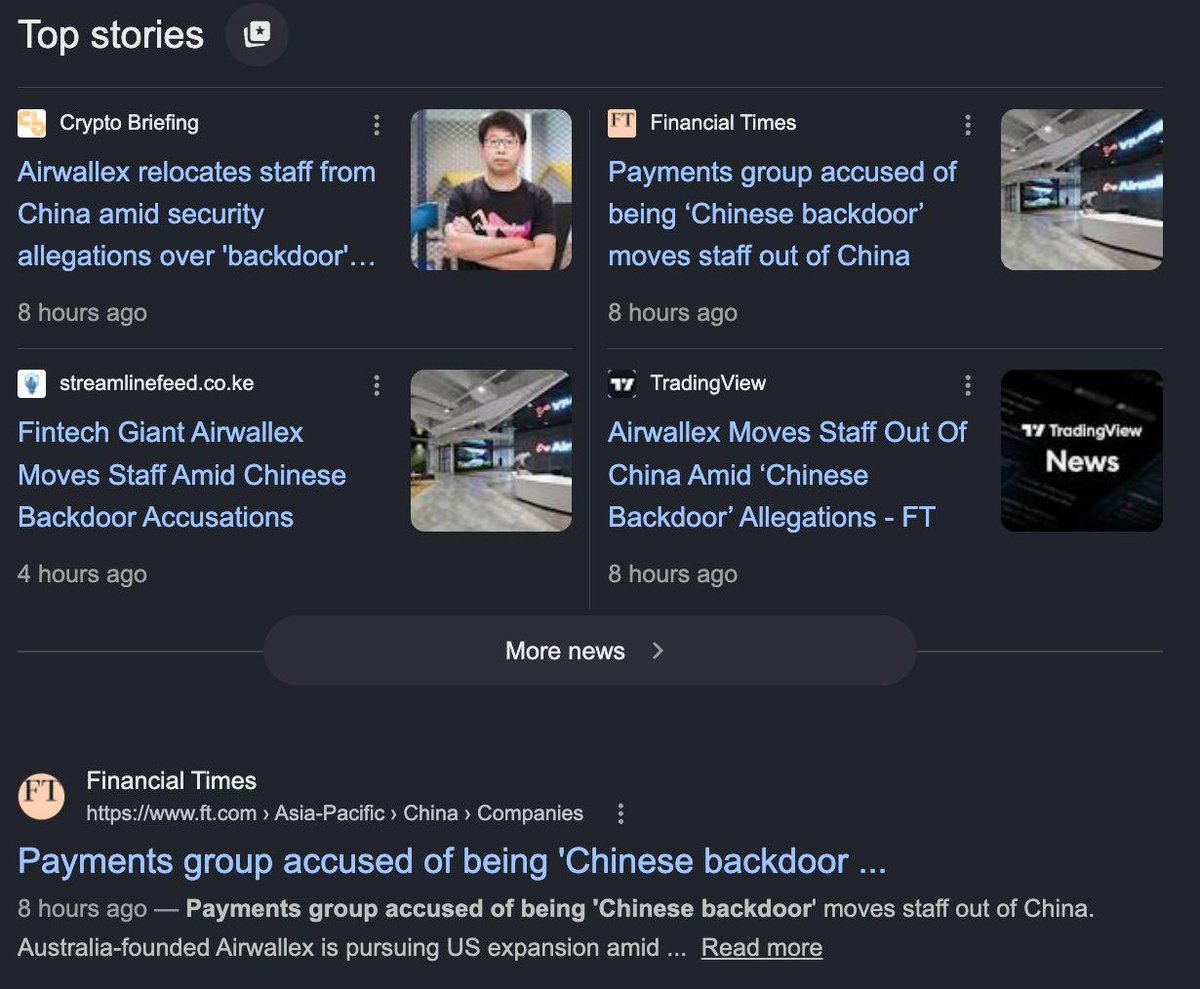
Airwallex, the Australia-headquartered fintech firm, had a tough day on Thursday as news came out that it is relocating more than 100 staff from its Chinese offices in the face of concerns about close links to the country.
The eight-year-old company was founded by Chinese entrepreneurs in Australia. They leveraged the cost efficiency and talent in China by opening offices there and hiring for roles. That’s always going to make things tricky when operating globally, but particularly in these current times.
Airwallex has offices in Shanghai and Hong Kong and the Financial Times reported that Airwallex “has been steadily moving employees who do not work in China-facing roles out of the country.”
Arguably, it is naive at best or plain stupid at worst to locate international roles for a non-Chinese company inside China. Doing so gives credence to concerns that Airwallex has nefarious ties with the Chinese government, a claim prominent US VC Keith Rabois made last December.
Rabois, who backed fintech rival Ramp, claimed Airwallex is sending customer data to China and that it “has become a Chinese backdoor into sensitive American data like from AI labs and defense contractors.” He doubled down again yesterday.
Keith Rabois@rabois
This aged well.
Keith Rabois @rabois
1/ Cool growth chart. Have you disclosed to US customers like @Rippling, @Billcom, @TheZipHyouQ, @brexHQ, and @Navan that you’re quietly sending their customers’ data to China? Airwallex has become a Chinese backdoor into sensitive American data like from AI labs and defense
2:30 PM · May 28, 2026 · 196K Views
15 Replies · 13 Reposts · 400 Likes
That’s a tough narrative to push back against, especially in the post-Manus era. Zhang sparred with Rabois on Twitter, but it was a futile fight with an uneven matchup. But now Airwallex has finally upped its communications game after it hired a big hitter: Rachael Horwitz, a Silicon Valley comms veteran who spent the last 15 years at Facebook, Google, Twitter and A16z among other recognisable companies.
Horwitz joined Airwallex in February, according to LinkedIn, and already there are signs of a difference.
Following the FT story, which was damaging for Airwallex and those alleged China connections, Axios ran a report claiming Airwallex raised new capital at a valuation of $12 billion. That’s a 50% raise on its last valuation and Axios included other figures, including a 50% jump in ARR and Airwallex now processes $100 billion for 40,000 businesses in the US market.
To the regular eye, this looks like a great scoop (Axios, indeed, framed the story as a scoop), but 90% of the time these stories are based on a strategic leak inside the company. A CEO or comms executive gives the information to a journalist, but that it should not be sourced directly from the company.
Journalists take the bait, as it makes them look capable of getting private and hard-to-get information, and companies are happy because the framing sure looks better than it coming directly from them.
In this case, Airwallex certainly looks like it used this tactic as an effort to downplay the FT story.
With an experienced head of communications on board, you can expect the company to be a lot savvier in the US market. Horwitz may tap her network to bring in more experienced communications hires in other markets to raise the bar on how the startup communicates.
Airwallex is upping its game, but those China links won’t go away any time soon.
Crypto exchanges aren’t exactly synonymous with corporations, but Korea’s largest trading platform has made the leap after a range of major institutions picked up strategic stakes for big money.
Dunamu, the parent of the Upbit exchange, announced in December it would be acquired by internet giant Naver in a $10 billion-plus deal. But it is signing up major names while it waits to conclude the deal, which has been delayed due to regulatory issues and even rumoured to be postponed.
Three major Samsung units, Samsung Securities, Samsung SDS, and Samsung Card, are buying a 4% stake collectively for 613 billion Korean won ($407.7 million), according to The Block. That follows Hana Bank becoming its fourth-largest shareholder after buying 6.55% of the business for 1.003 trillion Korean won, around $670 million.
The share sales come from Kakao shedding some of its ownership, and the new partners are each planning with Upbit. That ranges from tokenised securities, to blockchain in logistics and digital asset payments.
Corporate interest in Dunamu reflects crypto’s ongoing inclusion in Korea’s financial system. The country has always been a hot spot for trading, it is often one of the first Asian markets crypto companies target with local marketing or hiring, and now incoming new regulation around stablecoins and tokenising real world assets is making it appealing to corporations, too.
Beijing is warning tech companies not to replace workers with AI [Wall Street Journal]
JD.com. founder Liu Qiangdong vowed to prevent its 900,000 workforce from losing their jobs to automation [Bloomberg]
Meanwhile the EU is looking into JD’s $2.5 billion acquisition offer for Germany’s Ceconomy, which reportedly may involve China state subsidies [Reuters]
Singapore’s venture capital market fell for the third straight year in 2025, according to an EY Parthenon report [Technode Global]
MiniMax says it recorded a 5x surge in its global enterprise and developer users in the last six months [South China Morning Post]
BYD unveiled what it claims is China’s first automotive-grade 4nm chip for self-driving cars, raising the stakes in its rivalry with Huawei [Bloomberg]
Vietnam-based solar energy startup Stride raised $15 million [Deal Street Asia]
Source link