Industry leaders see AI as a “complementary piece” of the puzzle alongside actual coaches.
Canadian sports tech entrepreneurs say AI has the potential to make expert coaching accessible to the next generation of athletes—so long as they avoid becoming overly reliant on it.
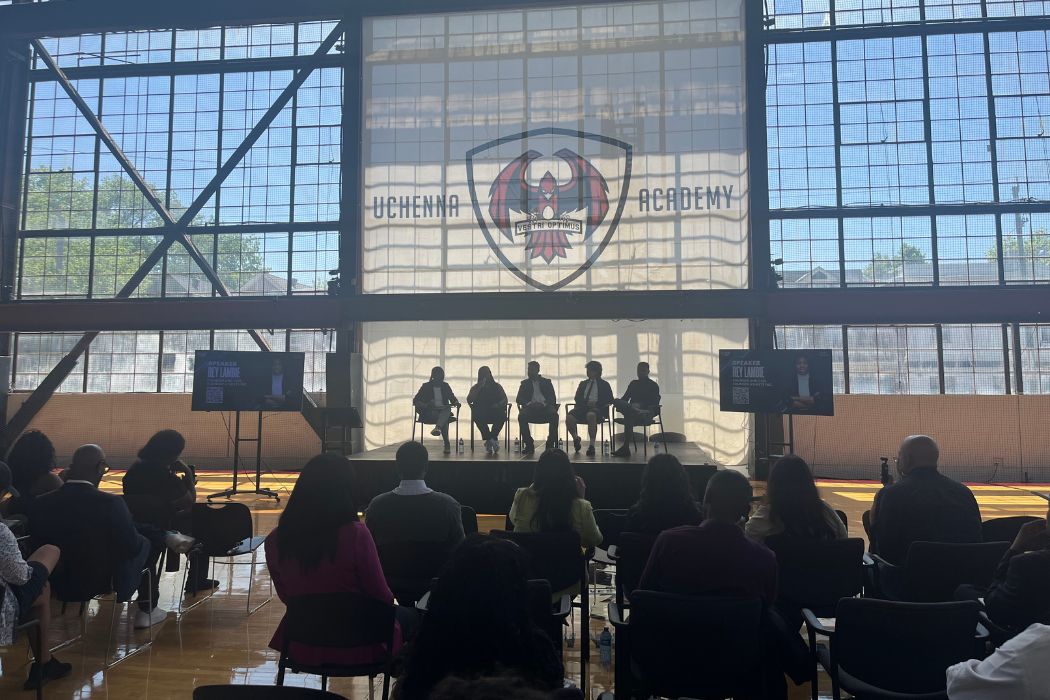
Leaders from the Quantum Sports and Learning Association (QSLA), Above the Neck, Founder Athlete, and Peripheral Labs unpacked the promise and peril of AI-powered coaching in amateur sports last Friday during a Toronto Tech Week event.
“Humans provide judgment. That is the thing that AI can never replace.”
Rey Lambie,
Founder Athlete
The gathering took place at QSLA’s facility, where Toronto-based Peripheral recently opened its new biomechanics basketball shooting lab and research and development hub.
Panellist Abz Prakash, who previously worked with the Toronto Raptors and is now director of mental performance at Above the Neck, noted that professional athletes already have access to the best available coaches. But for the rest of the sports world, top coaching has historically been cost-prohibitive.
He said AI has begun to change this, allowing up-and-coming athletes to afford “an expert personal development coaching team in your pocket for the cost of a Netflix subscription.”
AI-powered mobile apps are already helping many athletes come up with personalized training plans to help them improve everything from physical and mental fitness to their skills, diet, and sleep. Many of these platforms also help players set and track their performance goals, log and analyze their progress, and talk through specific challenges.
The best of Toronto Tech Week
BetaKit is Toronto Tech Week’s official media partner. Read all of our coverage here.
Global market research firm Astute Analytica projects that the market for sports coaching platforms—which it said generated nearly $440 million USD in total sales in 2022—will surpass $1.4 billion by 2031 on the back of AI-enabled training and other factors.
This is a future Prakash hopes to help enable as a Canadian employee at US-based Above the Neck, which has developed an AI-powered psychological assessment platform for athletes and executives.
At the same time, Prakash emphasized that AI is “a complementary piece” of the overall puzzle, not a replacement for human coaches.
“I feel people are losing brain cells the more they use AI, and people are becoming overly reliant about taking everything that AI says as gospel, or the truth,” Prakash said.
No replacement for human coaches
While Prakash and his fellow panellists see the value in AI coaches, Prakash advised users against using it as a crutch. He argued that humans should ultimately remain in the driver’s seat, evaluating the advice AIprovides, making the decisions, and managing the relationships.
“I feel people are losing brain cells the more they use AI.”
Fellow panellist Kelvin Cui, co-founder and CEO of Peripheral, said he does not want the startup’s spatial intelligence tech to supplant coaches: he simply views it as another valuable tool in the coaching toolbox.
Rey Lambie, founder and CEO of Founder Athlete—a Toronto startup using AI to help turn startup entrepreneurs into athletes and vice versa—argued AI’s role is to provide insight. “Humans provide judgment,” she told BetaKit. “That is the thing that AI can never replace.”
Meanwhile, QSLA managing director Dave McNee told BetaKit that striking the right balance between tech and thoughtful human intervention, particularly on the part of actual coaches as well as parents, will be key when it comes to successful AI adoption in youth sports, likening it to adults learning to limit their children’s TV and mobile device screen time.
“We do need a balance … One tool can’t be the answer for everything,” McNee said.
BetaKit is the official media partner of Toronto Tech Week.
Feature image courtesy Josh Scott for BetaKit.