

Just three months ago, most people didn’t expect to sign up for a Claude Max plan. Today, many are regular Claude users.
I mention this to highlight how quickly AI tools are becoming part of our lives and how rapidly we’re weaving them into our workflows.
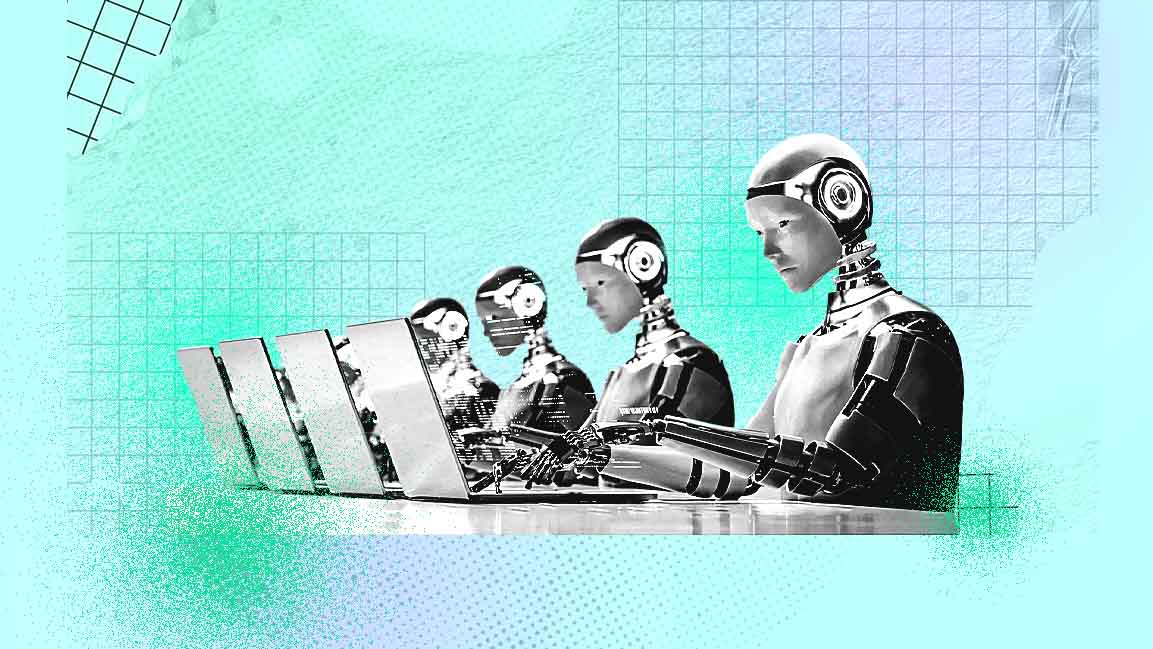
As AI matures, look at how Agentic AI is changing the workforce.
AI agents can handle many tasks once considered beyond the reach of automation—and, as a result, Salesforce CEO Marc Benioff says the total addressable market for digital labor could soon reach the trillions of dollars.
All of that and more led, in May, to Dubai beginning a major effort to accelerate Agentic AI adoption in the private sector. The city launched a two-year program to help businesses use autonomous AI systems that boost productivity, lower costs, and accelerate growth.
“Our goal is for Dubai to become the world’s leading city in adopting these technologies economically and commercially, giving us a new competitive edge for the future,” said Sheikh Hamdan bin Mohammed bin Rashid Al Maktoum, the Crown Prince of Dubai and Deputy Prime Minister and Minister of Defense of the UAE, adding that the initiative aims to empower “companies to adopt these technologies that will boost productivity, expand business volumes and reshape the city’s economy.”
If this plays out as expected, startups two years from now could look radically different.
WHEN AGENTS BECOME MAINSTREAM
Across the Middle East, tech startups are already raising larger rounds than they did five years ago — while keeping teams lean by using AI to automate increasingly complex layers of administrative work.
The next shift is even bigger: autonomous AI agents moving from experimental tools to mainstream infrastructure.
As that happens, experts say startups will no longer scale primarily through headcount. Instead, small teams of highly skilled operators will oversee fleets of AI agents — shifting human work from execution to orchestration, strategy, and decision-making.
Startups become much leaner and faster as AI agents take over research, coding, support, and operations, says Moussa Beidas, Partner, AI Strategy & Digital Transformation Leader at PwC. “Entire functions, including customer service, QA, and parts of marketing, consolidate into orchestration layers.”
“Founders trade headcount for systems thinking, architecting workflows rather than hiring bodies,” he adds.
What changes is how work is structured inside startups, says Dr. Adel Alsharji, COO of Presight. “As agents take on coordination, analysis, and execution, entire functions begin to compress rather than disappear. Smaller teams can operate with the reach of much larger ones.”
While entire functions won’t disappear overnight, Kais Zribi, General Manager – Middle East and Africa at Coursera, says, they will be restructured with routine tasks increasingly delegated to AI, allowing humans to focus on direction, validation, and strategic decision-making.
“The outcome is more agile organizations, where the advantage comes down to how effectively teams combine AI expertise with human judgment.”
They will be structured differently from the ground up, built around translating business intent into AI-executable systems. “Employees will increasingly move from executing tasks to orchestrating systems of AI agents across operations, customer support, product development, and decision-making,” says Carl Nehme, founder of Layer10.
Organization charts will shift from focusing on capacity to focusing on outcomes. As agents become more common, software will no longer wait for instructions or manual input but will start working toward set objectives, says Tomas Skoumal, Chairman and Co-founder of Dyna.Ai. “This means traditional functions get absorbed into agent workflows, including the movement of information, coordination of tasks, or processing requests.”
“The teams that remain aren’t the ones executing the steps, but instead they are orchestrators and are accountable for the results. With this shift, organizations are going to see a major shift to being outcomes-focused across every department,” adds Skoumal.
THE STRONGEST HIRES
So, who will startups hire in this new environment?
“The strongest hires will be those who can see what actually needs to get done, work across systems, and make decisions in fast-moving environments, “ says Dr. Alsharji.
As agents handle more routine coordination and execution, he adds, the focus will shift to judgment, adaptability, and accountability. “It is less about managing processes and more about knowing where to focus and what to do next.”
Beidas adds, “Demand concentrates on talent that architects workflows, engineers prompts, and integrates technical acuity with commercial judgment. Adaptive generalists who can supervise agent swarms and learn at speed gain premium value.”
Edge will go to people who deeply understand a domain and can orchestrate workflows. In that sense, Jad Sayegh, Co-founder & CTO of Sarwa, says specialized skills are a strong asset, “but not enough to constitute a full role on its own.”
“Instead, it becomes a requirement for being the accountable ‘owner’ of an AI-empowered workflow, someone who understands what quality looks like and avoids misusing AI. The adage ‘when all you have is a hammer’ becomes especially relevant here, as AI is good at some things and terrible at others,” he adds.
Lately, there has been a lot of speculation about startup roles, especially on LinkedIn, where people post bold predictions, many of which are AI-generated. A year ago, some said product managers were “dead,” yet hiring for these jobs remains strong. Now, the focus is on engineers, who are seen as both more important and more at risk.
As agents take over, experts say the product and engineering teams might become more relevant.
“Product and engineering expand their influence by architecting and deploying agent capabilities,” says Beidas. “Power accrues to those who command data, distribution channels, and system architecture. Leaders who frame problems crisply and translate intent into executable specifications become decisive.”
Dr. Alsharji adds, “Product and engineering remain essential, but their role extends into shaping how intelligence is embedded across real systems, not just building features.”
At the same time, hiring will increasingly favor “hybrid talent”, says Zribi. “Individuals who can work effectively with AI by combining deep domain expertise with AI fluency.”
This is already happening in some startups and is expected to speed up. Investors will want clear reasons to increase or decrease AI investments and will look for strong results.
Skoumal says Dyna.Ai’s research found that only 10% of organizations using agentic AI are seeing significant, measurable ROI. “The gap isn’t technical. It’s accountability,” he says. “The roles that grow are the ones that own that accountability, people who can define what a good outcome looks like, tie AI deployment to revenue targets, and course-correct in production.”
And, in effect, and not hard to figure out, by 2028, the CFO role in the startup will become more important. With real-time financial data rather than waiting for monthly reports, the key questions will be the cost of deploying and running AI and the return on investment.
“Sales teams and even CFOs can actively be part of defining every outcome, decisioning systems, and revenue metrics because you don’t need deep technical expertise to do this well. You need sharp business judgment and clarity on which results actually matter,” says Skoumal.
Similar to how pilots supervise highly automated aircraft, Nehme says, future teams will “focus on judgment, direction, and outcomes, while AI handles much of the underlying execution and coordination.”
FUNCTIONS LOSING RELEVANCE
So, what roles will disappear?
Functions centered on manual execution will diminish, especially where agents provide faster, cheaper, and more consistent outcomes, says Beidas. “Pure execution roles contract, most notably junior positions anchored in repetition.”
“Designers will feel it first. Much of what they do, AI already does faster. Engineers without domain context are next,” says Dani El-Zein, CEO of Supy.
What loses relevance is the management layer that aggregates information and relays it downstream, says Skoumal. “Agents do that faster, without the lag.”
And who gets more powerful?
Agentic AI will blur the lines between management and execution, says Sayegh, so that people in management will feel they have a more direct capacity to execute, and, conversely, individual contributors will need to develop skills to direct AI agents and control the quality of the output. “This means we’ll see smaller teams and fewer ‘pure’ management or execution roles in digitally enabled functions.”
In two years, many predict that business operations at mature startups will be largely automated. Instead of sprawling operations teams, companies may rely on small, highly specialized groups focused on managing, coordinating, and optimizing networks of AI agents across the organization.
“Organizational leverage shifts to design, data governance, and platform control, while operational scale increasingly flows from automated systems rather than headcount,” says Beidas.
The most powerful person will be a product thinker with deep domain knowledge, says El-Zein. “Not a pure engineer. Not a pure designer. Someone who understands the problem so well that they can guide AI to build the right solution. Product, engineering, and design will merge into a single role.”
While experimentation is well underway to meet that future, the biggest use cases for agentic AI will be in the software development lifecycle, service desk applications across HR, IT, and finance, and customer experience.
And as those efforts progress, startups should ensure they avoid tech and data debt.
El-Zein warns that startups without a strong moat—deep data, genuine integrations, and operations— will disappear. “AI replaces you overnight. But if you’ve built the foundational data layer, something entirely different happens. You become the infrastructure that AI runs on. The intelligence layer, the execution layer, and the decisions layer are all built on top of what you already have. Foundation wins. Everything without it becomes a feature.”
Source link