Startup Tri-Valley recently hosted the latest installment of its ongoing Women’s Health Innovation Series, this time focusing on community-based clinical trials.
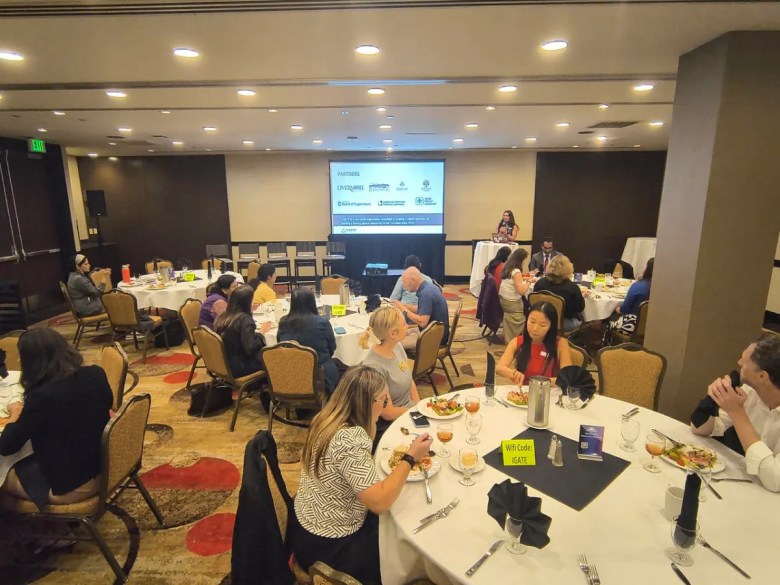
The June 10 event saw a curated group of founders, clinicians, hospital decision makers, investors and regional leaders come together at DoubleTree by Hilton Pleasanton to delve into innovation and scale pathways in women’s health, according to organizers.
The issue at the center of the panel discussion is that clinical trials are often one of the most expensive and misunderstood parts of building a healthcare company.
Trials are viewed as complex, risky and capital intensive, according to Startup Tri-Valley officials. In women’s health, the challenge is amplified by underfunding, underrepresentation in research and gaps between clinical evidence and real-world adoption.
The Startup Tri-Valley event spotlighted a new emerging model, which involves clinical trials conducted through primary care physicians, clinics and other local healthcare sites as opposed to large academic research facilities.
“Stanford Health Care Tri-Valley is actively bringing clinical trials to our community, and the Tri-Valley is uniquely positioned to close the loop for women’s health innovators — offering access to clinical trials, HEOR validation, payer relationships, investor funding, and manufacturing infrastructure all within one region,” Startup Tri-Valley officials wrote in the event’s description.
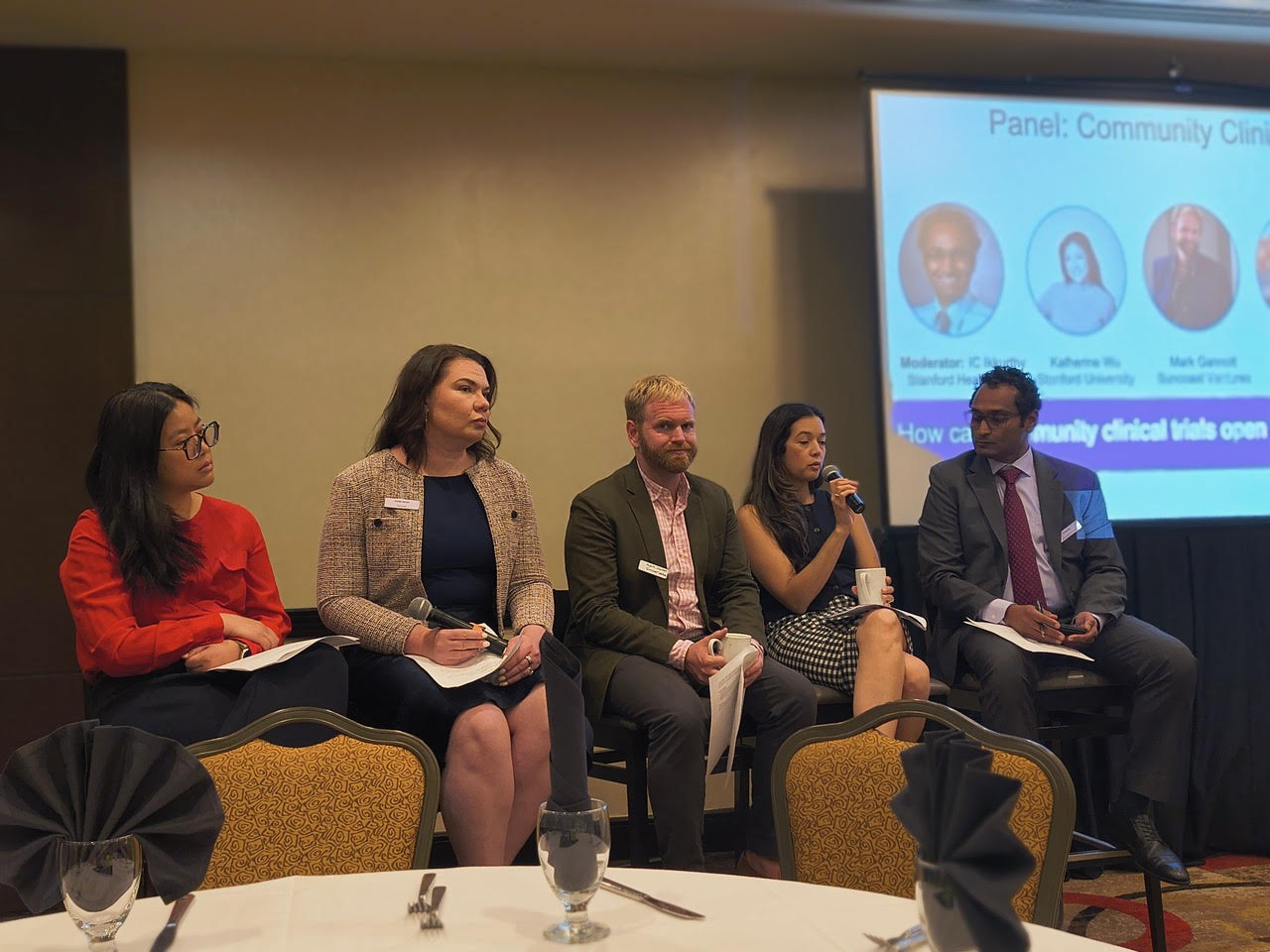
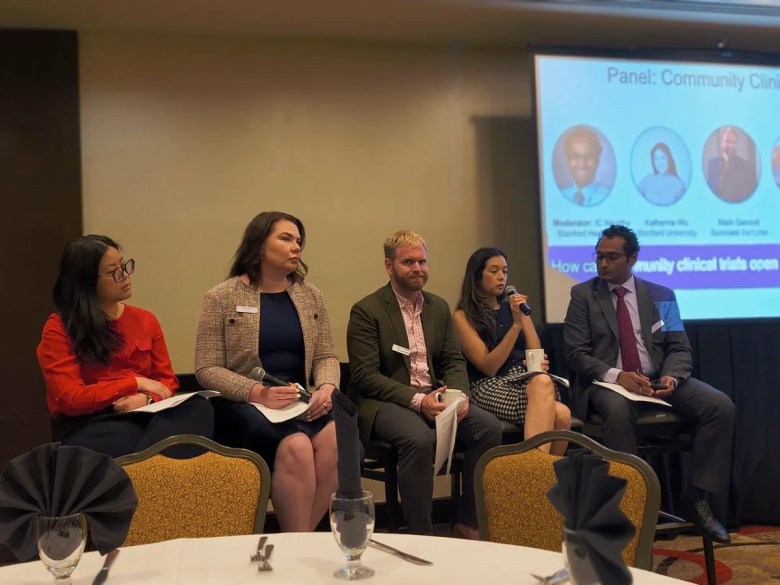
The conversation was moderated by Chiranjeevi “IC” Ikkurthy — IT director at Stanford Health Care Tri-Valley.
The featured panelists were Katherine Pangborn Wu, clinical research operations leader for Stanford Medicine; Mark Gannott, CFO of venture capitalist firm Suncoast Ventures and health economist; Genevieve LeMarchal, managing partner of Suncoast Ventures; and Estelle Giraud, the founder and CEO of Trellis Health — a generational health AI company building personal intelligence for family health, starting with pregnancy, postpartum and infant health at home.
“Every person on earth is either a woman or her child,” Giraud said during the talk, underscoring the value and importance of the topic.
A key thread in the conversation was whether community-based clinical trials could offer a more practical, capital-efficient path to scaling women’s health companies by generating earlier signals, reducing cost and bringing founders closer to real patient populations.
Other themes that came out of the discussion explored using community clinical trials as a capital strategy with early data designed to de-risk companies and demonstrate efficacy and health economics return on investment before larger, more expensive trials; how using existing data can accelerate proof by establishing early signals without starting from scratch; how product, patient feedback and real-world data evolve together and the use of unstructured data as a growing signal source as physician notes are one of the richest sources of clinical insight, increasingly usable through artificial intelligence.
Clinical insight is not just quantitative — it’s “the story,” reflected in patient experience and physician context, according to Gannott.
The latest gathering is part of an ongoing series by Startup Tri-Valley that aims to demonstrate the potential for the region to become a hub for women’s health innovation. The series was first announced during a similar event held last August that centered on investment opportunities in women’s health.
Source link