
Analysis
When the EU AI Omnibus proposals surfaced in late 2025, Europe’s tech startup ecosystem faced an immediate operational bottleneck: while the framework established necessary safety guardrails, SMEs were left with a stark commercial reality of the heavy financial and technical debt required to comply with “high-risk” classifications.
Read more: EU’s AI Omnibus signals shift from regulation to deployment
To prevent a compliance-driven drain of talent and capital, the European Commission is shifting from purely legislative oversight to direct market intervention. On April 21, the Commission unlocked €63.2 million under the Digital Europe Programme.
This capital injection is not a standard innovation grant. Rather, it is a strategic mechanism designed to lower entry barriers, subsidize regulatory friction, and build a localized data moat for European B2B startups before strict enforcement deadlines hit the market.
De-risking the compliance bottleneck
The most commercially significant portion of the package is the €8.5 million specifically reserved to engineer automated regulatory solutions. This capital will prove to be vital, as it enables lean teams to architect “compliant-by-design” systems without siphoning funds away from core technical R&D.
For founders racing toward the August 2 compliance deadline for high-risk categorization, the financial debt of legal audits and technical preparation can deplete a seed-stage runway. By underwriting tools that streamline these administrative hurdles, Brussels is attempting to mitigate the friction of its own oversight.
European Commission briefings regarding the Digital Omnibus updates suggest this funding framework is intended to establish a more “innovation-friendly” trajectory for the ecosystem. Authorities underscored that this capital deployment is intended to architect transparent governance structures and streamlined operational frameworks – providing emerging ventures with privileged entry into regulatory sandboxes and subsidized technical automation well ahead of the December 2, 2027 enforcement deadline for high-risk systems.
During a recent strategy session for the Apply AI initiative, the Commission maintained that digital oversight should steer rather than stifle progress. Policymakers argued that these targeted state injections allow regional players to maintain an “AI First” posture while offloading the high operational costs of managing systemic risks.
Architecting the industrial AI sovereign moat
Recognizing that European tech cannot challenge Silicon Valley or Asian giants on raw compute power or consumer-facing foundational models, this latest capital deployment signals a strategic pivot. Brussels is doubling down on industrial AI, targeting specialized B2B verticals like healthcare and agriculture, where the region maintains a distinct institutional data advantage.
The €63.2 million injection is architected around three critical commercial pillars designed to defend the market:
- €24 million for the European Health Data Space: This allocation serves as a foundational pillar for regional infrastructure, allowing health-tech founders to leverage a localized competitive moat. By providing privileged, secure access to expansive data repositories, Brussels is shielding domestic startups from the scale advantages of international rivals.
- €9 million for AI Medical Imaging: Investment focused on accelerating the commercialization of automated diagnostic tools. These funds transition cardiovascular and oncological screening solutions from experimental R&D phases into rigorous clinical validation environments.
- €12.5 million for Advanced Digital Skills: Capital deployment aimed at bridging the operational literacy gap. This strategic injection recognizes that B2B software cannot achieve market penetration if enterprise procurement officers and public stakeholders lack the technical proficiency to integrate these systems.
Grant friction vs. product speed
Although substantial state injections appear impressive on paper, the commercial reality for agile B2B players is the persistent friction of bureaucratic drag. Maneuvering through the intricate EU grant submission process frequently requires the very operational bandwidth that seed-stage founders are desperately trying to protect.
With the submission window set to expire on October 1, 2026, ecosystem players are navigating a narrow five-month window. Resource-constrained technical teams must now weigh the urgency of product iterations and capital raising against the administrative burden of recalibrating their strategic roadmaps to satisfy Brussels’s rigid eligibility criteria.
Francesco Bernabeu Fornara, founder and editor-in-chief of independent analysis publication Euro Prospects and research assistant at the Centre for European Policy Studies, noted that while SMEs typically embrace these capital reserves, the underlying system contains significant structural impediments.
“Companies love it when the EU opens such funding pools, especially small-to-medium-sized enterprises, since that is where the EU likes to put money,” Bernabeu Fornara explained to 150sec, adding that Brussels historically targets smaller companies to increase competition – even as policy conversations start shifting toward building massive homegrown European tech giants.
However, getting that capital into the hands of founders is rarely straightforward. “There has been a lot of criticism of the EU over its administrative burdens when it comes to industrial policy,” Bernabeu Fornara said, “but this also comes from the fact that administrative approvals also have to go through individual member states often.”
Asked whether the October deadline gives companies enough time to prepare, the researcher views the window as conditional. “Yes, I would say so, it depends on the details of the criteria for the funding application, though.”
The bottom line for European tech
The success of this €63.2 million deployment will not be measured by how fast the funds leave Brussels, but by how many startups use it to successfully cross the August compliance threshold.
For European founders, this funding represents a temporary capital buffer; those who secure a portion of this call before the October deadline can effectively offload their regulatory compliance costs onto the state, gaining a distinct runway advantage over non-EU competitors entering the European market.
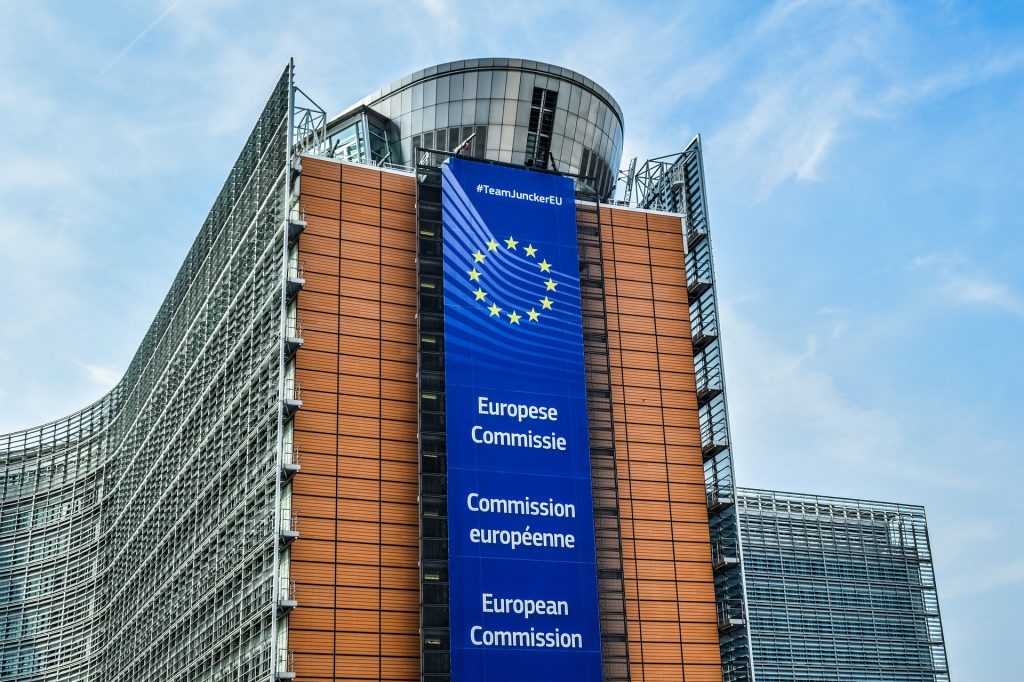
Featured image: Euroopa Komisjoni hoone Brüsselis
Author: dimitrisvetsikas1969
Via Wikimedia Commons
Creative Commons Licenses