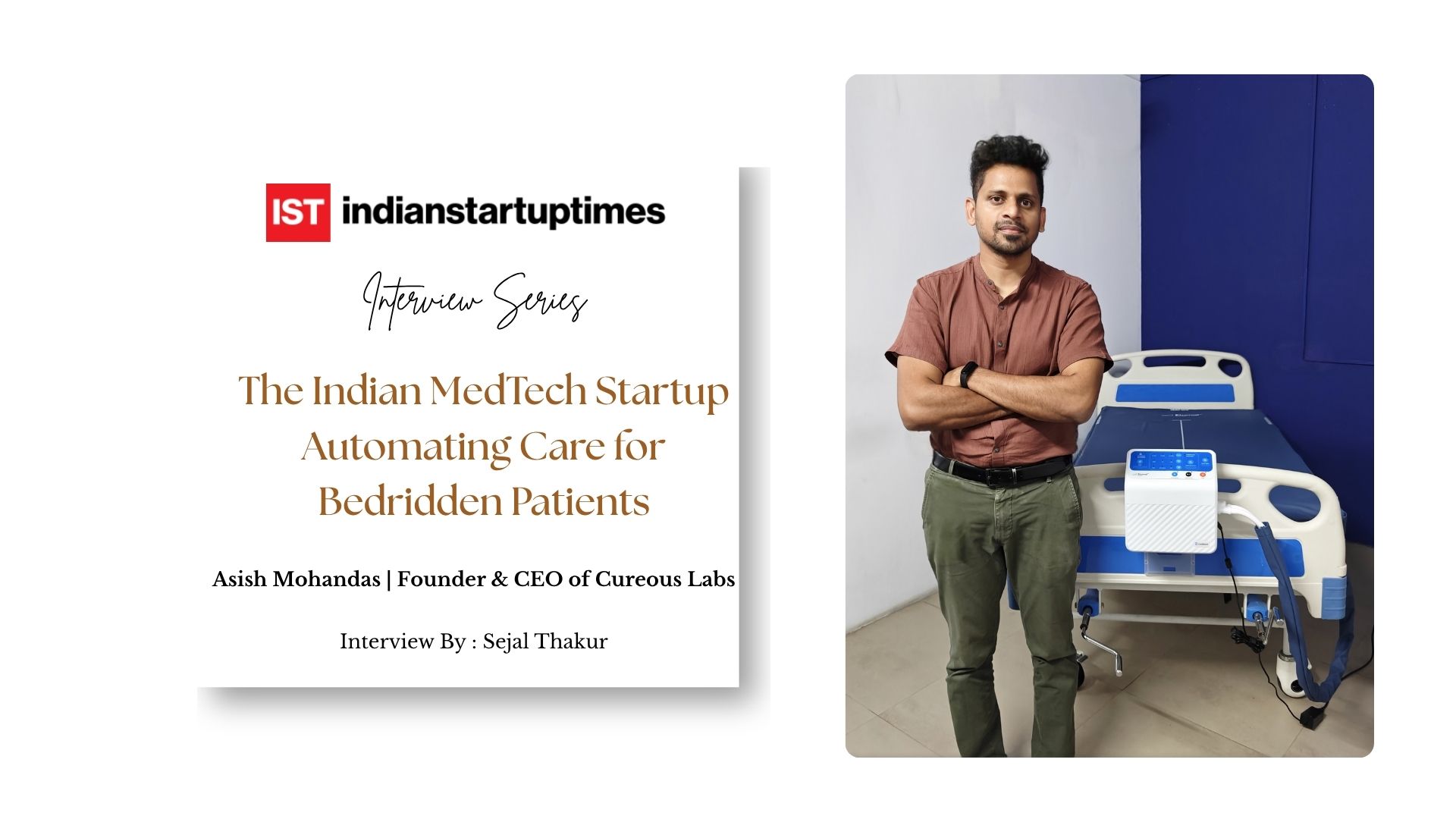
When a school project turned into a lifelong curiosity for making tangible things, Asish Mohandas followed the thread from mechanical engineering to a Masters of Design at IIT Kanpur—and eventually to medical devices. His startup, Cureous Labs, tackles stubborn clinical problems such as pressure injuries and patient transfer with human-centred design, rigorous testing and a practical bias toward deployment.
From thesis to therapy
Asish’s pivot to healthcare began during a thesis project that addressed patient transfer—work that later connected him with clinicians at PGI and shaped his approach to product design. A Biodesign fellowship and early grant funding gave him a runway to prototype solutions for clinical settings. “Curiosity is the starting point,” he says. “But design is the method to turn that curiosity into products that actually help people.”
Design ethos: jobs to be done, not flashy tech
Cureous Labs focuses on “jobs to be done”: identifying core clinical problems and building simple, reliable devices that solve them. The team prioritizes functionality and user needs over feature bloat. That led them to develop retrofittable systems like the Eturnal turning system—solutions that hospitals can adopt without overhauling existing infrastructure.
User‑centered iteration and rigorous testing
A hallmark of Cureous Labs is continuous user involvement. The company ran extensive testing—engaging over 300 volunteers during product development—and integrated clinician feedback at every stage. Asish stresses that device development in healthcare demands patience: sourcing components, meeting safety and regulatory standards, and assembling competent engineering teams are non‑negotiable but time‑consuming steps.
Grants, credibility and careful scaling
Cureous Labs’ early funding came from grants and awards, a deliberate choice that allowed the team to validate hypotheses and build working prototypes before taking on equity investors. This grant-first approach helped build credibility and reduced early commercial pressure. The company now delivers products across India and emphasizes quick resolution of issues—committing to on‑site installation, training and 24‑hour problem response to maintain trust with clinical customers.
Collaboration across disciplines
Asish highlights cross‑discipline collaboration as central to Cureous Labs’ culture: engineers working directly with clinicians and designers leads to better problem framing and more practical solutions. Face‑to‑face engagement with end users doesn’t just validate design; it shapes engineers’ understanding of constraints and priorities in clinical workflows.
From perfectionism to deployment
A leadership lesson Asish shares is the need to balance perfectionism with market realities. Early on he focused on idealizing products; over time he learned the value of shipping a solid, tested product and iterating with real users. Narrowing focus to a flagship product improved market performance and helped the team build operational maturity.
Geriatric care and the future roadmap
Looking ahead, Cureous Labs aims to become a reliable partner for geriatric care—targeting senior living centres, assisted‑living facilities and hospitals that need practical solutions for an ageing population. Asish sees AI, connected devices and digital healthcare as tools that can augment their offerings: smarter monitoring, predictive maintenance and better patient outcomes, while the core job—solving fundamental clinical problems—remains unchanged.
Why Cureous Labs matters?
In a sector where product failure can have serious consequences, Cureous Labs’ approach—human‑centred design, methodical testing, careful scaling and strong clinician partnerships—creates a replicable model for medical device innovation in India. By focusing on retrofit solutions and rigorous support, the startup helps institutions adopt technology without disruption.
Key takeaways
- Start with the job to be done; design simply and iteratively.
- Validate with grants and pilots before scaling with equity.
- Embed clinicians and end users in each design cycle.
- Priorities installation, training and fast issue resolution to build trust.
- Use AI and connectivity as enablers, not substitutes, for core clinical solutions.
Interview By : Sejal Thakur