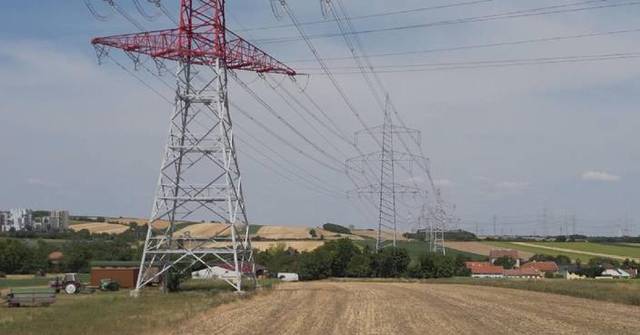
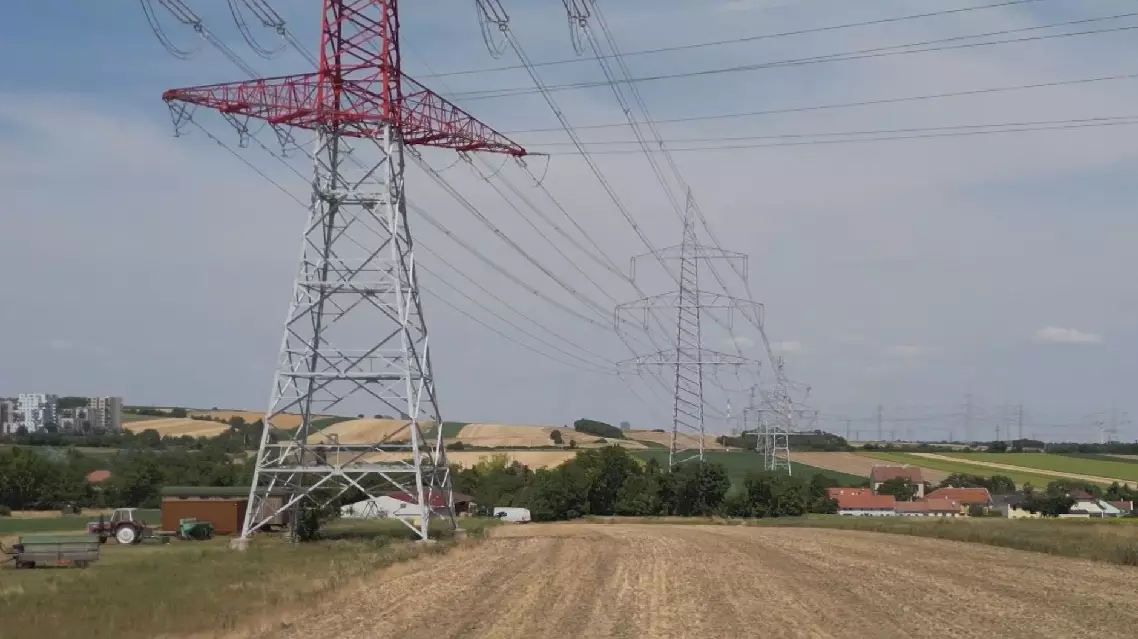

An Austrian-based tech startup has been utilizing AI to provide a smoother and more stable power supply, as renewable energy quickly becomes the preferred power source for nations.
As Europe increases its green energy capacity by installing wind turbines and solar panels, challenges have emerged due to the weather dependency of these sources. Even small fluctuations — a cloud blocking the sun or a brief period of too little wind — can destabilize power networks.
However, these problems can be mitigated with intelligent management. Clemens Wasner, founder of the AI Enlite, uses AI learning to stabilize power grids, and the system can react faster and evaluate more options than operators switching the grid manually.
“In case a blackout might happen, our solution can go 60 percent longer than, let’s say, normal manual switching,” said Wasner.
The AI agent can predict overloads and suggests the fastest way to restore balance. Wasner gave a demonstration from his computer desk.
“This part of the grid is overloaded, so it is telling you if you switch these three stations, the overload here and here will vanish. It’s a little bit like traffic routing,” he said.
So far, the company has worked with power grid operators in France and the Netherlands. Wasner said he hopes more countries will embrace his AI solution to strengthen the resilience of their electricity networks, noting that he learned much of his foundational knowledge from Chinese experts.
“I spent 10 years in Asia, a long time also in Beijing in China, and I saw how AI is picking up in China. So, when I returned to Austria in 2016, the idea was to create a company that is applying and rolling out AI to real-world use cases,” the tech-startup founder said.
Austrian startup leverages AI to stabilize green-energy power supply
Various regions across China have vied with one another in rolling out unique cultural tourism programs, including beautiful scenery, performances and folk events, to provide distinctive travel options for tourists during the current peak summer holiday season.
Lotus flowers covering 110,000 mu (about 7,333 hectares) in Guangchang County of east China’s Jiangxi Province have entered the peak bloom season recently, attracting visitors to wander through the sea of blossoms, snap photos and fully enjoy the vibrant summer scenery.
“It is breathtaking. I used to think lotus flowers only grow in ponds. This is the first time I have seen such a vast expanse of lotus fields,” said Gao Yujia, a tourist.
This year, local authorities have added activities such as traditional Chinese performances and displays of intangible cultural heritage to the flower scenery, allowing visitors to not only enjoy the lotus flowers but also experience the charm of traditional culture.
Since the start of the blooming season, major lotus flower viewing sites in the county have received an average of approximately 8,000 visits each day.
“We have seen a significant increase in tourists, especially on weekends, when rooms need to be booked two or three days in advance. Even nearby restaurants are doing much better business,” said Wu Aimin, manager of a local homestay.
In Hanshan County of east China’s Anhui Province, over 2,000 mu (about 133 hectares) of wild lotus flowers have reached full bloom. Local authorities have launched tourism activities featuring lotus appreciation, performances, and roadside stalls for shopping, attracting large numbers of visitors.
The Sumu Mountain in north China’s Inner Mongolia Autonomous Region has staged a mountain-opening ceremony, featuring folk performances including traditional dragon and lion dances, giving visitors a chance to escape the summer heat in fresh mountain air and take part in a variety of fun activities.
“Using this mountain-opening and blessing folk activity as a platform, we will explore the mountain’s forest ecology, traditional folk customs, local characteristics and food resources to create an immersive cultural tourism experience,” said An Feifei, general manager of a local tourism company.
Diverse leisure experiencing programs attract tourists in peak summer season
Source link