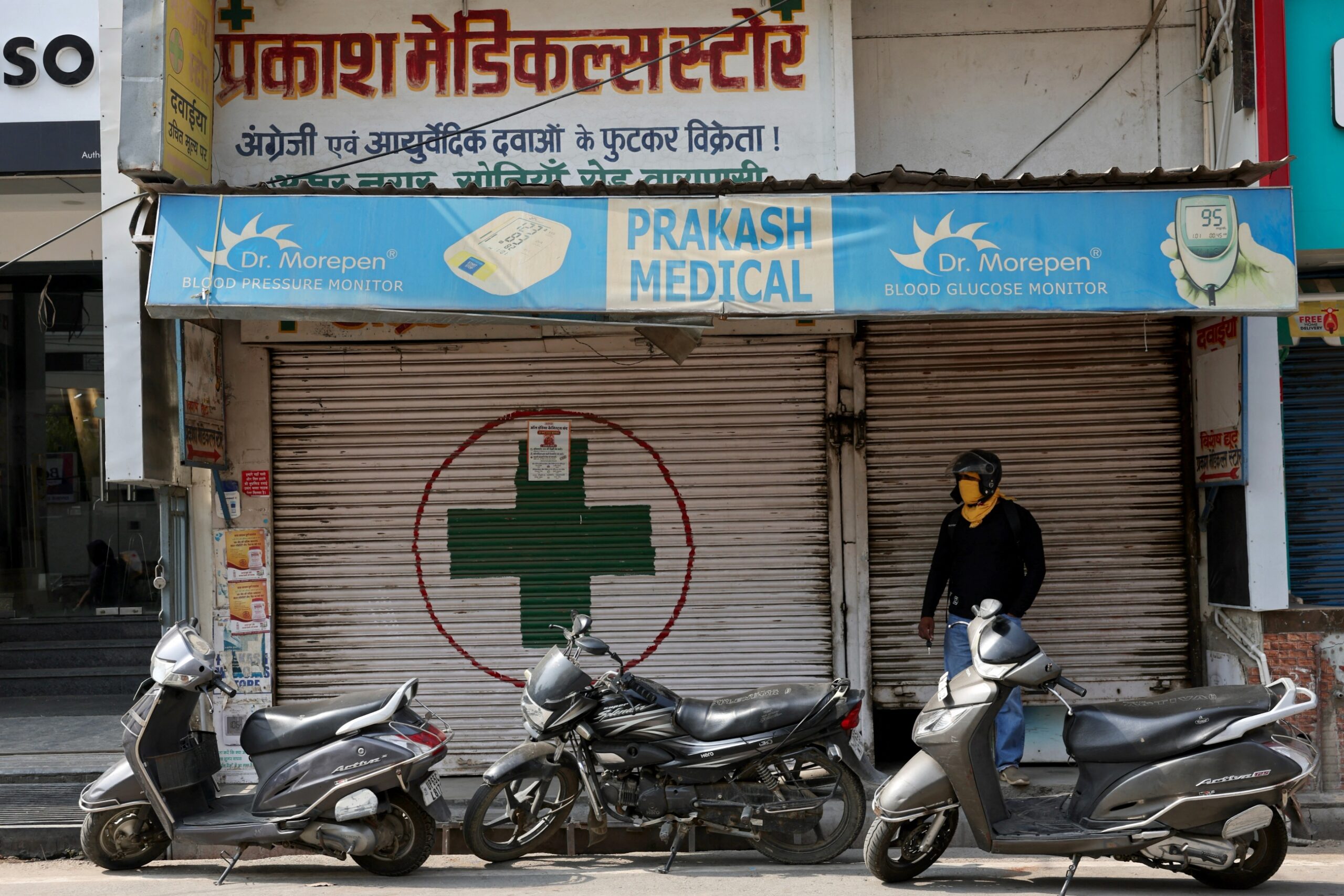
Walk into almost any neighborhood pharmacy in India and ask for a full prescription — one covering three or four medicines — and there is roughly a coin-flip chance you will leave empty-handed on at least one item. Traditional pharmacies typically stock around 5,000 medicines out of a market comprising more than 100,000 available SKUs, resulting in prescription fill rates of just 50 to 60% according to the Series A announcement. That gap — the difference between what patients need and what their nearest pharmacy can actually provide — is the problem that Plazza, a Bengaluru-based pharmacy quick-commerce startup, was built to close.
On July 20, 2026, Plazza announced a $15 million Series A funding round co-led by Accel, Elevation Capital, and Nexus Venture Partners, with participation from existing backers All In Capital and Better Capital. The capital will be used to expand Plazza’s network of technology-enabled neighborhood pharmacies beyond its current two-store presence in Bengaluru, deepen its AI-driven inventory platform, and build out operational infrastructure ahead of what the company describes as a broader city-by-city expansion over the next twelve months.
The round follows a $1.4 million seed investment closed in September 2025 and arrives as India’s quick-commerce sector enters what analysts at Bernstein have described as “another year of discovery, not profits” — a moment when the market’s long-term scale is no longer in question, but the path to unit-economic sustainability remains contested.
India’s Pharmacy Problem Is an Inventory Problem, Not a Delivery Problem
To understand Plazza’s investor pitch, it helps to understand the structural dysfunction it is targeting. India’s pharmaceutical market is projected at approximately $60 billion in 2026, yet the mechanics of buying medicines have remained largely unchanged for decades. The country has approximately 850,000 retail pharmacies, of which nearly 89% are small independent chemists.
These neighborhood chemists serve an essential social function — they are often the first point of healthcare contact for millions of Indians, including in areas with limited physician access — but their inventory model creates a systemic bottleneck. Small stores carry what moves fastest off their shelves. Slow-moving but medically important drugs, specialty medicines, and less-common formulations of common molecules rarely appear in their stockrooms. A patient with a complex or multi-drug prescription routinely visits two, three, or four chemists to assemble a complete set of medicines.
Plazza argues that neither traditional pharmacies nor existing e-pharmacy platforms have solved this problem: the former optimize for walk-in retail while the latter prioritize broad inventory over speed. Its model instead positions each store as a technology-enabled neighborhood fulfillment hub: AI-powered inventory intelligence that continuously learns local prescribing patterns, 40,000-plus SKUs per location, and delivery within 15 to 30 minutes.
“Medicine availability shouldn’t depend on luck,” said Aman Priyadarshi, Plazza’s founder and chief executive. “Patients shouldn’t have to visit multiple pharmacies or wait days for essential medicines simply because inventory is fragmented. We believe pharmacy retail needs to be rebuilt around technology, not shelves.”
Priyadarshi founded Plazza in 2024 after holding leadership roles at Zomato across India, Turkey, and the UAE, and then leading product at healthtech startup Kenko Health — a background that spans both the operational logistics of large-scale food delivery and the healthcare access challenges of digital health platforms.
How the AI Actually Works: Micro-Market Demand Signals
The phrase “AI-powered inventory intelligence” is easy to say and difficult to operationalize at the neighborhood level. The distinction between a grocery dark store and a pharmacy fulfillment hub matters here, and it is worth explaining in technical terms.
Grocery demand is predictable at city or zone level. The items people buy from a Blinkit or Zepto dark store — eggs, milk, chips, cooking oil — vary modestly by neighborhood, and a well-run grocery operation can serve a metro area with relatively consistent SKU coverage across its dark stores.
Pharmaceutical demand does not work this way. Which medicines sell fastest at a pharmacy in Koramangala depends on which specialists practice nearby, which hospital’s outpatient clinics are in the catchment area, what chronic disease burden the local population carries, and which drug companies’ field representatives have been active with local physicians. A neighborhood full of elderly diabetic patients drives demand for insulin, metformin, and cardiovascular medicines. A neighborhood near a pediatric hospital drives demand for antibiotics and antiparasitics. These signals are specific, local, and completely invisible to a grocery-trained demand model.
Plazza’s AI system ingests prescription transaction data from its licensed pharmacy network, learns which medicines are moving in which micro-markets, and continuously adjusts each store’s assortment accordingly. The practical output of this system is visible in a data point the company disclosed in its funding announcement: even between its two existing Bengaluru stores, only approximately 50% of top-selling medicines overlap. Each store has developed a distinct pharmaceutical demand profile tuned to the prescribing patterns of its surrounding neighborhood.
This is the technical argument for why horizontal quick-commerce platforms cannot simply replicate Plazza’s claimed fill rates by adding pharmacy to their grocery dark stores. Their demand signals are grocery-trained. Pharmaceutical demand requires a distinct data pipeline — one that starts with prescription flows through licensed pharmacies, not grocery purchase histories. A dark store that excels at predicting when to reorder tomatoes is not the same system as one that can anticipate micro-market demand for a specific formulation of a Schedule H antibiotic.
On the operational layer, Plazza operates through what it calls Lifestores: existing licensed pharmacies converted into Plazza-operated franchise outlets, with the company providing inventory management software, ERP tools, workforce support, and customer acquisition infrastructure. The Lifestore model serves two purposes simultaneously. First, it gives Plazza access to licensed pharmacist capacity, which is legally required for dispensing prescription drugs under India’s Drugs and Cosmetics Act, 1940 — a compliance pathway that horizontal platforms have struggled to build at scale. Second, it allows rapid expansion through conversion of existing pharmacy real estate rather than building net-new dark stores from scratch.
The company claims its AI system can convert a prescription into a shopping cart in 0.4 seconds, and targets 500 to 600 orders daily per Lifestore, according to Inc42’s January 2025 deep-dive.
Growth Metrics Signal Early Traction
Plazza launched its 24×7 platform out of a single Yemalur location in Bengaluru in November 2024 and has since expanded to two stores. The company says gross merchandise value grew approximately 27 times between June 2025 and March 2026 — though it is worth noting this is a company self-reported figure covering a nine-month window when the operation was scaling from a near-standing start, and has not been independently audited, per Business Standard’s reporting.
The repeat-customer metric is more analytically interesting. Plazza says repeat customers place orders with an average basket size approximately 30% higher than first-time buyers. In quick-commerce economics, this basket premium on repeat orders is the signal investors look for: it suggests that as customers integrate a platform into their healthcare routines, they consolidate more of their pharmacy spend there rather than treating it as a last-resort option.
For context on where India’s broader quick-commerce market stands: gross order value for the sector grew from approximately ₹30,000 crore in 2024 to ₹64,000 crore in 2025, and is projected to reach ₹2 lakh crore by 2028. Within that total, medicines remain a small segment — but the category is growing at roughly 1.6 times the rate of food on major horizontal platforms, according to logistics firm Shadowfax.
Why Investors With Competing Portfolio Stakes Backed This
The composition of the investor syndicate is notable, and each investor articulated a specific structural thesis.
Pratik Agarwal, partner at Accel, framed the investment around the structural constraints of the incumbent model: “offline pharmacy remains constrained by availability, speed, reliability, and cost, while urban consumers increasingly lack the time to interrupt busy workdays or depend on limited pharmacy hours.”
Chirag Chadha of Elevation Capital pointed to the operating model rather than the delivery promise: “what stood out to us about Plazza was not simply faster delivery but a fundamentally different operating model built around AI-driven inventory intelligence and neighbourhood-level demand.”
Anand Datta of Nexus Venture Partners drew a direct line from the fund’s prior bets — Rapido, Zepto, and Snabbit — to Plazza, framing pharmacy as the next vertical that the ultra-fast delivery model it has helped scale can enter.
It is worth noting that Nexus Venture Partners’ portfolio includes Zepto — a major horizontal quick-commerce platform that competes in the adjacent grocery delivery market and has begun expanding into pharmacy. Nexus backing Plazza, a pharmacy-vertical specialist, alongside its Zepto position suggests the fund sees horizontal and vertical pharmacy plays as complementary bets rather than substitutes.
Can Horizontal Platforms Simply Catch Up?
The competitive question most relevant to Plazza’s long-term positioning is whether Blinkit, Zepto, or Swiggy Instamart — each of which has begun adding pharmacy to its existing grocery quick-commerce operation — can replicate the prescription fill rates and inventory depth Plazza claims by applying the same dark-store expansion they have used for groceries.
The structural argument against easy replication is the one described in the technical section above: pharmacy-specific demand signals require pharmacy-specific data pipelines. But there is a second barrier that is legal rather than technical.
Under India’s Drugs and Cosmetics Act, 1940, selling prescription drugs in Schedule H, H1, and X categories requires a licensed pharmacist and maintained dispensing records, according to Spice Route Legal’s analysis. Horizontal platforms, including Blinkit and Zepto, have entered pharmacy primarily through over-the-counter products. A September 2025 analysis in Inc42 found that unlike dedicated players such as Plazza, these platforms are “still exploring the periphery” of the pharmacy supply chain and have not yet built deep supply-chain presence in the category.
The regulatory environment adds further complexity. India’s Draft E-Pharmacy Rules, first proposed in 2018, remain unfinalized as of July 2026 — leaving all digital pharmacy operations in a legal framework designed for brick-and-mortar chemists, as Mayank Soni’s December 2025 analysis details. In May 2026, approximately 12 lakh wholesale and retail pharmaceutical outlets joined a nationwide protest against what industry associations describe as unlicensed digital medicine sales. The Drugs Technical Advisory Board has also been considering rolling back pandemic-era doorstep delivery allowances that current platforms partly rely on, per the same analysis.
Plazza’s Lifestore model — working through existing licensed pharmacy outlets rather than aggregating deliveries from unlicensed dark stores — is designed precisely to operate within this framework. Whether it represents a defensible regulatory moat or simply early compliance that competitors will eventually replicate is a question the Indian pharmaceutical regulatory process will ultimately answer.
What the Capital Will Do
With the Series A secured, Plazza plans to launch approximately 8 to 10 new stores in Bengaluru within the next eight weeks, with a target of 20 operational stores in the city by the end of 2026, according to Startuppedia. The company intends to build out 70 to 80% coverage of Bengaluru’s urban neighborhoods before entering new cities, an approach that mirrors the density-first expansion strategy that has driven Blinkit toward cluster-level profitability in its established markets.
Longer term, Priyadarshi has expressed the ambition of reaching 3,000 stores over three to four years — a scale that would position Plazza among India’s largest organized pharmacy networks. That ambition depends on demonstrating that the Lifestore model can maintain its AI-driven assortment depth and compliance standards as it replicates across diverse urban markets.
The company also plans to move beyond pure medicine delivery: it has indicated plans to add lab tests and doctor consultations to the platform, positioning itself as a broader access point for primary healthcare rather than purely a pharmacy fulfillment operation.
What a Bengaluru User Actually Gets Today
Customers in the two current Plazza service areas in Bengaluru can order via the Plazza app or WhatsApp. Plazza stores function as local fulfillment centers for digital orders while also serving walk-in customers, per the company’s own account. The platform operates 24×7. Plazza claims delivery within 15 to 30 minutes for most medicines in its service area — that figure is a company-stated target, not an independently verified average, and performance in the eight to ten stores planned for the coming weeks will be the first real test of whether the model scales beyond its two-store proof of concept.
For a patient in Plazza’s current service area, the practical question is whether the AI-curated 40,000-SKU assortment actually contains the specific formulations of the less-common medicines on their prescription. Plazza’s claimed 95% fill rate suggests it does, with reliability that traditional chemists routinely fail to match — but that claim will face its most meaningful test as expansion takes the platform into neighborhoods whose prescribing patterns its AI has not yet learned.
Frequently Asked Questions
What is Plazza and how is it different from Tata 1mg or PharmEasy?
Plazza operates technology-enabled neighborhood pharmacy stores — called Lifestores — that function as both walk-in pharmacies and fulfillment hubs for rapid delivery. Unlike platform e-pharmacies such as Tata 1mg and PharmEasy, which primarily aggregate inventory across third-party pharmacy partners and optimize for breadth and next-day delivery, Plazza controls its own inventory using AI that learns the specific prescribing patterns of each neighborhood it operates in. The company claims this allows each store to achieve prescription fill rates exceeding 95% — compared to 50 to 60% at a typical neighborhood chemist — because the stock on the shelf reflects what local doctors actually prescribe, not what generic demand models predict.
Can Blinkit or Zepto add pharmacy and replicate what Plazza does?
The technical and regulatory barriers are more substantial than they might appear. Pharmacy demand is driven by micro-market prescribing patterns — which specialist practices are nearby, which hospitals are in the catchment area, what chronic diseases are prevalent in the neighborhood — and these signals require pharmacy-specific data pipelines, not the grocery purchase histories that horizontal quick-commerce AI systems are trained on. The regulatory layer adds a second constraint: prescription drugs in Schedule H, H1, and X categories require a licensed pharmacist and maintained dispensing records under India’s Drugs and Cosmetics Act, 1940. Horizontal platforms have primarily entered pharmacy through over-the-counter products and have not yet built the licensed pharmacy infrastructure required for full prescription dispensing at speed, according to a September 2025 Inc42 analysis.
How does AI inventory management for a pharmacy work at the neighborhood level?
Plazza’s system ingests prescription transaction data from its licensed pharmacy network and uses machine learning — including time-series forecasting and demand regression models — to predict which medicines will be needed in which quantities at each store location, as described in published research on AI-driven pharmacy inventory systems. The system continuously adjusts each store’s assortment as new prescription flows come in. The practical evidence that this is working as described: only about 50% of top-selling medicines overlap between Plazza’s two existing Bengaluru stores, according to the company, suggesting the AI is producing genuinely distinct assortments for each micro-market rather than defaulting to a single standardized SKU list.
Is India’s regulatory environment stable enough to build a digital pharmacy business on?
This is the open question for every player in India’s digital pharmacy space. Draft E-Pharmacy Rules proposed by the government in 2018 remain unfinalized as of July 2026, leaving digital pharmacy operations in regulatory ambiguity. The Drugs Technical Advisory Board has been considering rolling back pandemic-era doorstep delivery allowances. A nationwide protest in May 2026 brought approximately 12 lakh traditional chemists and drug distributors into the streets over what they describe as unlicensed digital medicine sales. Plazza’s Lifestore model — operating through licensed pharmacies rather than unlicensed aggregation — is designed to maintain compliance with the existing Drugs and Cosmetics Act, which is the safest structural position while regulatory clarity remains pending. Whether that compliance advantage persists through a future regulatory framework is an open question for all investors in the sector.