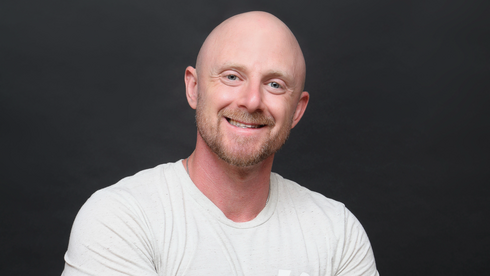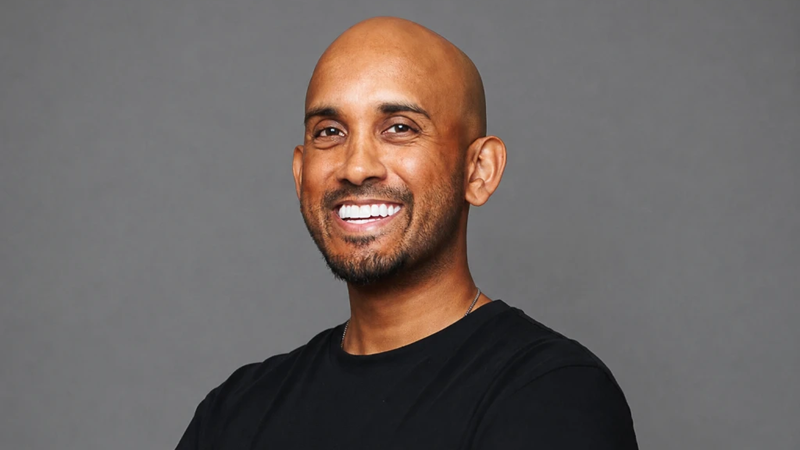
Maximum founder Randy Fernando
Miami, Fla.-based fintech startup Maximum has come out of stealth with $30 million in seed funding and an ambitious plan to replace the banking core systems that still run much of the U.S. industry.
The round was led by Palo Alto, Calif.-based CRV, with participation from Pear VC, Restive, Plug and Play Ventures and Anthemis. Founded by Randy Fernando, Maximum is pitching what it calls an AI-native operating system for banks, built to do more than store records and reconcile them overnight.
Fernando, previously the founder of Power Finance, said in a LinkedIn post he started the company “to build an intelligent bank operating system designed for a world where software doesn’t just record information but also understands and anticipates.”
Fernando argues that legacy cores were designed for batch processing, not for autonomous software agents that need continuous access to live data, the ability to act in real time and a full audit trail. In practice, that means a compliance agent scanning transactions for sanctions or suspicious activity is only as useful as the data it can see, and on older systems that information may lag by hours.
Deloitte Insights has made a similar point, saying fragmented data architectures and aging technology make it difficult for banks to support real-time, AI-native services. The broader industry is moving in the same direction: Backbase recently introduced an AI-native banking operating system aimed at unifying front-office operations, while Zafin founder Al Karim Somji has also backed an AI-native core banking push with OpenCoreOS.
Still, the market is dominated by a small group of incumbents. Federal Reserve Bank of Kansas City research shows that Fiserv, Jack Henry and FIS control the majority of U.S. bank core contracts, leaving customers with few easy escape routes. Migrating away from those systems can take 18 to 24 months, require substantial internal staffing and expose banks to contract penalties and operational risk.
Fernando, who previously founded and exited two fintech companies, said the shift to AI is forcing banks to rethink their infrastructure rather than simply add new software on top of old systems. “For decades, banks have attempted to serve the evolving needs of customers on infrastructure that was never designed for today’s world,” he said in the company’s announcement.
That thesis has attracted investors familiar with his prior work. Several of the backers in Maximum also supported Power Finance, Fernando’s earlier company, and CRV partner Caitlin Bolnick Rellas said the firm believes banking technology has reached a point where incremental upgrades are no longer enough.
Maximum has not publicly named customers or put a product into production yet. The company says the new capital will go toward product development, hiring and the first bank migrations, which it plans to tackle one institution at a time.
The challenge now is execution. Maximum’s pitch is that AI agents will only reach their full value on a real-time, unified banking core. The industry’s next test is whether banks are willing to pay to find out.
[Noah Wire Services helped in the writing of this article.]