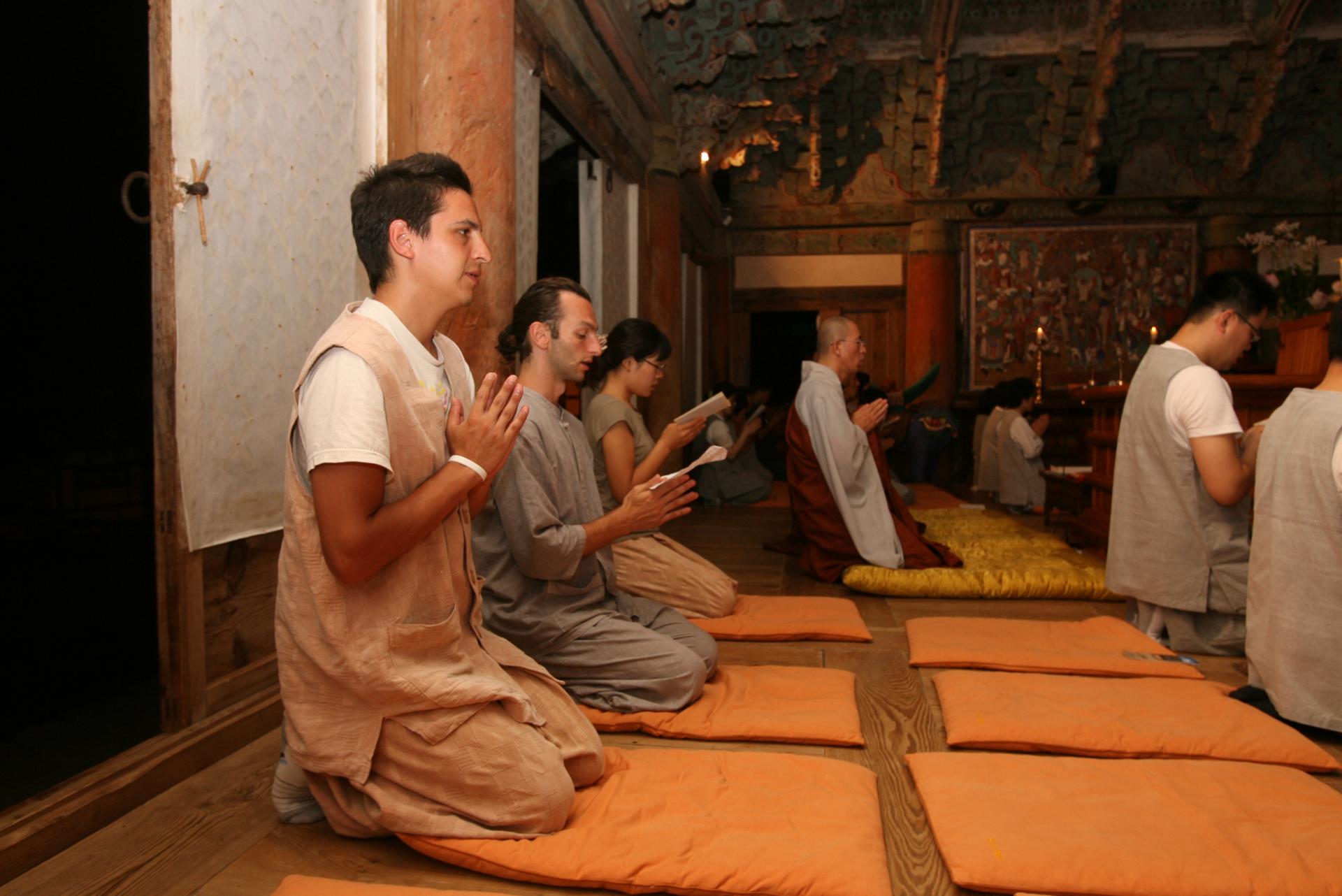
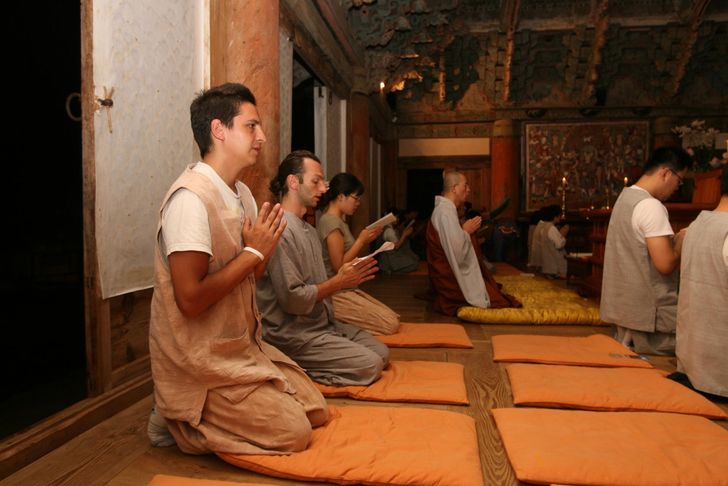
Foreign nationals sit in meditation during a templestay program at Mihwang Temple in Haenam, South Jeolla Province. Hankook Ilbo
In a leafy temple courtyard tucked away from the bustling avenues of Seoul, foreign travelers attempting to navigate the nuanced rituals of temple stays, meditation and traditional Eastern medicine may soon find an unlikely companion: generative artificial intelligence (AI).
Under a newly announced initiative from the Seoul Metropolitan Government, Korea is deploying cutting-edge digital technologies to modernize its oldest cultural assets. Officials said Tuesday that three tech startups have been selected to pair advanced AI, location-based audio guides and automated booking platforms with traditional Korean wellness and Buddhist heritage sites.
The municipal project addresses a persistent hurdle for overseas visitors exploring Korean cultural heritage: steep language barriers and complex reservation systems.
While K-pop and Korean cinema have drawn record numbers of international tourists to the capital, foreign visitors frequently report difficulty navigating off-the-beaten-path experiences like temple stays, herbal medicine consultations and monastic cuisine.
To bridge this gap, city authorities partnered with two major cultural institutions: the Jogye Order of Korean Buddhism, which is the country’s largest Buddhist sect, and the Seoul Korean Medicine Association. The initiative sparked significant interest, drawing 78 startup applicants competing for three partnership slots.
Among the winners, tech company Sweet & Data will roll out generative AI kiosks and media art solutions designed to deliver personalized, multilingual explanations of Buddhist rituals and temple architecture. Another startup, Tobelist, will implement GPS-enabled audio guide software that offers automated translations for temple stay participants.
Meanwhile, Trip Supporters will launch an online-to-offline platform catering to Eastern medicine. The system will use AI to calculate treatment cost estimates and streamline reservations for foreign patients seeking traditional Korean health therapies.
The trial reflects a broader strategic pivot by municipal officials.
Last year, the city sponsored similar partnerships with corporate giants like CJ CGV to launch luggage delivery services and cosmetic tour guides. The success of those programs convinced planners to apply tech solutions to historic and spiritual tourism assets.
“By combining our unique heritage assets like temples and Eastern medicine with startup technology, we expect to offer foreign tourists a differentiated experience found only in Seoul,” said Cho Sung-ho, director of the city’s Tourism and Sports Bureau.
Field testing will begin in October at select sites across the capital, backed by 100 million won ($75,000) in municipal funding along with business development consulting and marketing assistance. City officials plan to review progress during an interim assessment in late October, with final performance evaluations scheduled for late November before expanding the services commercially.
This article was published with the assistance of generative AI and edited by The Korea Times.