US President Donald Trump has ordered executive branch departments and agencies to use “Super Intelligence” and “SI” in place of “Artificial Intelligence” and “AI”, as the White House pushes a new name for the technology alongside a voluntary safety agreement with six leading tech companies.
An executive order signed on September 29 directs agencies to use the new terminology in official correspondence, public communications, websites, reports, policy documents, and other non-statutory material. The order goes further by stating that the administration will, where permitted by law, no longer acknowledge the terms “Artificial Intelligence” and “AI” in applicable settings.
The change reflects Trump’s argument that the word “artificial” makes the technology sound less significant or even “fake”. He had previously announced the planned change during an address to the UN General Assembly, saying “Super Intelligence” was a more accurate description. The State Department subsequently instructed diplomats working with international organisations to adopt “SI” in their documents, positions, remarks, and press material.
The terminology is notable because “superintelligence” already has a more specific meaning in the technology industry, where it generally describes a hypothetical AI system whose intellectual capabilities exceed those of humans.
The White House order initially avoids that distinction. For legal purposes, it says “Super Intelligence” and “SI” will refer to technologies already covered by the existing statutory definition of artificial intelligence. The president’s science and technology adviser has been ordered to propose a federal definition of Super Intelligence within 60 days.
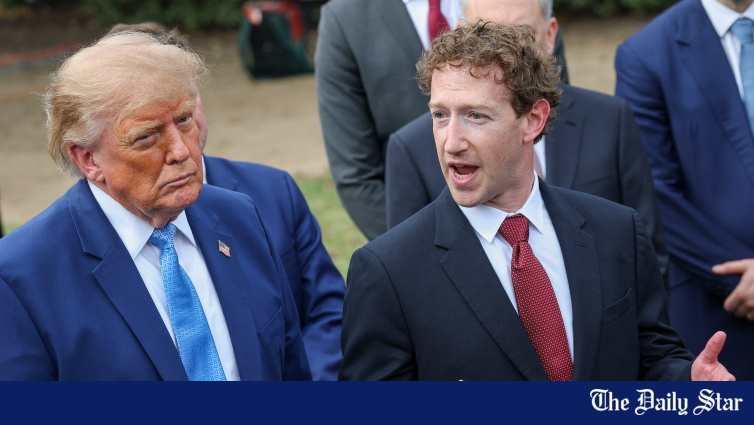
The naming change came as Trump and executives from Anthropic, Google, Meta, Nvidia, OpenAI, and xAI signed what the administration calls the White House Accord on Super Intelligence.
The agreement establishes four layers of voluntary oversight intended to address risks from increasingly powerful systems. Companies are expected to maintain internal safety controls, establish teams to oversee those controls, work with independent external auditors, and create independent committees at board level to review the findings.
The accord was signed by Trump, Anthropic chief executive Dario Amodei, Google chief executive Sundar Pichai, Meta chief executive Mark Zuckerberg, OpenAI president Greg Brockman, Nvidia chief executive Jensen Huang, and Elon Musk, founder of xAI.
The agreement is voluntary rather than legally binding and sets out no penalties for companies that fail to follow it. It also does not require companies to make their audit findings public or give the federal government a direct enforcement role. Trump described the commitments as “morally binding” and emphasised what he called the importance of industry self-policing.
The accord does, however, leave open the possibility that some of its provisions could eventually be incorporated into legislation or regulation.
The simultaneous announcement of the accord and the executive order means the administration is doing more than establishing a voluntary framework for technology companies. It is also attempting to change the language the US government uses to describe the technology itself.
For now, the change applies primarily to executive branch terminology rather than changing the meaning of AI throughout US law. Existing regulations, presidential actions, contracts, grants, and historical documents do not have to be rewritten under the order.