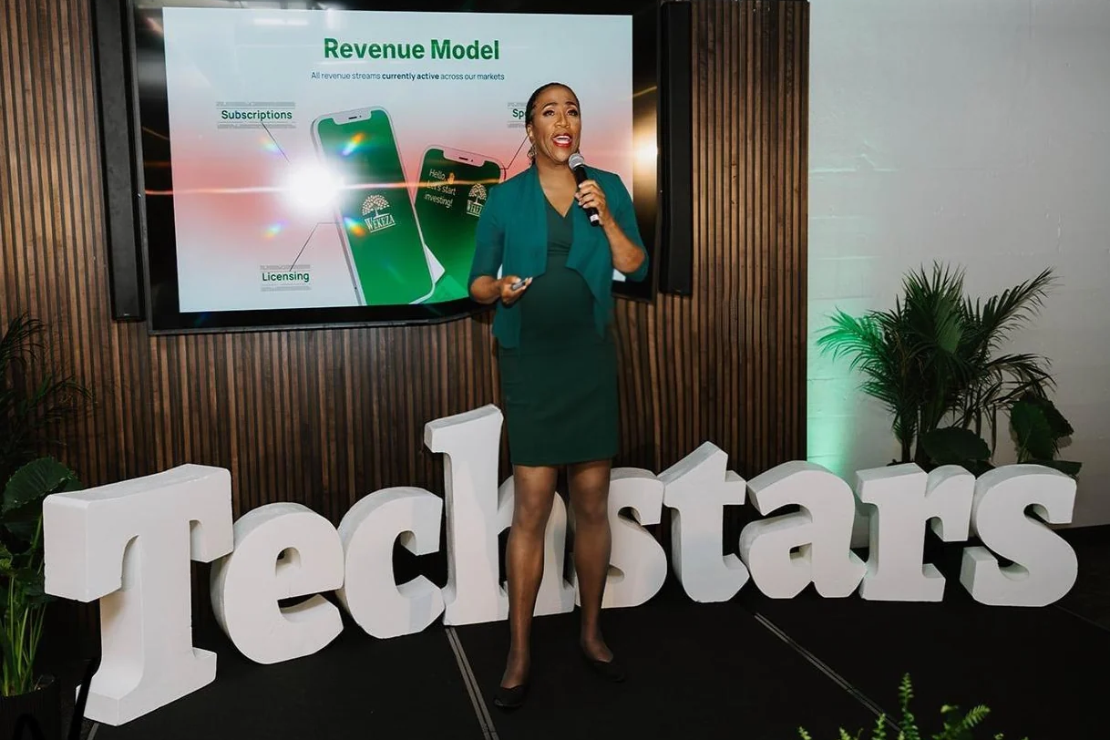
Sabrina Lamb is the Founder & CEO of Wekeza, a multilingual investing app built for anyone locked out of financial security because of language, culture, gender, or economic status. A 20-year entrepreneur and NAACP Image Award–nominated author, Sabrina previously built WorldofMoney.org, educating 15,000+ youth and families globally. She has testified before the U.S. Congress on financial inclusion, contributed to Ghana’s Ministry of Finance Digital Financial Services Policy, and helmed the NASDAQ Opening Bell. Wekeza is Techstars-backed (Build in Tulsa, Spring 2025) and has been recognized by Motley Fool as “Best Overall Financial Literacy App.” Sabrina builds for the 1.4 billion people in the African diaspora and every first-generation investor who has been told wealth is not for them.
I’ll remember it like it was yesterday. I came to Wekeza as I founded an organization, a nonprofit called World of Money, the leading provider of immersive financial education for children ages seven to 18 here in the United States as well as in African countries. And so, traveling around the globe, meeting with regulators and students and teachers and teaching 120 classroom hours annually here in the United States, I was hearing, okay, we have all the education; now what do we do next? And so when I was doing a keynote in Nairobi and then teaching briefly at the University of Nairobi, they were saying, what were the barriers to access to be able to invest? Here in the West, we understand we can just download an app, and then everything is fine, but the barriers were our language and culture and pricing and gender. Wekeza was founded on the principle of moving those World of Money students to now having an app to be able to invest in, not only here in the United States, but across different African countries. They have a means by which the first financial behavior they do or perform when they download the app is to choose the language they want to navigate it. And so we support eight languages.
You entered Techstars with a bold vision for Wekeza. What changed most during the program? Your company, your leadership style, or the size of your ambition?
What changed most was the doubling down on community, always doing the community work through the nonprofit and making sure that was established and that the foundation of that continued during Techstars Tulsa. So what changed was just fortifying and making sure that no matter where Wekeza goes, there’s a community connection and not just extract, but to give. And aligned with Techstars’ motto to Give First.
What I also learned through the Techstars Accelerator, you can build and build until you’re blue in the face and not having consulted with anybody whether what you’re building is with your community, with your customer, as opposed to for them. And so people understand and almost reject it if you built this outside of them being central, being the hero.
Whatever you do, have your community be your resource. Because sometimes we’re building, we think, oh my God, this is a great idea. But the community is saying, “That’s not really a priority for me.” And so by making your community and those people around you, the heroes in your company, they can provide you with a treasure trove of information.
Going into Techstars, tell us a little bit about that experience and what Techstars helped you achieve.
In our particular accelerator, we have all these other founders, and each of you is building. But think about asking the other founders in your cohort: how can we partner together? Maybe you’re in this lane, and I’m in this lane, but sometimes we may complement each other, and then it may save us money, and we really don’t have to raise because you’re doing this and I’m doing that. And there are some resources that we can both benefit from. Sometimes your answer might be in your cohort, or it might be in the Techstars international alumni network. Think about reaching out and exploring those because sometimes building alone can be challenging, but the answers may be right around the next cubicle.
What did the early stages of your company look like?
Ugly. The early stages of Wekeza were ugly. I mean, I think about them, I’m sure founders can relate, that when you have this idea, something that’s driving you, that I have to solve for this, is that when you share the idea, number one, people are looking at you like you have four heads.
Was there ever a moment where you almost lost faith? What did you do to change that?
I’ve never said or even considered giving up. I know why I live. And so, just dovetailing and building on my nonprofit work, Wekeza is that next step in terms of making the impact that I’m determined to make in this world: to enable others to create financial security, no matter language, gender, culture, or economic status. Because I think about the woman who right now is in Accra, Ghana, who may be returning home after selling fruit, with a basket of fruit on her head. I think about her all the time. There should be no separation, no daylight between giving her opportunities to build for herself as the teacher or the professor in Atlanta. And so I have never thought of giving up. Others have suggested that “Sabrina, this is a wacky idea,” or whatever, but you never give others permission to validate your vision.
What is something you want others to know about your story?
Sometimes we don’t give ourselves grace. When we’re building and we’re seeking validation and we’re seeking resources, sometimes we can pretend is that, oh, it’s just easy. No, it’s not, we understand, and I’m sure other founders understand that this journey is not easy, but things will shift for you when you determine that you will succeed, no matter who doesn’t return your call, no matter who doesn’t invest in what you’re doing, no matter what, no matter what, no matter what.