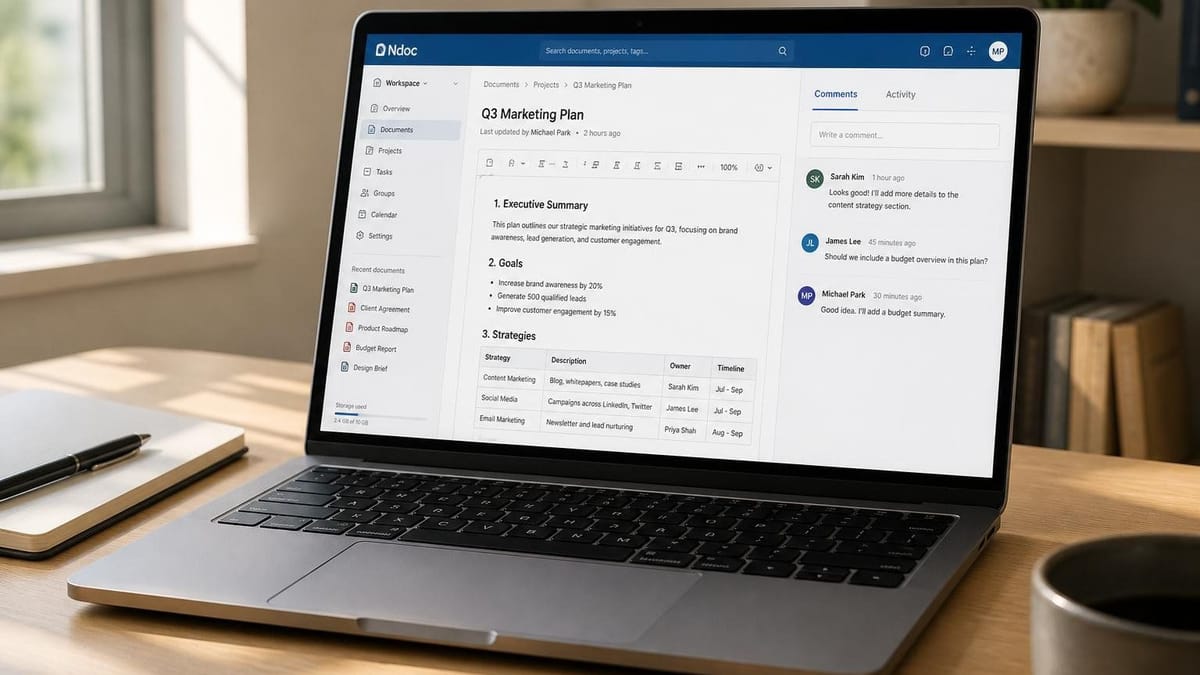
Meta is losing one of its AI evaluation leaders. Rohit Patel, who spent eight years directing AI evaluations and reinforcement learning work at the social media giant, is departing to launch Ndoc, a startup aiming squarely at Microsoft Office and Google Workspace, TechCrunch has exclusively learned. The move signals growing confidence among AI veterans that they can leverage their experience to disrupt established enterprise software markets, even as Meta pours billions into AI infrastructure.
Meta just lost a key AI architect to the startup world. Rohit Patel, who directed AI evaluations and reinforcement learning at Meta for eight years, is leaving to launch Ndoc, a productivity startup that plans to take on Microsoft Office and Google Workspace, according to an exclusive report from TechCrunch.
The timing is striking. Meta just announced a $95 billion stock sale to fund its AI supercomputer ambitions and recently crushed Q3 earnings while signaling even heavier AI investments ahead. Yet Patel is walking away from one of the industry’s most aggressive AI buildouts to bet he can disrupt the $50 billion-plus productivity software market that Microsoft and Google have dominated for years.
Patel’s departure from Meta comes as the company reshuffles its AI priorities. During his tenure, he worked on critical AI evaluation frameworks and reinforcement learning systems that helped Meta compete with rivals like OpenAI and Anthropic. His work touched everything from content moderation algorithms to the recommendation engines that power Facebook and Instagram feeds.
But the productivity software space is notoriously difficult to crack. Microsoft Office has been the gold standard for decades, while Google Workspace captured the cloud-native market with aggressive pricing and seamless collaboration tools. Challengers like Notion, Airtable, and Coda have carved out niches but haven’t dented the duopoly’s dominance.
What Patel likely sees is an opening created by AI. The productivity software giants are racing to embed AI assistants into their suites – Microsoft with Copilot, Google with Duet AI – but they’re constrained by legacy architectures and enterprise customer bases that resist rapid change. A startup built AI-first from the ground up could potentially leapfrog them, especially if it can deliver genuinely useful automation rather than glorified autocomplete.
The broader context matters too. Microsoft just offered voluntary buyouts to 60,000 workers as it pivots toward AI, while Google’s AI search overhaul is reshaping how people access information. Both companies are vulnerable to disruption even as they appear dominant. Their productivity suites generate massive revenue but haven’t fundamentally changed in years.
Ndoc’s strategy remains unclear – the startup hasn’t publicly disclosed funding, team size, or product details. But Patel’s pedigree suggests he’s not building another note-taking app or project management tool. His background in reinforcement learning and AI evaluation hints at something more ambitious: productivity software that learns from user behavior and automates workflows in ways current tools can’t.
The competitive landscape is brutal. Enterprise software sales cycles are long, switching costs are high, and IT departments are conservative. Microsoft Office has over 345 million paid subscribers, while Google Workspace serves more than 9 million paying businesses. Breaking into that market requires either a radically better product or a new category entirely.
Yet AI veterans keep making this bet. Anthropic launched Claude Duet to automate professional workflows, while dozens of AI-powered productivity startups raised funding this year. They’re all betting the same thing: that AI enables a fundamental rethink of how knowledge work gets done, and that incumbents will be too slow to adapt.
Patel’s departure also highlights Meta’s talent retention challenge. Despite creating a new share class to fund AI investments and posting strong earnings, the company is losing experienced AI leaders to startups. That brain drain could slow Meta’s AI ambitions even as it pours billions into infrastructure.
For now, Ndoc remains a mystery. But Patel’s willingness to leave Meta’s well-funded AI labs to challenge Microsoft and Google suggests he sees something the rest of us don’t – or at least believes he can build it before the giants wake up.
Patel’s leap from Meta to Ndoc encapsulates the current moment in enterprise AI. Experienced practitioners are leaving Big Tech’s resource-rich labs to build focused products, betting they can move faster than incumbents weighed down by legacy code and cautious enterprise customers. Whether Ndoc can actually crack the productivity software duopoly remains to be seen, but the fact that a veteran AI director is willing to try signals just how much opportunity builders see in applying AI to everyday work. The next year will reveal whether that confidence is justified or if Microsoft and Google’s moats are deeper than they appear.
