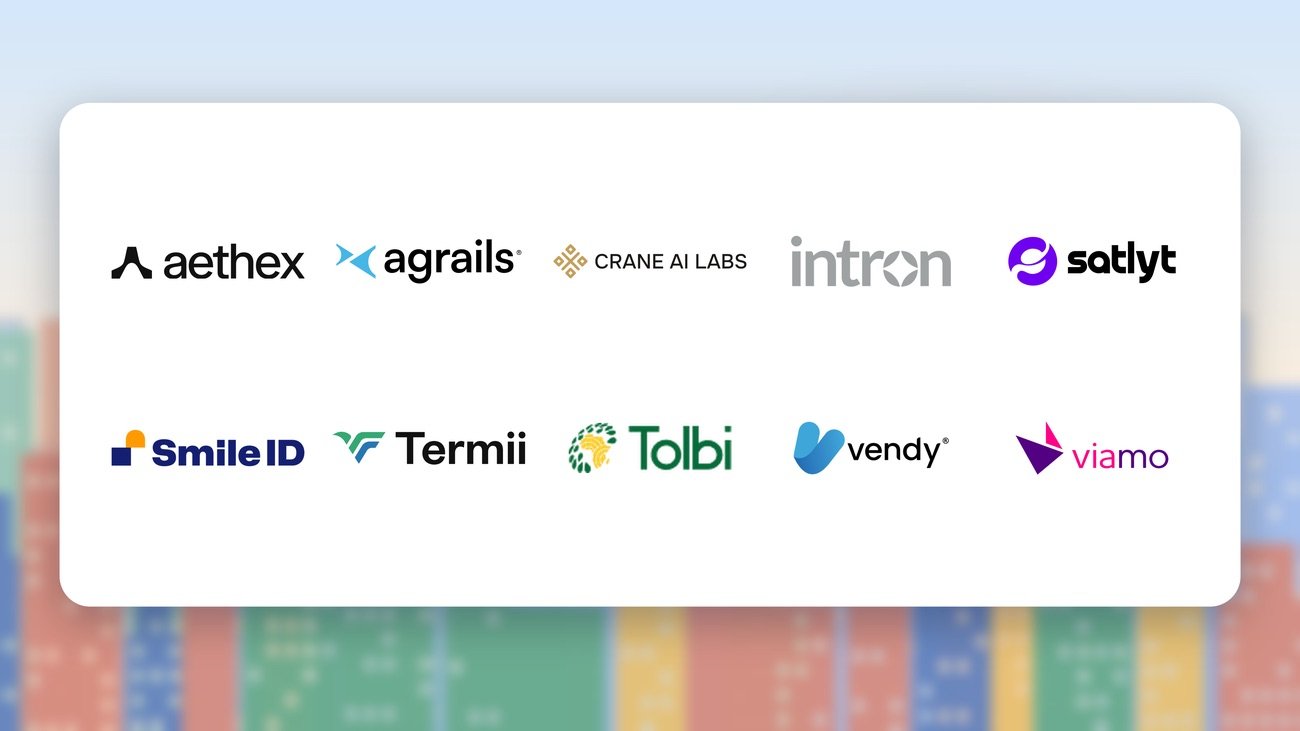
Google has named the 10 startups in the first cohort of the Google Africa Applied AI Lab, a programme that pairs African founders with Google’s engineers and researchers to build products on its AI models. It announced the list on 11th November 2026, and on Google’s own count the 10 were picked from thousands of entries from more than 45 African countries. Satlyt, a startup whose software lets satellites process their own data in orbit, is the only one listed as Kenyan.
The Lab is run by the Google AI Futures Fund, the Google fund that invests in AI startups, together with Google Research. Its base is the Accra AI Community Centre in Ghana, and that’s where the cohort will meet in December for a demo day, an event where each startup shows investors what it has built.
So what does a startup walk away with? Going by Google’s own programme page, it’s mostly access. Each team gets models from Google DeepMind, such as Gemini, Gemma and Veo, before they’re released to everyone else, plus hands-on technical mentorship and help taking the product to market. Money is a maybe. The page says some teams “may also be eligible for funding” from the AI Futures Fund or from the four venture capital firms partnering on the Lab: 4DX Ventures, Norrsken22, Novastar Ventures and Ventures Platform. A startup doesn’t give up any shares just by taking part, though Google says the fund or the VCs may approach it with investment offers.
Google asks for two things in return. Each startup has to use Google’s AI “in some material way”, and it has to show up in person in Accra for the demo day. It can still use other companies’ models alongside Google’s.

The 10 startups
| Startup | Listed as | What it does |
|---|---|---|
| AethexAI | Pan-African | AI voice agents for banks, telecoms providers and customer support centres |
| Agrails | Pan-African | AI-powered insurance infrastructure for farmers, gig workers and small borrowers |
| Crane AI Labs | Uganda | Offline AI tools that run on affordable phones, for health workers and schools |
| Intron | Nigeria | Speech recognition that understands African accents and speech that switches between languages |
| Satlyt | Kenya | Software that turns satellites into connected computers so data can be processed in orbit |
| Smile ID | Pan-African | Uses computer vision to verify identity when financial services sign up customers |
| Termii | Nigeria | Customer verification, messaging and alerts for financial services |
| Tolbi | Senegal | Satellite imagery plus voice guidance to help smallholder farmers improve their yields |
| Vendy | Nigeria | Lets businesses run a shop and take payments inside WhatsApp |
| Viamo | Pan-African | Generative AI over ordinary phone calls in local languages, for people without smartphones |
Satlyt is a name we know. Last month we covered its USD 8 million seed round, about KES 1.04 billion. Rama Afullo, a Kenyan-American engineer, started it in 2024, and its Africa headquarters is in Nairobi. Satlyt doesn’t own any satellites. Its software runs on computers other companies have already put in orbit, so a satellite can send down an answer instead of every raw file it collected. It has also built on Google’s models before: in March it ran a troubleshooting agent based on Gemma, Google’s small open AI model, on a Momentus spacecraft. The bigger idea in its pitch is linking satellites from different owners so they share heavy computing work the way servers in a data centre do, and in October Satlyt said it hadn’t yet shown that in orbit.
Termii has been through Google’s hands too. It was one of the 15 startups that graduated from Class 10 of the Google for Startups Accelerator Africa at a demo day in Nairobi in June.
Smile ID, one of the pan-African names, already works with Kenyan IDs. It verifies who you are when you sign up with a financial service, and its Kenya page says it can check against IPRS, the government’s population register, as well as eCitizen and the Business Registration Service.
What Google hasn’t said
Start with the dates. When applications opened on 1st July, the programme page said the work with Google would run from mid-September to early December, and that selected teams would hear from September. The 11th November announcement says the teams will work with Google’s engineers, research scientists and product leaders “over the coming weeks”, with the demo day in December. Google doesn’t say when each team’s work started. It also doesn’t say how many of the 10 it expects to fund, how much a cheque would be, or whether the Lab will take a second cohort.
That missing money detail matters, because Google isn’t the only AI company courting young startups. In October we wrote about Anthropic’s Claude Startups programme, which gives young companies a free year of Claude Team and USD 1,000, or about KES 130,000, in API credits. Google’s page puts no number on what a team gets. What it gives is time with its own engineers and models before they go public. In exchange, Google gets African products built on Gemini and Gemma, since every team has to use its AI, and its fund gets a first look at companies it might back.
Satlyt goes into that demo day about two months after raising its seed round, with the multi-satellite part of its plan still to prove. Whether it, or any of the other nine, leaves Accra with money is up to the AI Futures Fund and the four VCs. We think how many of them do will tell African founders more about whether the Lab is worth their time than the early model access will.