Building SportSkill to Address a Gap in Sports Training
Sports talent can be found everywhere, but access to quality coaching, performance analysis and the right development opportunities is not always equal. For many athletes, especially those from smaller cities and underfunded institutions, finding the right guidance can be a major challenge.
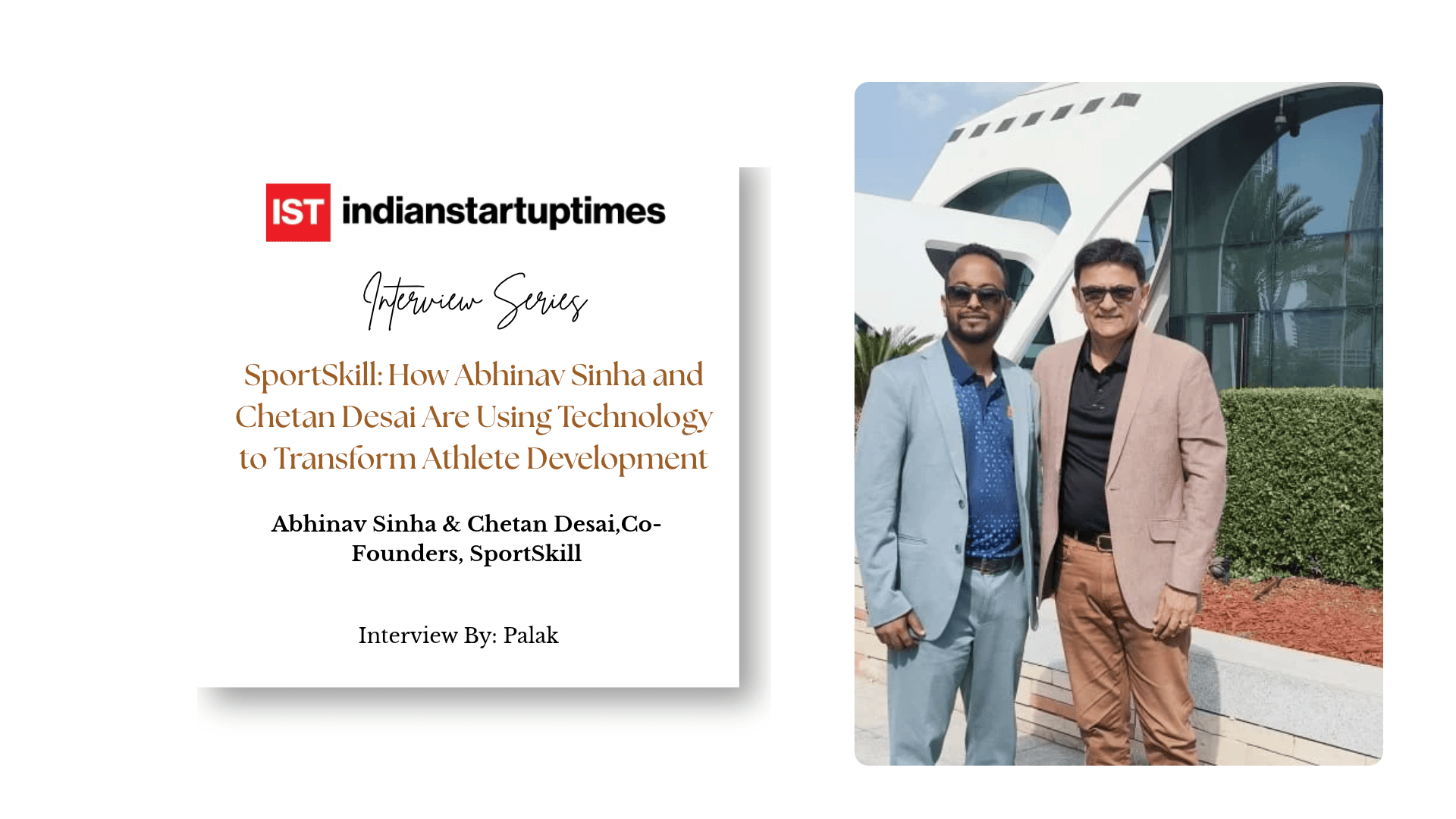
This was the gap that inspired Abhinav Sinha and Chetan Desai to build SportSkill, a sports technology platform founded in 2021. With Abhinav’s experience as an international squash player and coach and Chetan’s background in tennis, the founders shared a common understanding of the challenges athletes face across different sports.
Their conversations went beyond individual games and focused on the wider sports and fitness ecosystem. They recognised that while technology was increasingly being used for video analysis, athlete assessment and talent scouting globally, its adoption in India remained limited.
Coaches often struggled to maintain detailed records of every athlete, parents wanted clearer updates on their children’s progress, and players needed a better understanding of their strengths, weaknesses and development goals.
SportSkill was created to bring these stakeholders together through technology and make sports training more organised, accessible and data-driven.
Making Sports Technology Accessible to Every Athlete
SportSkill aims to support people at different stages of their sporting journey, from beginners and recreational players to competitive athletes and professional coaches.
The platform allows athletes to upload videos of their training and sporting performance, receive feedback and connect with coaches beyond their local area. It also supports written comments and video-based analysis, helping coaches and athletes maintain a structured record of training and progress.
The founders believe that sports development becomes more effective when information is organised and accessible. A coach working with 50 or 100 athletes may find it difficult to remember every player’s performance, previous feedback and improvement areas.
SportSkill aims to simplify this process by bringing athlete information together in one place. Coaches can review earlier feedback, monitor progress over time and identify areas that may require attention.
The platform also improves visibility for parents and athletes. Parents can better understand their children’s development, while athletes can access their training records and work towards clearer goals.
As the founders explained, the idea is to make technology an enabler for the entire sports ecosystem rather than a tool limited to professional players.
Connecting Athletes With Coaches Beyond Geographical Boundaries
One of SportSkill’s key objectives is to reduce the geographical limitations of traditional coaching.
In a conventional setup, athletes generally train with coaches available in their city or within travelling distance. This can limit access to specialised expertise, particularly for players living in smaller towns.
SportSkill aims to change this by allowing athletes to share their videos with coaches in other cities and countries. A player in Patna, for example, can seek guidance from a coach in Australia, while an athlete in Gurgaon can connect with a specialist based in Pune.
This approach also creates new opportunities for coaches. Experienced professionals can expand their reach, provide online guidance and monetise their expertise without being restricted to a single academy or location.
The founders compare this model to online education, where digital platforms have enabled teachers to reach students across geographical boundaries.
SportSkill also offers a business-to-business (B2B) solution for schools, academies, physical education teachers and sports institutions. These organisations can use the platform to organise athlete information and improve the way they manage training and performance records.
With the introduction of its business-to-consumer (B2C) offering, SportSkill has also opened its services to individual users who want to improve their fitness or sporting skills.
Using AI and Data to Improve Training
SportSkill is gradually introducing intelligent features to make sports technology more useful for athletes and coaches.
One of its features allows users to upload fitness videos and receive AI-generated feedback. Athletes can use this information to understand aspects of their performance and identify areas for improvement.
The platform combines video-based information with written comments, giving coaches different ways to record observations and communicate with players.
According to the founders, the real value of sports technology lies not simply in collecting data but in organising and processing it in a way that supports better decisions.
By maintaining athlete profiles and performance information, SportSkill aims to make it easier for coaches to review progress and provide more structured guidance.
The founders also highlighted the development of new technology tools, including features inspired by different coaching styles and coaching avatars. These capabilities are still being developed and could become part of the company’s future differentiation.
For SportSkill, technology is intended to support a coach’s expertise and judgement, not replace it.
Bringing Grassroots Athletes Into the Sports Ecosystem
Grassroots development remains central to SportSkill’s vision. The founders believe that talented athletes often miss opportunities because they lack access to experienced coaches, suitable facilities or structured performance assessment.
Chetan Desai shared the example of a young squash player from Kalam, a remote area in Maharashtra. According to him, the player began learning the sport a few years ago and, with coaching support from Abhinav through technology, went on to become India’s number-one player in the under-15 category.
The founders see this as an example of how technology can help athletes access guidance that might otherwise be difficult to find locally.
Their approach also extends to underfunded schools, military schools and institutions where children may have the ability to excel but lack adequate sporting resources.
SportSkill aims to help coaches and organisations reach more athletes through digital tools, reducing the need to depend entirely on physical visits and traditional training arrangements.
The platform also allows athletes to create profiles featuring their fitness activities and sporting videos. Over time, these profiles may help them showcase their abilities for talent identification, training opportunities and applications to schools or colleges.
To further support grassroots initiatives, the founders also spoke about Chance to Sports Foundation, a Section 8 company through which they aim to expand access to sporting opportunities. They are looking for ways to reach more children and support athletes from different regions.
The Challenge of Encouraging Technology Adoption in India
Building a sports technology platform has presented several challenges, particularly in encouraging coaches and institutions to adopt data-driven training methods.
The founders recalled that when they began discussing SportSkill more seriously in 2022 and 2023, awareness of sports technology in India was still limited. Many people were unfamiliar with the role digital tools could play in athlete development.
Even established academies can find it difficult to maintain detailed records for every player, especially when coaches manage large groups. Introducing new systems therefore requires not only technology but also a change in working habits.
The founders said that adaptability remains one of the biggest challenges in the Indian market.
However, they have seen encouraging responses from international users, including experienced coaches and former world champions. They also mentioned a coach associated with a leading university in the United States who used the platform for training camps over multiple years.
The company has also engaged with coaches in the United Kingdom and the United States across different sports.
These experiences encouraged SportSkill to place greater emphasis on international users while continuing to see India as a market with significant long-term potential.
The founders believe that awareness and adoption will improve as more coaches, athletes and institutions understand the practical benefits of organised sports data.
Expanding Across Sports and Reaching More Users
SportSkill has expanded beyond its initial focus and now supports six to eight or more sports, with additional sports under development.
The founders reported that the platform had attracted more than 2,000–3,000 users following the launch of its B2C product. They also highlighted engagement with experienced coaches across disciplines, including squash, tennis, shooting and taekwondo.
The company is continuing to develop its product and build relationships with coaches who can help athletes benefit from technology-based training.
Rather than focusing only on headline growth numbers, the founders said they want to concentrate on building useful features, improving the platform and expanding its reach.
Their approach reflects the belief that sports technology must solve practical problems for athletes and coaches if it is to become a regular part of training.
Combining Technology With Physical Training
SportSkill’s vision extends beyond its digital platform. The company has recently opened a technology-enabled performance centre in Pune, bringing together squash courts, fitness facilities and sports science services.
The centre represents another part of the founders’ strategy: combining digital capabilities with physical training environments.
They plan to explore additional high-performance centres that can provide integrated support for athletes, bringing coaching, fitness and sports science together in one place.
Alongside these offline initiatives, SportSkill intends to develop more advanced technology features for global users. The founders see international expansion as an important priority, with the potential to increase the platform’s reach in India over time.
This combined approach reflects their view that athlete development requires more than a digital tool. It also depends on coaching expertise, training infrastructure and consistent support.
The Road Ahead for SportSkill
Looking ahead, Abhinav Sinha and Chetan Desai want SportSkill to become an enabler for athletes at every level, from beginners taking their first steps in sports to elite players working towards high-performance goals.
The founders believe that India already has talented athletes and capable coaches, but the system can become more organised and accessible. Too many players lose opportunities early in their journey because they lack visibility, guidance or access to the right resources.
Their long-term objective is to use technology to help connect these pieces of the sports ecosystem.
By making athlete information easier to manage, enabling remote coaching and supporting data-driven training, SportSkill aims to improve the way athletes are guided and developed.
For the founders, the goal is not to replace existing coaching methods but to strengthen them. They see the platform as a practical tool that different stakeholders can use according to their needs.
As SportSkill continues to build its technology and expand internationally, its larger ambition is to help more athletes access the support they need, regardless of their location or starting point.
The founders’ vision is straightforward: make sports development more organised, make coaching knowledge more accessible and give promising athletes a better chance to realise their potential.
Interview By : Palak