SE3, a Munich-based startup that makes AI software to help drones and other unmanned military systems understand the three-dimensional world around them, has raised $30 million in a Series A round led by Accel.
Keen, Lakestar, and Seedcamp also participated in the funding round. It comes less than five months after the company, which recently dropped “Labs” from its name, emerged from stealth with €5.5 million ($6.1 million) in seed funding.
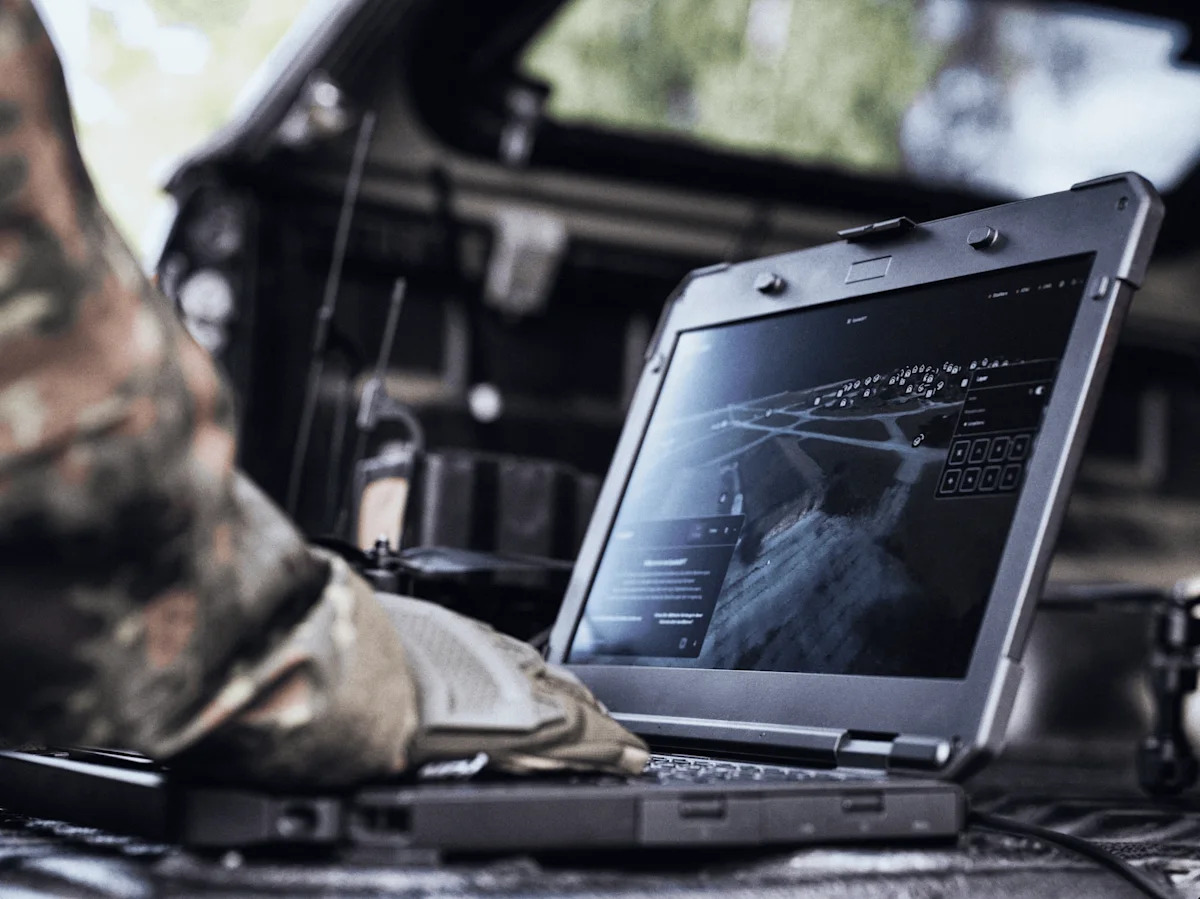
SE3’s software takes video and sensor feeds from multiple drones and ground vehicles and fuses them into a single 3D picture of the battlefield—”like a mini map, how you would know it from a strategy game,” cofounder and CEO Lukas Köstler told Fortune.
On top of that map sits a layer that labels objects and how they relate to one another, so soldiers can query it in plain language: How do I reach a target without being seen? What’s a good route for a heavy vehicle?
Operators can also give commands the same way. Rather than remotely piloting a drone with a joystick or having to tap away on a tablet, a soldier can simply say, “I need reconnaissance two kilometers in the north over the forest,” Köstler said, and a suitable drone would take off, fly the mission, and report back.
In addition to this map-level understanding of the battlefield, SE3 also builds the AI systems that sit inside the drones or other unmanned systems, giving them the ability to maneuver and navigate, even in cases where GPS is jammed, detect objects, and act as a “swarm” with other drones.
Köstler, who previously worked on Tesla’s Autopilot team and at Nvidia Research, said the most basic capability—drones locating themselves without GPS—has been delivered thousands of times and is “very robust.”
But he said the high-level fleet command AI is less mature. SE3 has contracts with Germany’s armed forces, the Bundeswehr, to develop it and has demonstrated it with them, but “there’s still much that needs to be built out over the next one or two years,” he said. The company also has contracts in Ukraine, where its technology is already deployed.
SE3 does not rely on general-purpose, large language models to understand physics or terrain. Instead, it uses classical computer vision algorithms to distill vast amounts of sensor data into a database a language model can query, and gives the model a harness equipped with a variety of conventional software tools the model can call. If the model needs a flight path, a conventional planning algorithm calculates one—avoiding mountains or enemy lines of sight, for example.
Simply feeding raw data to the model “wouldn’t work at all,” Köstler said. Actions such as a drone takeoff can be set to require a human operator’s approval. The system can run entirely offline, and customers can swap in their own preferred frontier AI model to act as the “brains” of the system.