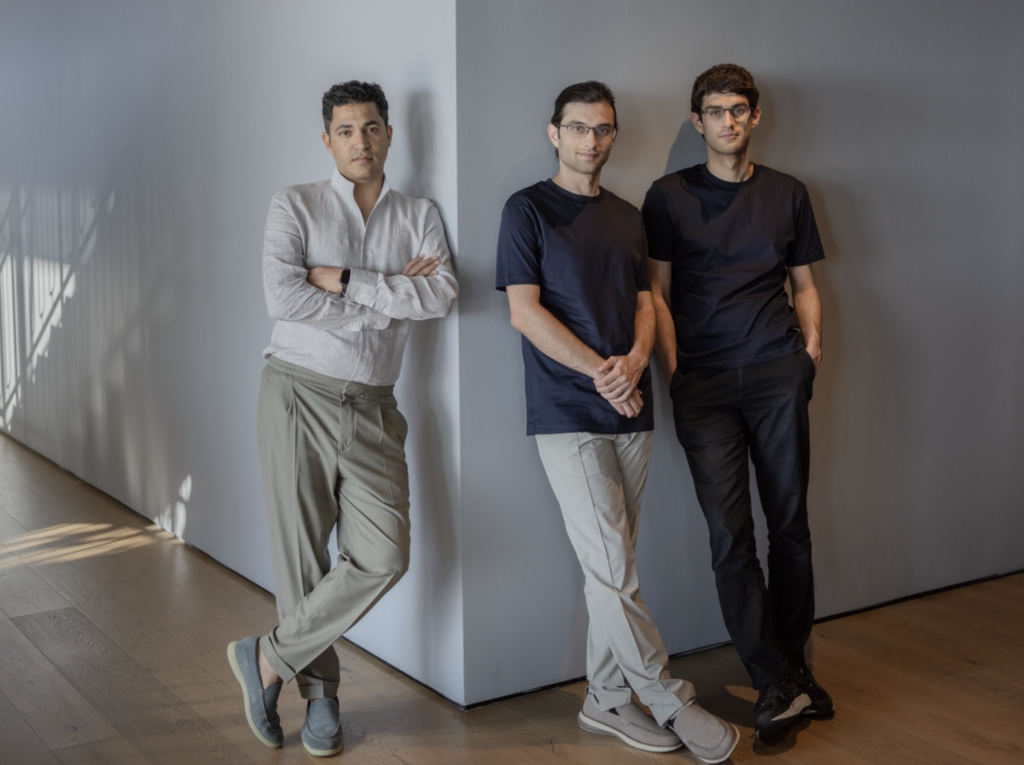
Founders were called up for reserve duty after October 7 attack
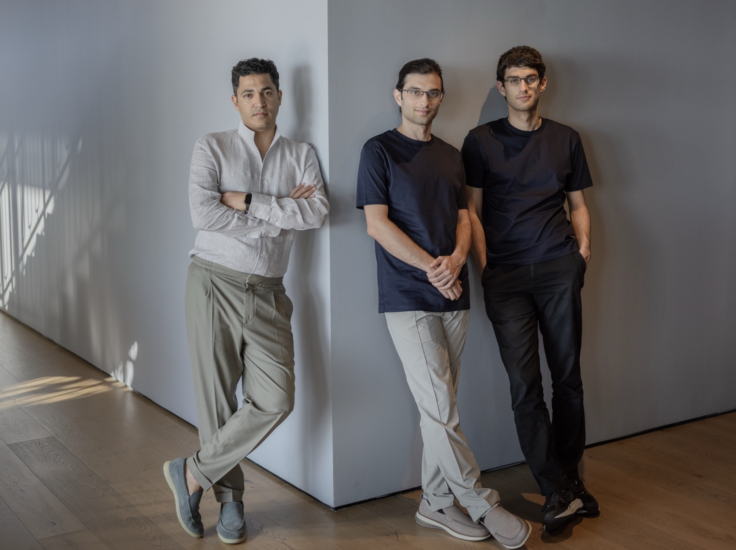
Amazon announced Monday that it is acquiring Decart, a three-year-old Israeli technology startup, and hiring its three founders. The price was “about $7.5 billion,” according to “a person familiar with the matter” quoted by Bloomberg News.
The announcement is a tribute to the remarkable resilience and strength of Israel’s technology sector in the aftermath of the war that began with the October 7, 2023 Hamas terrorist attack. It’s also a reminder that those boycotting or divesting from Israel will be missing out on some opportunities to make real money.
“The company was officially registered on September 7, 2023. A month later, both founders were called up for reserve duty and remained there for months,” according to a report in Calcalist I quoted when I wrote about Decart in November 2025. The company was discussed at a conference at Harvard Business School on a panel moderated by Harvard’s Paul Gompers, who wrote a business school case about the company.
When Sequoia venture investors Shaun Maguire and Dean Meyer wrote about Decart in October 2024, they likened the company to Google and called it “one of the most technically gifted teams we’ve ever worked with.” One Decart founder, Dean Leitersdorf, was described by Sequoia: “While simultaneously serving in the IDF’s elite Unit 8200, he earned his Ph.D. from Technion, Israel’s most prestigious technical university, at just 23 years old.” Another, Moshe Shalev, “served in key positions in Unit 8200, working directly with top leaders on special operations and developing a reputation as a trusted problem-solver and executor who can connect the dots from idea to reality. … He and Dean worked closely together in the IDF for several years before teaming up on the biggest unsolved challenges in AI.”
Today, after the deal was announced, Meyer said the company “built one of the most impressive AI research labs in the world. A lot of it from Tel Aviv, through a war.” He added, “Today Decart joins Amazon. I think this will be looked back on as one of the most strategically important acquisitions in many, many years.”
“From day one, our mission has been to redefine the boundaries of what AI can do and to make it dramatically more efficient along the way,” Decart’s co-founder and CEO, Dean Leitersdorf, said in the announcement. “Joining Amazon gives our team the scale, the customers, and the infrastructure to pursue that mission faster than we could on our own. We’re looking forward to exploring what we can build together.”
The Amazon announcement said, “With their deep expertise in full-stack performance optimization across hardware and software, Decart brings a strong connection between technology and talent that will help further Amazon’s investment in custom silicon and optimize AI inference for its customers.”
“Every leap forward in AI starts with getting more out of every chip,” Amazon’s senior vice president of foundational AI models, custom silicon, and quantum computing, Peter DeSantis, said in the announcement. “More efficient compute means better training, better reinforcement learning, faster inference, and better models for customers at a lower cost.”
Anthropic reportedly walked away from a $6 billion or $7 billion deal with Decart in September 2026. Calcalist, an Israeli tech and business publication, said the three founders stand to split about $3 billion under the terms of the Amazon deal.
According to the Calcalist account from 2025, two of the founders, Dean Leitersdorf and Moshe Shalev, bridge different demographic sectors of Israel. Leitersdorf, who is in his late 20s, comes from a prominent Israeli financial family. Shalev, by contrast, comes from a fervently Orthodox household in the Israeli city of Bnei Brak: “He married young and worked in a butcher shop while studying accounting in evening classes. At 23, he took the rare step of enlisting in the IDF through ‘Bina Beyarok,’ a program designed to integrate ultra-Orthodox men into military tech units. He served for 13 years in various roles within 8200, eventually becoming the right-hand man to then-unit commander Yossi Sariel.” Leitersdorf and Shalev met in the hallway in an army base.
Israel has no shortage of problems—political uncertainty, Arab and fervently Orthodox populations who avoid army service, lots of enemies around the world. Yet somehow it keeps racking up the wins. When was the last time you heard about an Egyptian or Lebanese or Saudi or Jordanian tech startup that sold for $7.5 billion? The International Monetary Fund projects Israel to have 4.5 percent real GDP growth in 2026, with inflation at 1.8 percent, putting it on track to become the world’s 25th largest economy.
Decart’s website describes the company as having “a little over a hundred people across Tel Aviv, New York, and San Francisco.” For comparison’s sake, the market capitalization of the New York Times Company, a 175-year-old company with about 6,000 employees, is about $11 billion.