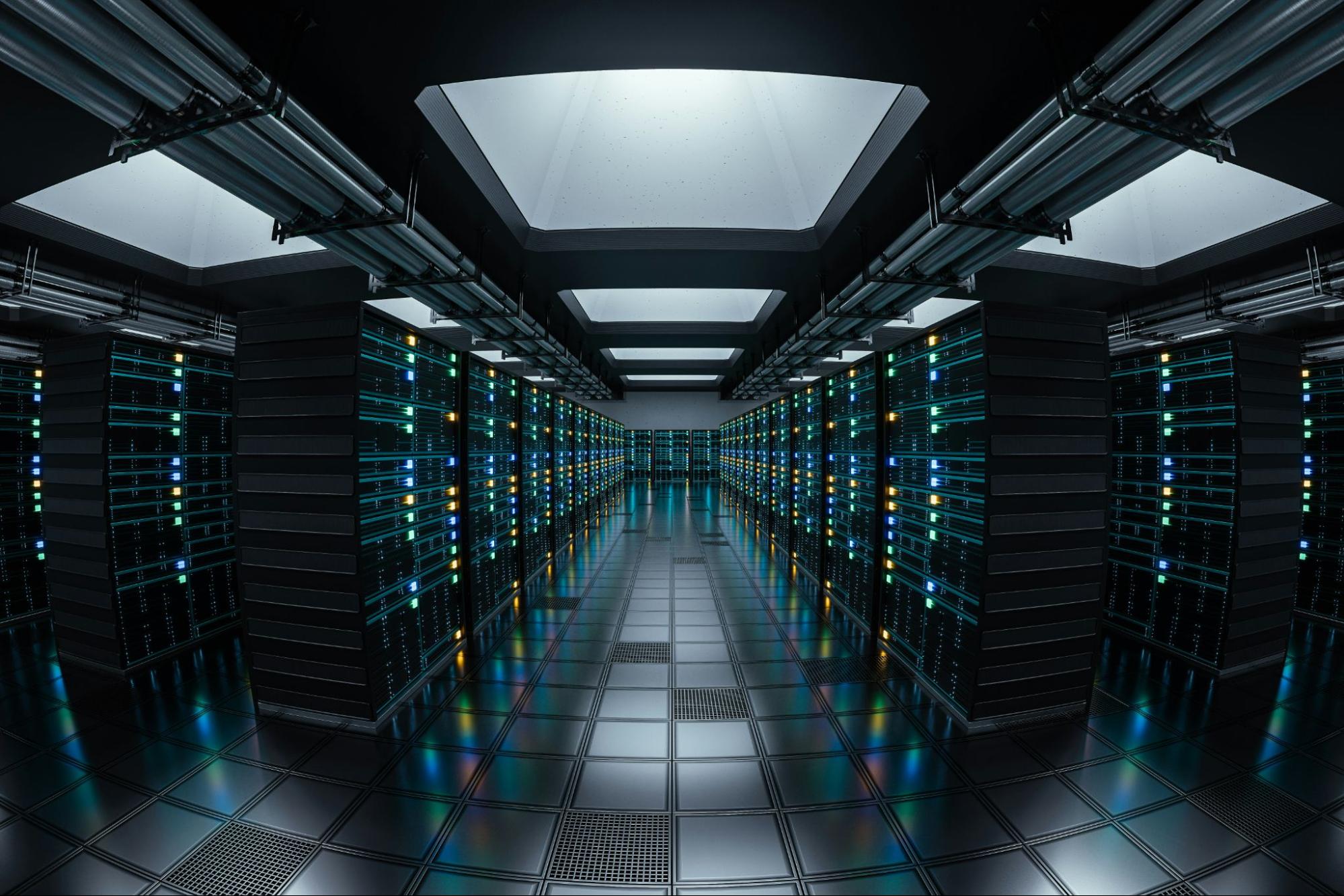
Marlowe, a six-month-old startup based in Bellevue, Washington, and Redwood City, California, said Monday it raised a $277 million seed round at a $1.15 billion valuation, with Accel leading, to build AI inference data centers on AMD and Etched chips instead of Nvidia. Marlowe says tuning chips, networking, power management, and software together yields 2x to 3x more output per watt and per dollar than conventional GPU clouds, and the claim is not independently tested.
The company’s own inputs do not reach the top of that range. Gains of 10% to 20% at each of four layers compound to about 1.46x to 2.07x, and reaching 3x would take seven layers at 20% each or twelve at 10% each (arithmetic computed for this article). Anyone weighing Marlowe capacity, or the Nvidia-alternative thesis behind it, can use that gap as a checklist: ask which measurement boundary, workload, and baseline produced the claim, because Marlowe has not said.
The first test arrives next month. Marlowe’s first site, built on Etched chips, is scheduled to go live in December and will mainly serve a large AI coding company that Marlowe has not named.
Four Layers at 10% to 20% Each Compound to 1.46x to 2.07x, Not 3x
GeekWire reports that Marlowe attributes gains of 10% to 20% to each layer of its stack, from chips and networking to power management and software. Multiplying four such gains gives 1.1 to the fourth power (about 1.46) at the low end and 1.2 to the fourth power (about 2.07) at the high end. Even at 15% per layer, the result is about 1.75x.
That leaves two readings of the 2x to 3x claim. Either the list of layers is longer than the four GeekWire names, or the top of the range is optimistic. GeekWire’s report names no benchmarks, customers, or measurement method for the figures.
Amdahl’s Law Caps Even That Range Because Gains Overlap
Multiplying layer gains assumes each one applies to all of the system’s work at once. Amdahl’s law, presented by computer scientist Gene Amdahl in 1967, limits gains to the improved share of the workload, so overall speedup is capped by the unchanged portion. The page’s own example is blunt: a 10,000x speedup yields only 1.11x when it touches 10% of runtime.
Applied to Marlowe, 1.46x to 2.07x is a ceiling for fully independent, fully overlapping gains, not a forecast. Real results can land lower because the analysis neglects memory and I/O bandwidth, which often limit data centers. A related caveat: efficiency figures depend on the power boundary, meaning whether only chip or system power counts or cooling is included, and on the load measured, so two claims of “2x per watt” can mean different things.
Etched Chips and AMD Helios Racks: What Marlowe’s Hardware Does
Inference splits into two phases with different bottlenecks. Prefill processes the prompt and builds a key-value cache, which stores key and value vectors so they are not recomputed for every new token. Decode then reads that state and generates one token at a time, and SiliconANGLE notes it moves large volumes of data between memory and processors, making memory bandwidth and latency the main constraints.
Etched’s design targets both phases, according to the company’s website. Low Voltage Inference runs math blocks at under half the voltage of most AI chips. Cluster Scale Memory pools memory across a rack-scale domain over a proprietary low-latency interconnect. The site publishes no benchmark figures, and it cites over $1 billion in customer contracts. It also says its systems target many-trillion-parameter MoEs and long context, meaning mixture-of-experts models. The tradeoff is inherent to purpose-built chips: an application-specific chip cannot be reprogrammed once fabricated and its design costs can run into millions, so it pays off at high, stable volume and risks obsolescence if model architectures shift.
Etched has raised heavily on that bet: a $300 million Series C in July led by Sequoia, then $700 million at $21 billion in August led by Jane Street, which was also an early customer.
AMD’s Helios is the other path: 72 Instinct MI455X GPUs per rack, 31 TB of HBM4 memory and up to 2.9 exaflops of FP4 compute, according to AMD. The rack is direct liquid cooled, and one Schneider Electric reference design uses 246-kilowatt liquid-cooled racks. For a buyer, that means Helios capacity depends on cooling, power delivery and HBM supply as much as on the chip. Marlowe says it tunes chips, networks and software for each customer’s workload, and it has not said whether it will split prefill and decode across different chips.
Why Does Marlowe Use Non-Nvidia Chips for AI Inference?
Dan Lewis ties the pitch to his time running enterprise AI at Microsoft, where capacity was “always oversold, effectively sold out,” according to GeekWire. Srinivasan says that at times much of the non-Nvidia fleet at big tech companies sat idle, was underused or could not run the latest models, the gap Marlowe says it is built to close.
Marlowe says it is not using Nvidia chips today but has not ruled them out. Bloomberg describes Marlowe as building cloud capacity for non-Nvidia chips; no source reviewed states whether it will own the sites it builds.
Marlowe Discloses Three Customer Agreements and Zero Customer Names
| Disclosed | Not disclosed |
|---|---|
| $277M seed at a $1.15B valuation (as reported), led by Accel; includes the earlier, smaller round led by Eclipse | Customer names or site locations |
| Site 1: Etched chips, live December 2026, mainly serving a large AI coding company | Power capacity or chip counts per site, beyond a plan for sites in the tens of megawatts |
| Site 2: AMD Helios systems, on track for Q2 2027 | Contract values or terms |
| Site 3: under a letter of intent | Which other chipmakers it works with, or who supplies networking |
| Three signed customer agreements | How the 2x to 3x figure was measured |
Marlowe plans to prove its approach at sites in the tens of megawatts, then finance more capacity one site at a time. It has close to 30 employees and was founded in May 2026.
Founders Lewis and Srinivasan Bring Microsoft Capacity Experience, Not Policy Track Records
CEO Dan Lewis co-founded freight marketplace Convoy, which reached a $3.8 billion valuation before shutting down in 2023. He later became a corporate vice president at Microsoft, and GeekWire reported he had left Microsoft in June. CTO Kutta Srinivasan was Microsoft’s company-wide AI infrastructure technical lead as a corporate vice president, after eight years at Valve, where he led the first Steam mobile app, then Facebook machine-learning infrastructure and a technical fellow role at LinkedIn.
Backers named by GeekWire include Bessemer, Altimeter, Atreides, Journey and Valor, with angels such as Uber CEO Dara Khosrowshahi and Box CEO Aaron Levie; Eclipse’s Lior Susan is executive chairman. Neither founder has a public position on data center power or permitting policy in the sources reviewed, though Marlowe cites power shortages, permitting and financing as obstacles to AI infrastructure.
Helios Supply Competes With Anthropic’s 2 GW and OpenAI’s 6 GW Commitments
AMD CEO Lisa Su said on the third-quarter earnings call that MI455X volume shipments began in the quarter and that Anthropic, Meta, Microsoft, OpenAI and Oracle had brought first Helios racks online. Demand is heavy: Anthropic has committed to up to 2 gigawatts of MI450-series GPUs, with the first gigawatt starting in the first half of 2027, and OpenAI has an agreement covering up to 6 gigawatts. Marlowe’s second quarter 2027 Helios site lands in that window, and the company has not said how it will secure supply.
Site-by-Site Financing Meets Neocloud Debt Doubts and ASIC Obsolescence Risk
Marlowe’s plan to finance each site after proving the model puts debt terms and customer commitments at the center. GeekWire notes that CoreWeave, the largest neocloud, carries about $47 billion in debt; other tallies differ, including about $35.1 billion as of June 30 in Wikipedia’s CoreWeave account.
Gartner predicts that more than 80% of neoclouds will cease independent operations by 2030, and Gartner analyst Will Sommer told Fierce Network that AI revenue may not catch up with data center spending until 2032 or 2033 at the earliest. CoreWeave says most debt facilities match customer contracts on take-or-pay terms, the structure Marlowe would need as well. The chip choice adds its own financing risk: lenders who accept ASIC-based hardware as collateral are betting that the models it runs will not change faster than the chips can be replaced, a bet TechTimes covered when General Compute used inference chips as loan collateral.
Power is a further constraint. Goldman Sachs said in May that only 50% to 60% of planned capacity may come online as expected over the next two years, according to Utility Dive.
Gimlet, General Compute and AMD-Cerebras Split Inference Across Chips as Nvidia Changes CEOs
Marlowe is entering a market where capital is flowing to multi-chip inference. Gimlet Labs raised a $300 million Series B at a $3 billion valuation in September, led by Andreessen Horowitz, for software that runs each part of a model on the chip best suited to it. General Compute raised a $100 million Series A in October; it has paired AMD MI300X chips for prefill with SambaNova chips for decode and has since added Positron and Cerebras as suppliers. In July, AMD and Cerebras announced a disaggregated inference solution in which Helios and Cerebras chips split the work, with the companies expecting up to 5x more tokens per second per watt; eWeek noted no production results had been disclosed.
Nvidia is also in flux. Its board accepted that Huang resigned as CEO on Nov. 11, and the company announced it Nov. 12, naming CFO Colette Kress interim chief; Nvidia says operations, customer commitments and the product roadmap continue without interruption. Lewis told GeekWire that some startups have raised four to five times as much as Marlowe.
December Etched Go-Live and Independent Tokens-per-Megawatt Data Will Test Marlowe’s Claim
Two things would settle the 2x to 3x question. The first is whether the Etched site comes online on schedule in December and how the AI coding customer’s workloads perform. The second is independent measurement: vendor-neutral suites such as SemiAnalysis InferenceMAX publishes tokens per megawatt, along with throughput and performance per dollar, the metrics a buyer needs.
For a buyer or investor, the practical test is concrete: ask Marlowe for tokens per megawatt and cost per million tokens on a named model, with the power boundary and baseline stated, and treat any multiplier beyond the roughly 2x ceiling of its own four layers as unproven until an outside party reproduces it.
Frequently Asked Questions
What is AI inference, and why does it need its own data centers?
Inference is what happens when a model is put to work in applications, a process known as inference, as opposed to training the model. Its decode phase moves large amounts of data between memory and processors, which is why chip startups and data center builders are designing around it.
Do 10% to 20% gains at each of four layers add up to 2x to 3x?
No. Four such gains compound to about 1.46x to 2.07x, and Amdahl’s law limits overall speedup because each gain applies only to the share of the system it touches, so real results can fall lower.
Is Marlowe using Nvidia chips?
Not today, according to GeekWire’s report on Marlowe, though the company has not ruled them out.
When will Marlowe’s first data center open?
The first site, built on Etched chips, is scheduled for December 2026, and an AMD Helios site is planned for the second quarter of 2027.