Good morning. Only two more days until Black Friday, a name once associated with dark moments like plunging gold prices or retail chaos in Philadelphia. It successfully rebranded in the 1980s to become the day when retailers purportedly shift from loss to profit. Despite now stretching out for weeks, it’s still the biggest shopping day of the year in the U.S.
What’s different this year is that a whole lot of agents fueled by chips instead of turkey will be participating in those sales. And a lot of retailers are trying to figure out how to leverage AI to get bots and people to buy. In September, traffic referred by AI tools generated 83% more revenue per visit for U.S. retailers than non-AI traffic, according to Adobe. But as Nordstrom co-CEO Pete Nordstrom points out, nobody cares about AI when they go shopping. “Customers don’t ask a lot of questions about how the sausage is made,” he recently told me. “They just want what they want when they want it.”
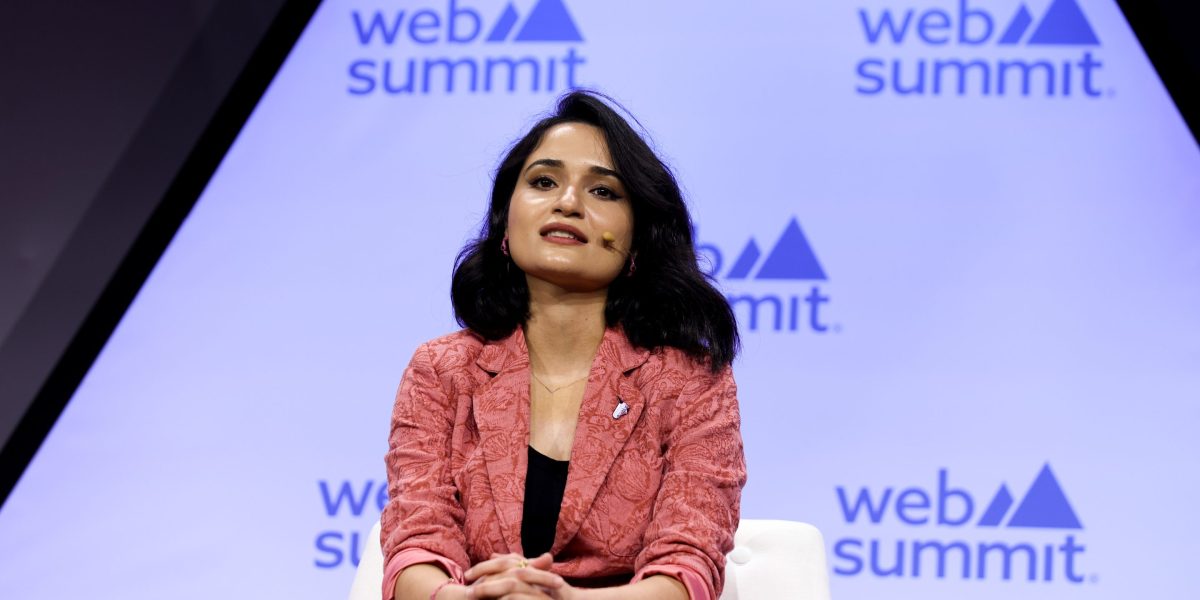
To get AI help for that, Nordstrom turned to a small company called Verneek cofounded by AI scientists Nasrin Mostafazadeh and Omid Bakhshandeh, who are married to each other. Although they’ve been on my radar for a few years—I’ve met Mostafazadeh at conferences and my colleague Ellie Austin profiled them in Fortune in 2023—their company is not a household name. What intrigues me is how much attention they’ve gotten from major retailers. Clients include Ralph Lauren, and strategic investors include Geoffroy van Raemdonck, CEO of Exemplar Luxury Group, which owns Saks Fifth Avenue, Neiman Marcus, and Bergdorf Goodman. Van Raemdonck called the AI tech company “unique” (rhymes with Verneek!) when we had dinner during New York Fashion Week. And its advisory board is a who’s who of retail.
When I asked Mostafazadeh what differentiates her approach from that of a large enterprise tech company, she pointed to the company’s focus on retail and on creating AI solutions that connect what happens behind the scenes, such as merchandising decisions, with how employees work and customers buy products. “The core of what we do is help these consumer brands and consumer retailers take control of their P&L,” she said. That could be helping employees troubleshoot a malfunctioning point-of-sale device or helping retailers identify what colors are likely to appeal to certain customers next season.
Is their technology better than everyone else’s? I don’t know. What I do know is that their retail specialization and relationships have given them a leg up over some big competitors. “These guys have a lane,” said Nordstrom, noting that he doesn’t need more AI tools but partners who understand the business enough to make them work together to solve retail challenges, improve the customer experience and ultimately drive more sales by leveraging technology to give people a reason to buy. “Everything we sell, no one needs it, but they want it.”
We will not publish tomorrow or Friday because of the U.S. Thanksgiving holiday. Let me say that I’m thankful to have colleagues like Lee Clifford, Claire Zillman, Nicholas Gordon, Joseph Abrams, and Jason Ma to help me put this newsletter out every day through deft editing, curation, news judgment, and more. I couldn’t do this without them. See you next week.
Contact CEO Daily via Diane Brady at [email protected]
Top leadership news
After Nvidia’s scandal, tech executives are asking about prenups
Silicon Valley divorce lawyers told Fortune they’ve heard from more tech executives and founders about prenups since Jensen Huang’s brief ouster from Nvidia. Some companies are calling lawyers themselves to ask for nondisclosure agreements for the people their CEOs date.
Samsung and SK Hynix are backing the same Nvidia challenger
South Korea is betting on Rebellions, a $2.3 billion startup, to help it reduce its use of foreign AI. Samsung makes the chips, and rival SK Hynix supplies the memory. Rebellions is designing chips to run AI models rather than train them, but it still has to show it can compete on cost without Nvidia’s scale.
Best Buy posts its strongest sales growth in five years
Comparable sales rose 6.1% in Best Buy’s first earnings report under CEO Jason Bonfig, and the retailer raised its full-year forecast. Shoppers bought consoles and accessories ahead of major game releases, but higher computer prices also helped: Best Buy sold fewer computers but shoppers paid about 25% more per unit on average.
The markets
S&P 500 futures are down 1.39% this morning. The last session closed down 0.50%. The STOXX Europe 600 was up 0.26% in early trading. The U.K.’s FTSE 100 was up 0.38% in early trading. Japan’s Nikkei 225 was down 2.78%. South Korea’s KOSPI was down 6.16%. China’s CSI 300 was down 1.65%. Hong Kong’s Hang Seng was down 1.14%. India’s NIFTY 50 was up 1.85% today. Bitcoin is down at $59k.
Around the watercooler
‘We’re begging’: DOGE slashed federal workforce to its lowest in 60 years, and the Trump administration says it still can’t recruit Gen Z worker by Sasha Rogelberg
Commentary Nvidia degrades U.S. national security as Chinese military snags its chips by Jeffrey Sonnenfeld, Stephen Henriques, and Steven Tian
CEO of $21 billion Cerebras says it’s minted 1,000 employees into millionaires—but warns that drastic changes in fortunes can be ‘really stressful’ by Emma Burleigh
Elon Musk says Tesla self-driving makes seniors safer. Tesla’s own fine print says the 93-year-old in its ad must watch the road by Mia Osmonbekov
Billionaire Fanatics CEO made millions as a teenager but nearly lost it all by 16: ‘Each disaster, if you learn from it, leads to your next success’ by Preston Fore
CEO Daily is curated and edited by Joseph Abrams, Jason Ma, Claire Zillman, and Lee Clifford.