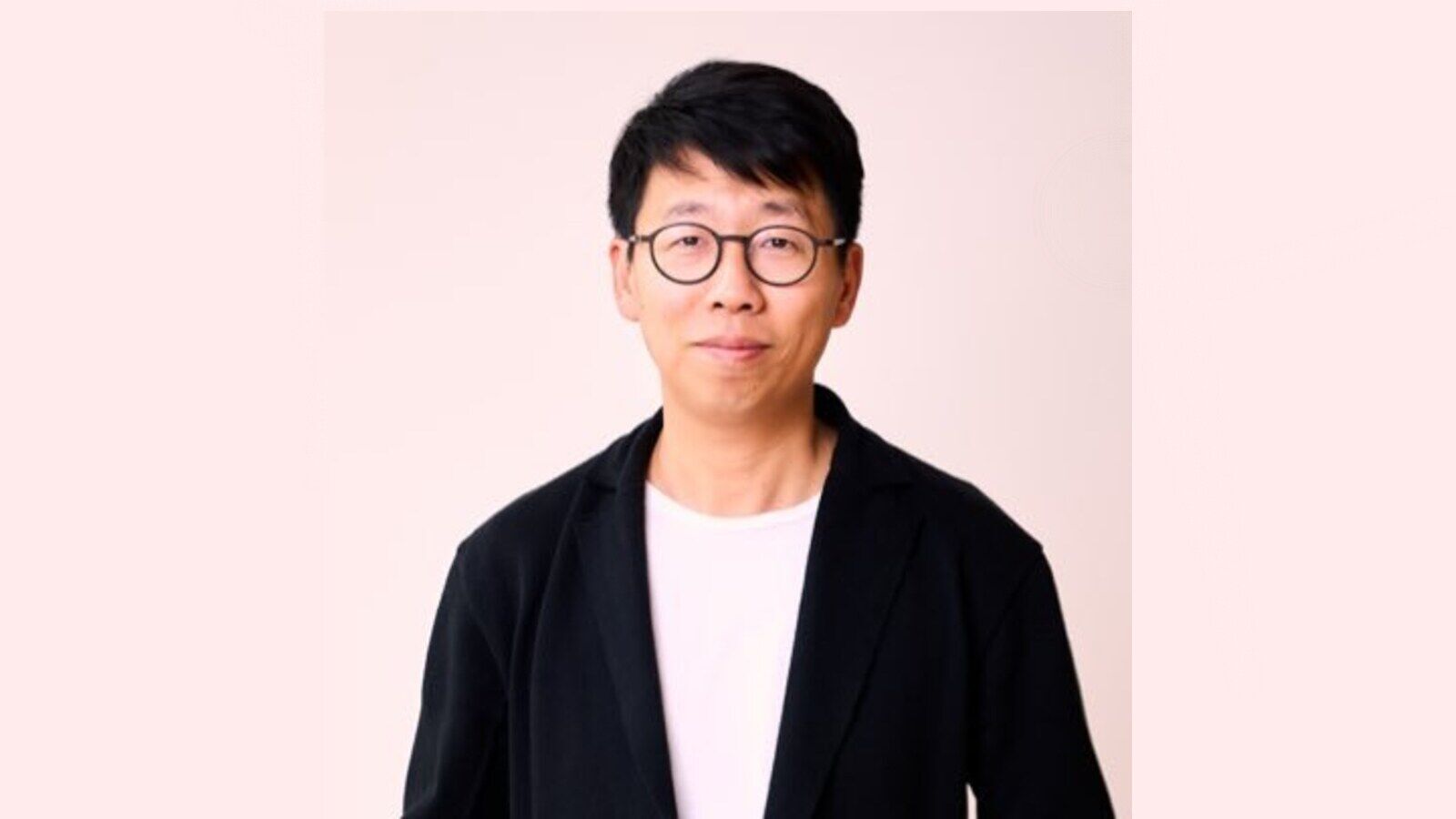
Jack Zhang, co-founder and CEO of payments platform Airwallex, who has built the startup into an $8 billion enterprise, feels that burnout is a concept outside his understanding.
Speaking to CNBC Make It, Zhang said, “I never understand that terminology (burnout) to be honest. I’ve worked 100 hours a week from [the] age of 16 for 20 plus years.”
While studying, Zhand said he worked 80-100 hours every week, “When you’re … in that tough situation [where] you need to survive, you’re not really [thinking] about burnout. I mean, either you survive or not, right?”
He still works 80 hours a week today in his late 40s, he added.
Airwallex co-founder on working blue collar jobs
Sharing his experience of funding his studies abroad through blue collar jobs, Zhang told the publication he moved from Qingdao, China to Melbourne, Australia alone at age 15. Living with a host family while speaking limited English, Zhang said his parents had financial difficulties and he had to support payment for his computer science degree at the University of Melbourne, and daily expenses.
“I [had] two choices: either I just return to China and try to go back to the education system there, or I continue to stay in Australia and figure out how to pay [for my] tuition and living [expenses] on my own,” he stated.
The jobs included washing dishes at a restuarant during the day, bartending in the evening, and taking up overnight shifts at a petrol station. He also packed lemons at a factory during the summer to make money.
Jack Zhang on finding his passion with Airwallex
Zhang graduated in 2007 and his LinkedIn profile shows his first job was as software engineer with insurance provider Aviva. His next job, as per the profile, was in the banking industry.
Zhang told CNBC that while he made million through his banking and businesses, wanting to find his true passion led to the founding of Airwallex. The birth of his daughter when he was 30, was the turning point.
“I remember I just looked at her, I [felt] like, I hadn’t done anything [to] make her feel proud. And I think that’s the moment I [decided] I need to stop just doing these side hustles, and I need to retire from my full time job and do something big, properly. I realized that while I always wanted money, money alone doesn’t bring [me] the highest level of happiness,” he said.
“I always wanted to find something [where] no one needs to ever wake me up and … every day I feel extremely passionate, obligated, and willing to devote my entire survival towards,” he added.
On his journey with Airwallex
As per the Airwallex website the idea for the firm came from one of Zhang’s business ventures with future co-founder and university friend, Max Li, where the duo imported coffee beans from Brazil and China, and needed to wire money overseas.
He told CNBC, “We thought, why can’t we build a … payment system in parallel to SWIFT and fundamentally change how money moves around the world?”
In 2015, the two onboarded other university friends — Jacob Dai, Lucy Liu (who invested $1 million in the start-up) and Ki-lok Wong. As of December, the company has achieved $1 billion in annualized run rate revenue (ARR).
By mid-2018, Airwallex’s transaction volume had already skyrocketed and investors poured in, and by year-end they raised a $80 million to support a valuation of $450 million. By 2022, momentum with a series E-2 fundraise grew the fintech’s valuation to $5.6 billion and marked their expansion into China. as per the company website, Airwallex was only the second foreign company outside China to do so.
The company now has 2,000 people across 26 offices around the world, but Zhang doesn’t see it as a time to stop. “I’m still very excited about what’s ahead of us. I think there’s tons of opportunities ahead of us … we think we can generate [at least] $10 billion [in] revenue by 2030 so that is our next goal post.”