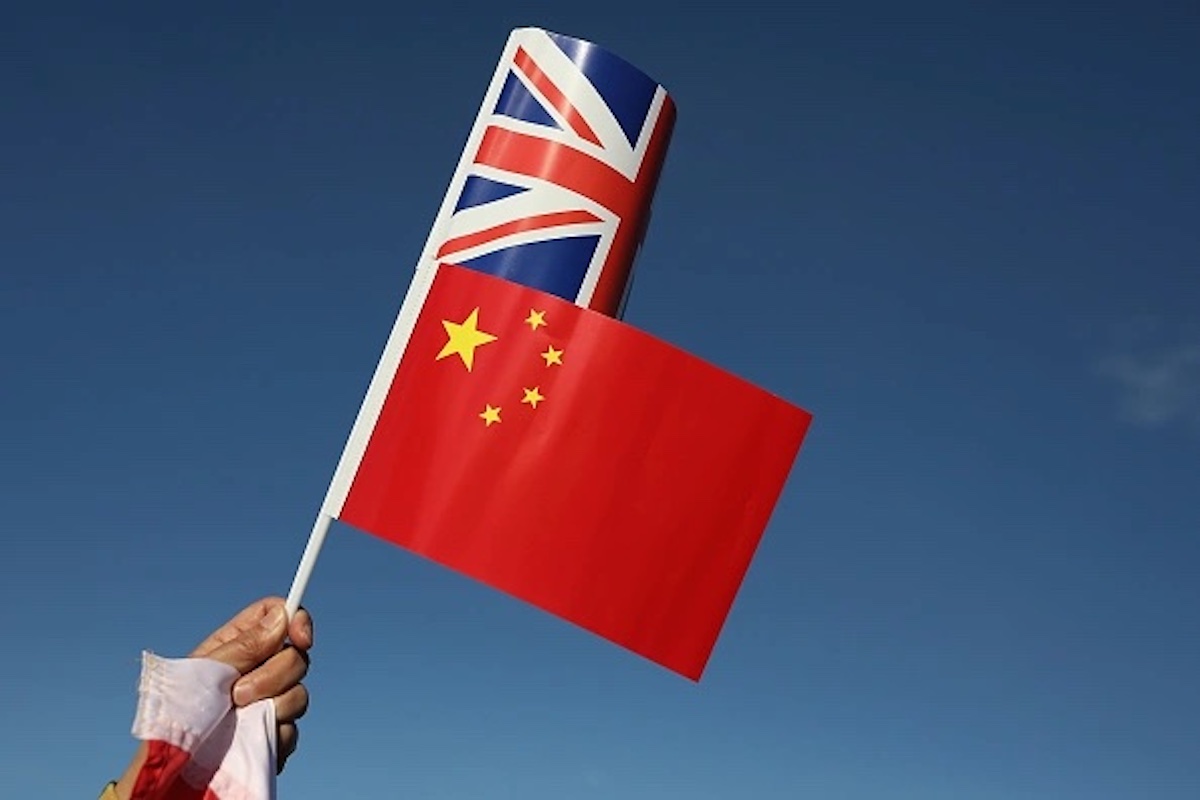
Co-founder of British AI chip startup Fractile left the company after concerns were raised internally about his links to China amid growing scrutiny of national security risks across the UK’s strategic tech sector.
Yuhang Song, Fractile’s former chief technology officer, departed the business in May 2024 following questions over his academic background and earlier ties to Chinese institutions, Sifted reported on Thursday.
The startup, founded in 2022, is developing next-generation chips focused on AI inference, the stage where large language models generate outputs.
It has pitched its technology as faster, cheaper and more energy efficient than hardware produced by rival giants like Nvidia.
The company has attracted high-profile backers including the NATO Innovation Fund, Kindred Capital, Cocoa VC and Arm co-founder Herman Hauser.
It raised $15m (£11.07m) in 2024 and has since secured a further $22.5m, according to reports.
Red flags raised
Song previously studied at Beihang University in Beijing, according to public records, before completing a PhD at Oxford University.
Beihang is part of China’s so-called ‘Seven Sons of National Defence’, a group of universities overseen by the Ministry of Industry and Information Technology, that play a central role in the country’s defence research.
The university is on the US Commerce Department’s entity list, which restricts organisations deemed to pose national security risks, although it is not subject to UK sanctions.
It has been estimated that roughly 60 per cent of Beihang’s research budget is defence-related.
However, there is no suggestion that Song engaged in wrongdoing, nor that any intellectual property was transferred.
That being said, several people close to the firm said the links became increasingly difficult to reconcile with Fractile’s ambitions.
A spokesperson for Fractile said Song “left to pursue other technical and business interests in 2024”, adding that early-stage tech companies often see founders move on as projects mature.
Song has not commented on the matter.
Security scrutiny hits tech
The move mirrors the tightening geopolitical environment facing UK startups working in sectors with potential risk, like AI or defence.
MI5 director general Ken McCallum warned at the end of last year that China posed a national security threat “every day”, while ministers have repeatedly warned that academic research and startup sectors are vulnerable to foreign state influence.
A 2024 review into academic security, commissioned by the government followed warnings that Chinese-linked funding could put sensitive technologies at risk.
A subsequent parliamentary intelligence report said UK universities and research institutions provided a “rich feeding ground” for the transfer of intellectual property.
Suki Fuller, a fellow at the Council of Competitive Intelligence Fellows who advises startups and NATO-backed programmes, said founders with links to certain Chinese institutions can face severe barriers when seeking capital.
“If a company has any co-founders or senior executives who studied at one of these universities, US funding is effectively off the table,” she said, adding that funds with state-linked limited partners are also likely to walk away.
She added: “I’s a brutal reality. People can lose control of something they helped build because of where they studied, not because of anything they’ve done wrong.”
