Actor Milla Jovovich has unveiled MemPalace, an AI-powered memory tool that digitizes the ancient ‘memory palace’ technique, blending classical cognitive science with modern artificial intelligence.
Milla Jovovich is best known for battling futuristic threats on screen, from alien invasions in The Fifth Element to viral outbreaks across six Resident Evil films. Now she is turning that creative energy toward a different kind of problem: how humans remember in an age of information overload. Her new project, MemPalace, uses artificial intelligence to help people train their memories by reviving a technique that is over two thousand years old.
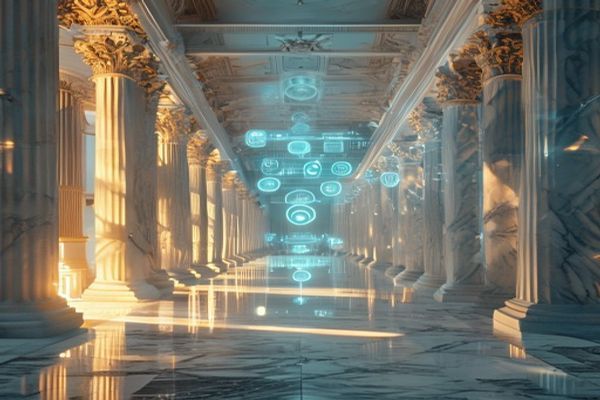
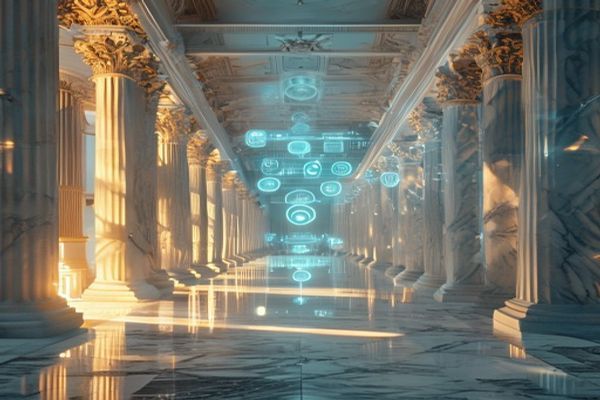
The concept is deceptively simple. The ‘memory palace,’ also called the method of loci, was used by ancient Greek and Roman orators to recall long speeches without notes. The practitioner visualizes a familiar physical space, perhaps a childhood home or a well-known street, and mentally places vivid images at specific locations along a route. To retrieve the information later, you walk through that imagined space and pick up the items you left behind. Neuroscientists at Stanford University and elsewhere have studied this method extensively, confirming that it dramatically improves recall by leveraging spatial memory pathways in the brain.
MemPalace takes that framework and builds an AI layer on top of it. Details about the product’s full feature set are still emerging, but the core idea is that the system generates personalized virtual environments based on user preferences, then helps assign information to specific locations within those spaces. Users can rehearse and retrieve what they have stored through guided sessions. As Decrypt recently reported, Jovovich was drawn to the project partly because of her own experiences with the demands of memorizing complex scripts and partly through a longstanding personal fascination with cognitive training techniques.
The timing is difficult to ignore. The global edtech market crossed $280 billion in 2023 and is projected to keep growing at double-digit rates through the end of the decade, fueled largely by AI integration. Language learning apps, coding bootcamps, and professional certification platforms are all racing to add adaptive AI features that personalize content delivery. A memory-specific tool built around a proven mnemonic system could carve out a meaningful niche in that landscape, especially if it appeals to students preparing for high-stakes exams, professionals managing vast amounts of technical information, or older adults looking to maintain cognitive sharpness.
Jovovich is not the first celebrity to attach her name to a tech venture, and the track record for Hollywood-driven startups is mixed. Ashton Kutcher built a credible reputation as an early-stage investor in companies like Airbnb and Spotify. Jessica Alba’s Honest Company went public, though not without growing pains. Will Smith’s investment in a biomedical startup generated headlines but little follow-through. What sets MemPalace apart is that Jovovich appears to be a genuine advocate for the underlying science rather than just a face on a term sheet, and the product addresses a universal problem rather than a niche lifestyle market.
The competitive landscape is worth watching. Anki and similar spaced-repetition tools have proven that consumers will pay for software that helps them retain information. OpenAI, Google, and a long list of startups are embedding memory features directly into general-purpose AI assistants. If MemPalace relies too heavily on the novelty of the memory palace gimmick without delivering measurable results, it risks being overshadowed by platforms that already have billions of users and massive distribution networks. On the other hand, if the spatial memory approach genuinely outperforms standard flashcard-style repetition, the science itself becomes a defensible differentiator.
What makes this project worth following is the intersection it occupies between ancient cognitive science and modern AI capability. The method of loci has survived for millennia because it works, but it has always required significant effort to learn and maintain. Artificial intelligence could lower that barrier enough to make the technique accessible to people who would never otherwise attempt it. Whether MemPalace itself becomes the vehicle for that shift or simply validates the concept for others to build on remains an open question. Either way, the broader signal is clear: memory training is becoming a market, and AI is the engine driving it forward.