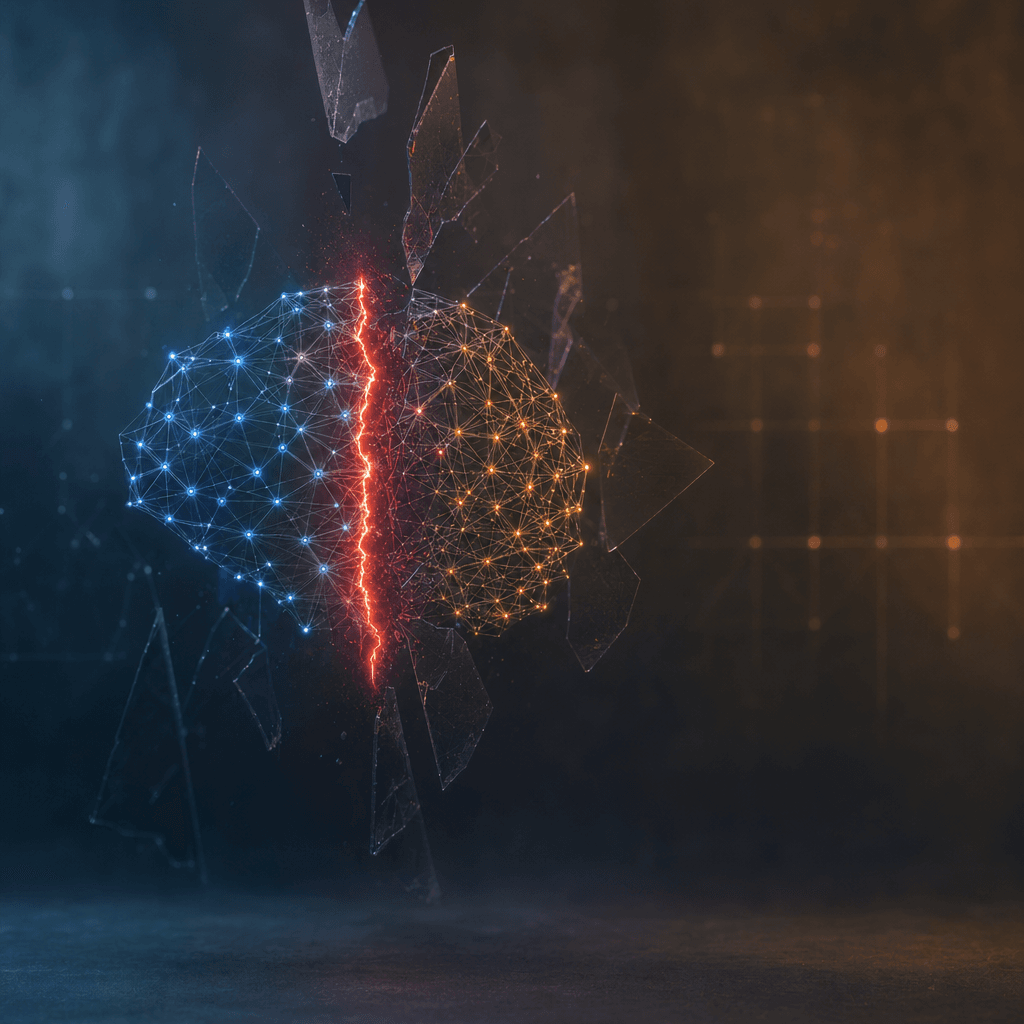
China just threw a wrench into Meta’s AI ambitions. Beijing announced Monday it’s blocking the social media giant’s $2 billion acquisition of Manus, a Singapore-based AI startup with Chinese roots. The move marks one of the most direct regulatory interventions yet in the escalating battle for AI supremacy between Washington and Beijing, and raises serious questions about whether any major US tech company can successfully acquire AI talent with ties to China.
Meta thought it had found the perfect acquisition target. Manus, founded in 2023 by former Alibaba AI researchers now based in Singapore, had cracked one of the toughest problems in artificial intelligence – compressing massive language models to run efficiently on smartphones and edge devices. The $2 billion price tag, announced in February, would have given Meta a critical edge in the race to bring AI capabilities directly to the billions of users on Facebook, Instagram, and WhatsApp.
But China’s State Administration for Market Regulation had other plans. In a terse statement released Monday morning Beijing time, regulators said the acquisition posed risks to “national security and technological sovereignty” – language that signals this decision came from the highest levels of government. The move effectively kills the deal, since Manus’s core intellectual property was developed partially in China and several key engineers still hold Chinese citizenship.
The timing couldn’t be more significant. Just three weeks ago, the Biden administration tightened export controls on AI chips to China, cutting off access to Nvidia‘s latest H100 GPUs. Beijing’s blocking of the Manus deal looks like a direct countermove – if China can’t access cutting-edge AI hardware, it won’t let Chinese-developed AI software flow to American companies either.
“This is the opening salvo in what’s going to be a protracted AI Cold War,” says James Lewis, technology policy director at the Center for Strategic and International Studies. “China is making it clear that AI talent and intellectual property with any Chinese connection is off-limits to US acquirers.”
The implications for Meta are immediate and painful. CEO Mark Zuckerberg had publicly touted the Manus acquisition as central to Meta’s strategy of embedding AI directly into its apps, reducing reliance on cloud-based processing. Manus’s model compression technology – which can shrink a GPT-4 class model to run on an iPhone without significant performance loss – was exactly what Meta needed to compete with Apple‘s on-device AI capabilities and Google‘s Gemini Nano.
Now Meta faces a choice: spend years trying to develop equivalent technology in-house, or look for alternative acquisition targets in markets beyond China’s regulatory reach. Neither option is attractive. Manus was genuinely ahead of the pack in model compression, and there aren’t obvious alternatives with similar capabilities. Building the technology internally would likely take Meta’s AI research teams two to three years, according to industry estimates – an eternity in the current AI race.
But the bigger story here isn’t about one blocked deal. It’s about the fracturing of the global AI ecosystem. For the past decade, AI research has been remarkably international. Researchers moved fluidly between universities and companies across borders. Startups recruited talent globally. Chinese engineers worked at OpenAI, American researchers published jointly with Tsinghua University teams, and venture capital flowed freely to promising AI startups regardless of geography.
That era is ending. The Manus decision follows a pattern of escalating restrictions on both sides. The US has blocked Chinese investment in American AI startups through CFIUS reviews, restricted AI chip exports, and pushed allies to limit technology transfer. China has responded with its own export controls on rare earth minerals critical for chip manufacturing, restrictions on AI model exports, and now direct intervention in M&A deals.
For AI startups with Chinese connections, the Manus precedent creates an impossible dilemma. Manus had deliberately established itself in Singapore, maintained a diverse international team, and positioned itself as a global company. None of that mattered. The fact that its founders had worked in China and some core technology originated there was enough for regulators to claim jurisdiction.
“Any AI startup with meaningful Chinese ties just became un-acquirable by US companies,” explains Sarah Chen, a partner at AI-focused venture firm Essence VC. “That’s going to reshape how these companies get funded and where they ultimately exit.”
The market is already reacting. Shares of other US tech companies known to be pursuing AI acquisitions in Asia fell in Monday trading. Microsoft, which has been actively scouting AI startups across Southeast Asia, saw its stock dip 2% on concerns that similar deals could face regulatory challenges. Meanwhile, Chinese AI startups are reportedly fielding calls from domestic tech giants now more confident they won’t face foreign competition for acquisitions.
For Meta specifically, this represents another setback in what’s been a challenging year for its AI ambitions. The company has poured billions into AI research and infrastructure but continues to trail OpenAI, Google, and Anthropic in the race to build frontier AI models. Its open-source Llama models have gained traction with developers but haven’t translated into the kind of consumer AI products that could drive engagement and advertising revenue.
The Manus acquisition was supposed to change that calculus. On-device AI that doesn’t require cloud connectivity would give Meta a distinctive edge, particularly in markets with limited internet infrastructure. It would also address growing privacy concerns about sending user data to cloud servers for AI processing. Now Meta will have to find another path to that capability – or risk falling further behind competitors who are shipping AI features directly to users’ devices.
What happens next depends partly on politics. If US-China tensions continue to escalate, we could see even more aggressive interventions in tech deals on both sides. There’s already talk in Washington about reciprocal measures – blocking Chinese companies from acquiring any US AI assets, even through indirect structures. That would effectively create two separate AI ecosystems, with different standards, different supply chains, and increasingly divergent technological trajectories.
The losers in this scenario aren’t just companies like Meta and Manus. It’s the entire global AI research community that has thrived on international collaboration, and ultimately consumers who will have access to less innovative and more expensive AI products as competition fragments across geopolitical lines.
China’s blocking of the Manus acquisition isn’t just about one $2 billion deal – it’s a signal that the global AI market is splitting along geopolitical fault lines. For companies like Meta trying to build AI capabilities through acquisitions, the playbook just got dramatically more complicated. Startups with any Chinese connections are now radioactive to US acquirers, while American AI companies face similar barriers in Chinese markets. The result is a fragmented innovation landscape where the free flow of talent and technology that accelerated AI progress over the past decade is being replaced by walled gardens and nationalist technology stacks. Meta will find other acquisition targets and eventually build comparable technology in-house, but the bigger casualty is the international collaboration that made the current AI boom possible.