
Good Morning [%first_name |Dear Reader%],
You are on a free plan. Your subscription has expired. Upgrade now to unlock premium newsletters, top feature stories, exclusive podcasts, and more.
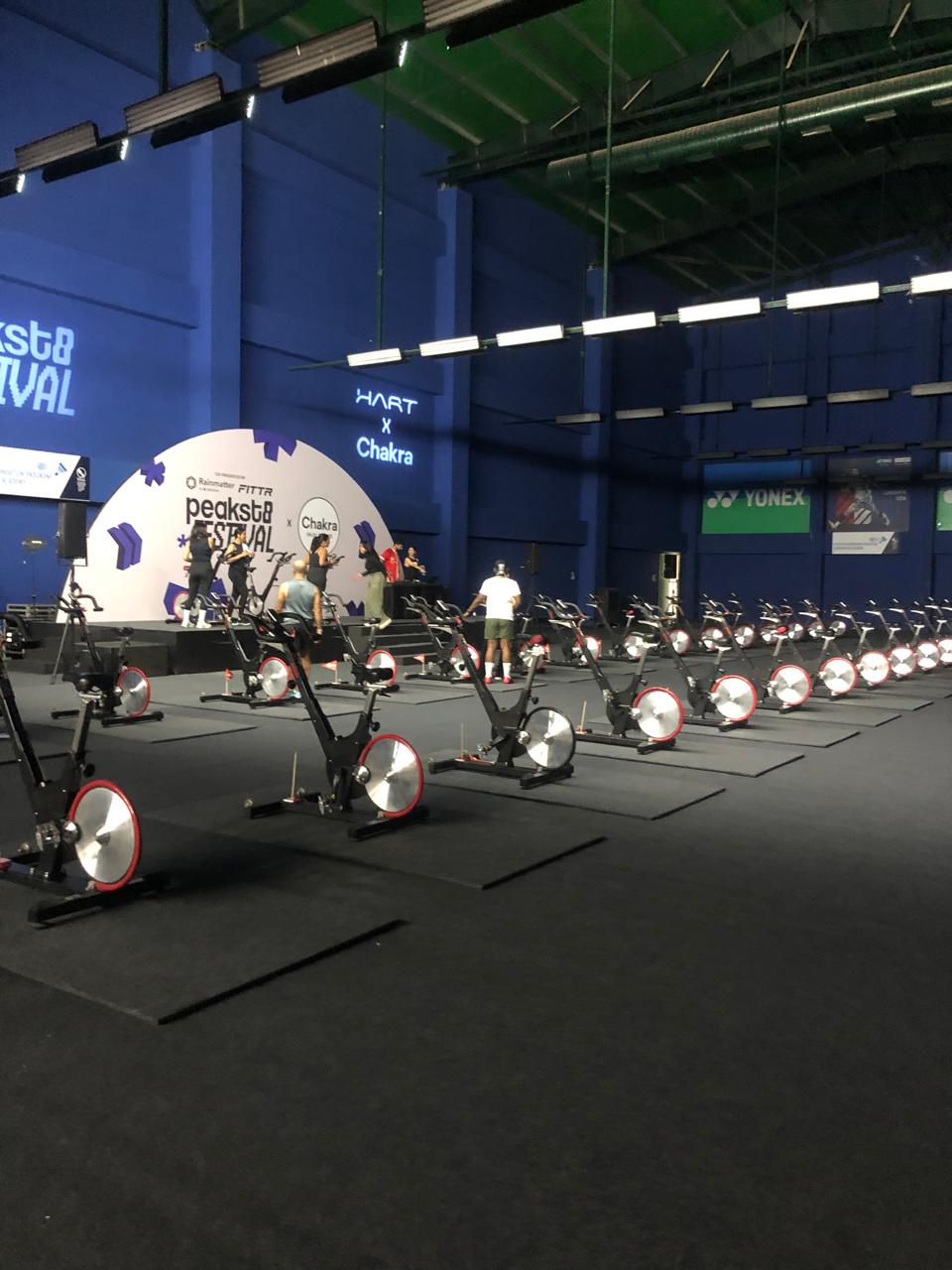
About three weeks ago, I spent the better part of a random Saturday getting lost in a sea of spandex. My wonderful colleague from the design team, Sakshi Modi, and I signed up for the Peakst8 (pronounced peak state) festival here in Bengaluru.
The festival took place at the sprawling Centre for Sports Excellence in Yelahanka. For those unfamiliar with Bengaluru geography: Yelahanka is leafy, suburban, and quite lovely, but also far enough out that most people don’t go there unless they are headed to the airport, or visiting distant, retired relatives.
And yet, thousands of people showed up for what could only be described as Coachella for fitness enthusiasts. It was a day-long festival built around different forms of exercise, some familiar, some less so. Think spin classes, mini Hyrox races, meditation, strength training, immersive runs, aqua sound healing, water pilates (yes, that’s a thing people do now).
Being there offered a front-row view of a shift I have been tracking for a while and the subject of the latest episode of 90,000 Hours.
If you work in any of India’s startup hubs–Bengaluru, Mumbai, or Gurgaon–you may have noticed it too.
Marathons, triathlons, hybrid races: people are constantly competing in some athletic event or the other. These are ordinary professionals training like pros, finding community, and often travelling across the country to compete.
In our latest episode, I spoke to some of these professionals, or as I like to call them, fitness warriors. Work, for them, follows the same logic as sport: optimise, train, perform. Training for something hard offers control when careers feel fragile and long-term certainty is scarce.
I met people like Darshan, a sales executive who took up running almost by accident and kept escalating to harder races; Manish, who moved to Bengaluru without a social circle and ended up building a large community of runners that now trains and travels together; and Sri Chandra, who began running as a way to meet people in the startup ecosystem after relocating to the city.
Meaning and community seem to be the defining concerns for professionals today. Endurance sport, in particular, neatly ties them together. I was reminded of an article I read in The Atlantic on the so-called “quarter-life crisis,” which argued that running a marathon has become a new kind of milestone.
Sri Chandra put it plainly when I spoke to him. “This is the decade of resilience building,” said the 28-year-old professional who works at IIM Bangalore’s startup incubator. For him, running and fitness were a way to build that resilience outside of work.
To understand what led up to this moment, I spoke to the people creating the formats that professionals are now organising their lives around—Deepak Raj, founder of Yoska, who brought Ironman 70.3 and Hyrox to India, and Adnan Adeeb, creator of Devils Circuit and the newer Yoddha Race. They explained why professionals today are willing to pay, train, and travel for increasingly punishing challenges.
Their conversations, alongside the stories of people living this shift, form the backbone of this episode of 90,000 Hours.
***
Before I sign-off, Vidhatri and I have a bittersweet announcement to make.
First, a big thank you for listening to and reading 90,000 Hours.
Over the past six months, my co-host and I have been documenting what feels like a particularly chaotic phase of working life. We spoke to entry-level employees, mid-career managers, founders, and operators, trying to keep our ear close to the ground to understand what people were anxious about, what they were hopeful for, and what they needed help making sense of.
At some point, we realised that many of the biggest questions we were circling—about AI adoption, rise of smaller tech cities, immigration chaos, and what “career progress” even means anymore—are still very much in motion. Doing them justice might require more time, more distance, and more clarity than we currently have.
Rather than forcing stories before they are ready, we have decided to pause.
On a personal note, working on 90,000 Hours has taught me more about my own career and how to think about it than I ever expected. For that, I’m deeply grateful to Vidhatri, and to everyone who listened and wrote in.
We hope the 16 episodes we have published so far serve as a time capsule of this strange, unsettled moment in working life and that they remain useful as you navigate it.
Do tune in to our latest episode and let us know what you think.
Until next time,
Rahel
Get a premium subscription to The Ken
Unrivaled analysis and powerful stories about businesses from award-winning journalists. Read by 5,00,000+ subscribers globally who want to be prepared for what comes next.
Trusted by 5,00,000+ executives & leaders from the world’s most successful organisations & students at top post-graduate campuses
Source link