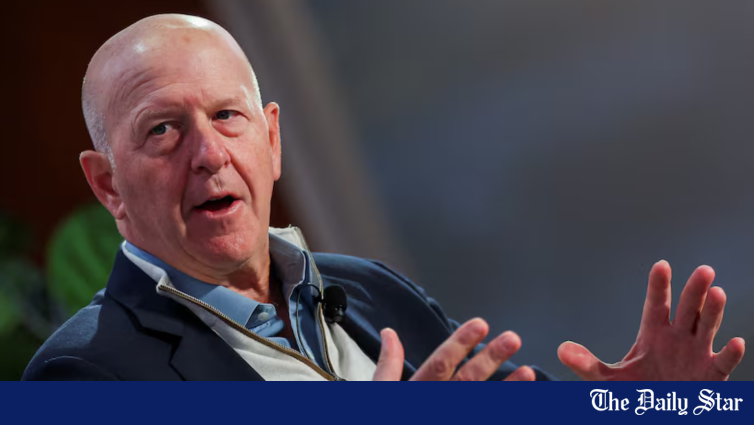
Goldman Sachs chief executive David Solomon has pushed back against warnings that artificial intelligence will trigger mass unemployment, arguing that the US workforce is capable of adapting to the technology’s rapid advance. His comments appeared in a guest essay published in the New York Times on May 22, 2026.
In the essay, Solomon acknowledged that disruption is coming. Goldman Sachs research estimates that AI could automate around a quarter of current working hours within the next decade. White-collar professions, including accounting, banking, and law, are likely to see many of their routine tasks taken over by machines, he wrote. The impact on certain blue-collar roles, he added, is harder to predict.
Yet Solomon laid out three reasons for believing the economy will remain resilient. AI, he argued, will free workers to focus on more complex responsibilities, raise standards within existing professions rather than eliminate them, and create new roles for people who manage and oversee AI systems inside companies. He conceded that if job destruction does occur at an unprecedented scale, a coordinated response between the public and private sectors would be needed to support displaced workers and institutions.
Solomon also invoked the economist John Maynard Keynes, who famously predicted in 1930 that by the end of the century, people would work only 15 hours a week. While that vision never materialised, Solomon suggested it serves as a useful reminder that dire forecasts about technology and employment have often overlooked its potential to lift productivity and economic growth.
According to a report by Forbes on the matter, the essay aligns with internal Goldman Sachs analysis that draws a distinction between jobs at high risk of outright substitution, such as telephone operators, insurance claims representatives, and bill collectors, and those more likely to be augmented, including education administrators, physicians, surgeons, construction managers, and chief executives. Separately, McKinsey reported in a 2025 survey that 51% of organisations said generative AI was reducing their need for entry-level hires.