
Jonathan D. Grinstein, PhD, North American Editor of Inside Precision Medicine, hosts a new series called Behind the Breakthroughs that features the people shaping the future of medicine. With each episode, Jonathan gives listeners access to his guests’ motivational tales and visions for this emerging, game-changing field.
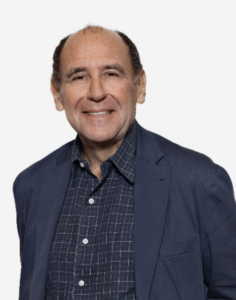
Philippe Pouletty, MD, is one of Europe’s most accomplished life sciences entrepreneurs, with a track record of creating category-leading companies in both biotechnology and medical technology. Over more than three decades, he has repeatedly identified breakthrough scientific innovations, assembled world-class teams, and scaled businesses from inception to global prominence.
His most celebrated success is Abivax, the biotechnology company he founded and led as chairman for a decade. Under his leadership, Abivax evolved into a global biotechnology powerhouse, achieving an approximately $10 billion market capitalization after positive Phase III results in 2025. In 2025, the company delivered the strongest stock market performance of any European company across all sectors.
A physician, scientist, inventor, and venture capitalist, Philippe has founded or co-founded numerous successful life sciences companies and holds dozens of patents, including one of Stanford University’s highest-revenue-generating life sciences inventions. With Abivax and now Carvolix, he has demonstrated a rare ability to build transformative healthcare companies that combine scientific innovation, commercial scale, and lasting impact for patients worldwide.
This interview has been edited for length and clarity.
IPM: Having spent time in both Silicon Valley and Europe, what cultural or structural differences have you discovered that have given Europe an advantage in deep tech and life sciences or that may be holding it back when compared to companies in the United States?
Pouletty: In California, financial resources are virtually limitless as long as you have a company with a great mission that addresses large medical needs and markets. Unfortunately, Europe is behind. France is an excellent place to begin, with companies to hire, good engineers, management, and so on. However, raising more than €50 or €60 million is often difficult when compared to the United States. So, things have improved over the last two decades, and there are some good grants and tax breaks available to help businesses raise capital.
However, the stock market in France and Europe is not as competitive as the Nasdaq. So, while I love the United States, many French and European companies must list on Nasdaq in order to grow, remain independent, and eventually reach the commercial stage. Then it becomes an American company, often a large pharmaceutical company or one with significant innovation. Wonderful small company. Let us buy it. So that’s great for the United States and big pharmaceutical companies. However, Europe’s prospects for the next 20 years do not look promising. The challenge for Europe is that competition will primarily come from the United States, China, and, most likely, India.
Europe faces a difficult task in catching up. But, because I’m still a crazy entrepreneur who is interested in European policies, it’s time for France and Europe to do the right thing and establish independent companies. I believe what is of interest is to do things that have an impact on patients. And if you have a positive impact on patients, you will increase shareholder value; however, you should not always focus on doing an IPO or selling the company as soon as possible. What matters is developing completely novel, radical innovation that will change or prolong the lives of patients while also benefiting the environment.
IPM: As one of Europe’s standout biotech success stories, what set Abivax apart from the many biotech companies that never scale beyond promising science in Europe before venturing out west?
Pouletty: What we like to do at Abivax and Carvolix is build businesses by merging two or three of our biotech companies when much of the R&D is completed in order to reach critical mass and have several product candidates available. So if one fails, the company is not doomed. To be able to attract extremely experienced management. There are too many very small businesses in Europe. For example, the president, Emmanuel Macron, likes to refer to France as the “startup nation.” The goal should not be to become the startup nation. The goal should be to develop world leaders similar to those in the United States, regardless of sector.
Abivax emerged in 2013. Three of our biotech companies were able to complete a Euronext IPO, which remains the largest biotech IPO on Euronext. We had raised €58 million at the time. Surprisingly, the most advanced product candidate, a drug candidate, failed following the IPO in phase two. So it was unpleasant but not disastrous because the second product candidate, which was only in phase one at the time, is now assembled, has a $7 to $10 billion valuation, and has had excellent results in phase three in treating ulcerative colitis patients.
So, it appears to be a straightforward business plan. It’s not correct. You must stay focused on your mission. Disappointment can occur during pre-clinical R&D and clinical development. Of course, this happens to the majority of biotech companies. And this is why, for example, when sailing across the Atlantic or Pacific, you must keep in mind that reaching the other side requires a strong team; sometimes we change the team and the CEO.
But we are very proud to say that the above acts would not exist without Truffle Capital, and I was chairman of the board for ten years and was very pleased. it looks like the drug should be approved. In the last few days the stock dropped because the long-term maintenance clinical results showed great efficacy and there were very few cancers, which is typical in this kind of patient population with a dysfunctional immune system.
So to me, it’s a little hiccup, but I’m very confident it will change and improve the lives of the patients with ulcerative colitis. Now, maybe the little drop in valuation will boost the M&A appetite of some big pharma companies. And I can send that because, well, not any more shareholders are involved in the epilogue. It’s my personal opinion, of course, about the future. I could be wrong.
IPM: How do emerging European companies like Carvolix or Abivax compete with American or Chinese companies? Do you try to establish a market in Europe first, then expand internationally, or do you try to do everything at once? What’s your strategy there?
Pouletty: When Carvolix first launched in the United States, the largest market was heart valve software. So, while launching in the United States with a very concentrated focus team, step by step with specialized centers and then with the market, research based on this successful launch will expand. We may later hire a partner for the United States, or agents or a single partner.
We want our products to be agnostic, regardless of whether the valve is Abivax, Medtronic, or Abbott, so that hospital clinicians can choose which valve system to use for their patients with our software and robot. We will continue to conduct direct sales in Europe, as we have in the past. If you have a highly innovative product, you will need a small, highly technical sales force that can visit clinics, hospitals, and clinicians to be successful in Asia.
IPM: How do you get clinicians and hospitals to buy into something like this, which isn’t really an upgrade of their system, but rather the introduction of a whole new line?
Pouletty: At first, we assumed that top-tier cardiologists who treat hundreds or thousands of patients would not require our services. And it will primarily benefit younger, less-trained cardiologists. However, we conducted studies in France with data from the world’s leading cardiologist for aortic valve replacement, as well as in Australia with highly trained cardiologists. They said, “That’s great because I’m less stressed during the implantation.” I may not need a second cardiologist in the room, as is frequently required, and I may see more patients during the day.
It’s somewhat similar to cars. You could argue that autonomous cars will not meet the needs of taxi drivers. But yes, taxi drivers will say, “Great.” I can drive more miles, transport more passengers, and feel more relaxed at the end of the day. I have no doubt that it will become the norm in medium and small hospitals over the next few years. Place special patients in the care of an expert cardiologist. Now for given special patients in the hands of an expert cardiologist, we don’t pretend it will do better. But many more patients who have not the chance, whether it’s hardware replacement or brain stroke treatment to healthcare… will if we are successful.
It is critical to ensure that introducing AI and robotics does not prolong the procedure. It takes roughly the same amount of time or appears to be shorter. However, it is always under clinical supervision. We can take over and stop the procedure, just like on a plane, and carry it out manually. However, after some initial training with a few patients, the clinician will most likely allow the procedure to be completed autonomously while closely monitoring the screen to ensure that everything is running smoothly.
IPM: How do European healthcare systems differ in their ability to adopt new biotech and medtech innovations?
Pouletty: No system is perfect. I do a very simple comparison in France and Europe. even patients who do not work will be treated in the hospital at no cost. In the U.S., you’d better have a plan. You’re working in the company to be covered. There is no perfect system. Certainly, pricing of drugs and medical devices in the U.S. is higher, which means that there is an incentive for investors and companies to do high-cost R&D to recoup their investment through high pricing. In France and Europe, there is a tendency to have to push for low pricing and low reimbursement, which is why for oncology drugs more are available and reimbursed in the U.S. today than for non-college products.
But there is not enough emphasis on the long-term impact of innovation. And pioneers often looked at the shorter impact and said, oh, that’s two weeks, let’s say. I’ll give you one example. In oncology, pancreatic cancer is tough because the diagnosis is very often very late when you have big tumors.
It’s very clear that if it were up to me, we would do imaging every two years. We would catch very small, tiny tumors very early on because an anatomical change in our cells within two years could indicate that you need to go and see if you should remove this little tiny one. But that’s not common in practice because it would be expensive to do an MRI every two years on everyone after 50 years old.
So beyond drugs and medical devices and the practice of medicine, how do you do? Preventative medicine needs to be greatly improved, and governments are not very good at looking at these approaches to improve healthcare. So, I went into politics. I would turn on that. I decided 25 years ago I would not run for any elected office and focus more on starting companies.
Source link