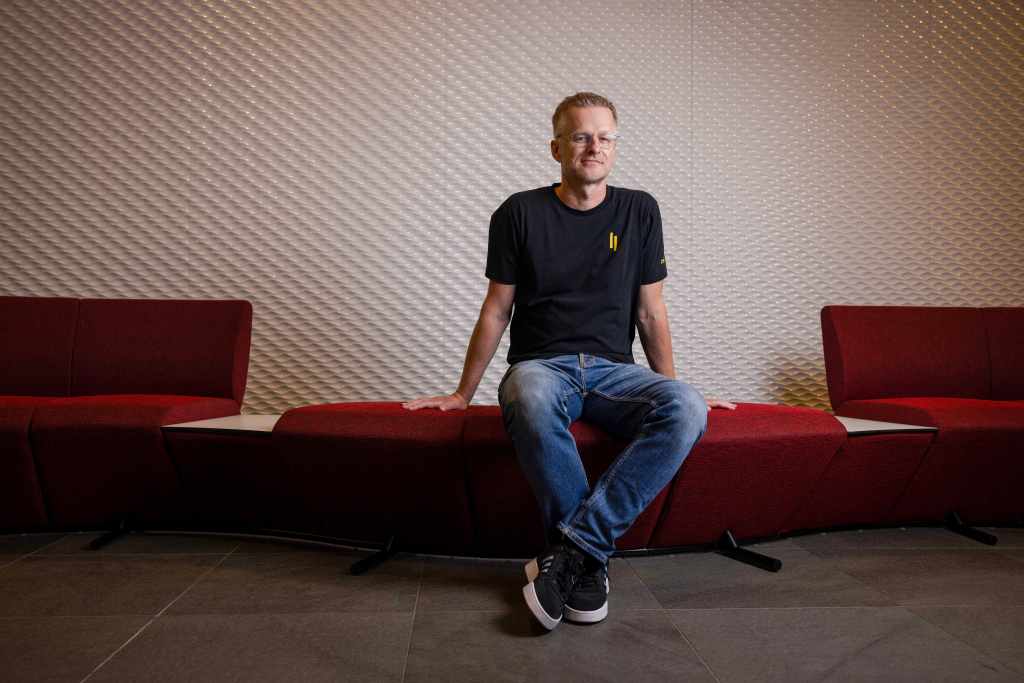
Zeller founder Ben Pfisterer says AI is shortening product cycles from nine months to four weeks. The fintech’s latest point-of-sale system is both a swipe at Square, Stripe and Shopify – and a testbed for Zeller’s AI ambition.
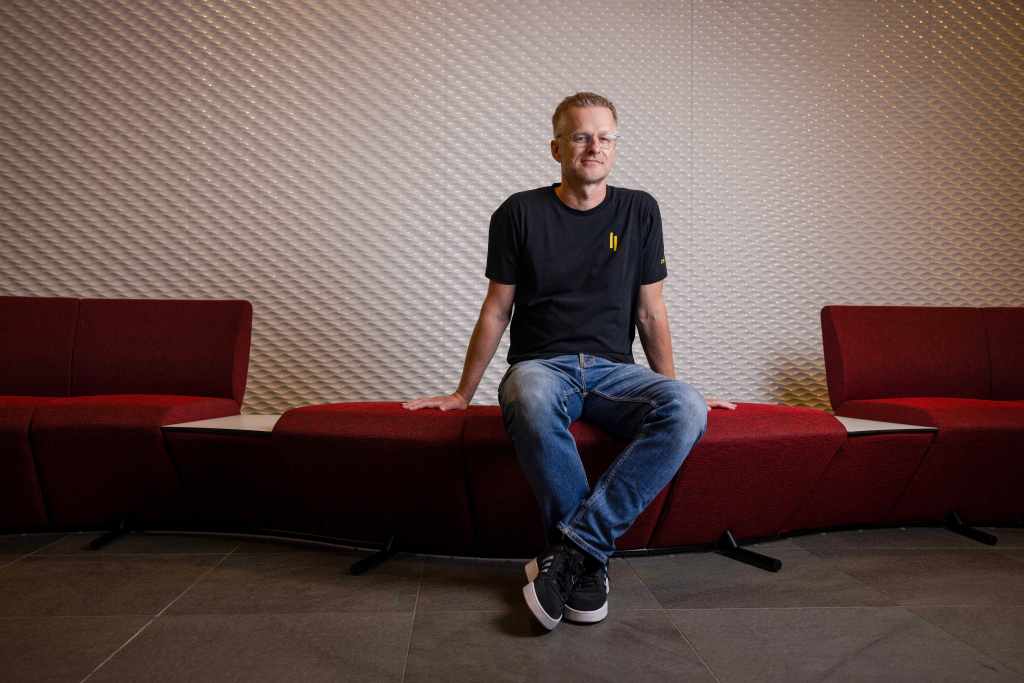
Zeller founder Ben Pfisterer says artificial intelligence is cutting product development cycles from nine months to just weeks – and his company’s latest product will prove it.
The unicorn fintech on Wednesday launched a new point-of-sale software from retail and hospitality customers, which Pfisterer says will rapidly evolve as AI allows the company to deploy new capabilities faster than ever before.
“Some businesses might need a really good table mapping system for hospitality or a fantastic inventory management system in retail, those are big chunks of capability that should take months,” Pfisterer told Forbes Australia. “We’ve identified eight of them that we’re going to do post launch, and we’re hoping to get the meaningful part of it – design, built and tested – in one to two week chunks of time.”
Ten months ago Zeller shifted from using artificial intelligence for assistance to integrating the technology into project development from the ground up. The building blocks of the just-launched POS system took months to build, Pfisterer said, while equivalent work is designed and tested in the space of a week.
“It’s definitely been a case study for us on two things,” Pfisterer said. “How meaningfully AI can change your delivery process, and how continual it is… whilst I’m talking to you and saying it’s so exciting [that] we’re going to build these meaningful capability advancements on top of the core POS within one or two weeks, I’m sure we’ll speak in a year and we’ll laugh that it took one to two weeks. It’ll be like, well, that’s now happening in a day.”
His proclamation of AI efficiency comes as big businesses in the US are raising alarm bells about the rising cost of the technology, as the supply of data-centre compute struggles to match demand stemming from large companies issuing organisation-wide directives to adopt the technology.
Meta, itself a big developer of AI models, told employees it would limit AI use after an “exponential increase” in costs, the New York Times reported. It’s not just tech companies, as Walmart as also limited employee use of AI tools to reduce expenses.
Pfisterer contends Zeller is a Goldilocks size to integrate AI: smaller businesses may have tight budgets that can’t withstand the bite of rising AI costs while larger organisations like banks will struggle to efficiently implement the technology.
“Most businesses just have to accept the fact that this is a cost centre they didn’t have yesterday, one they’re going to have to have,” Pfisterer said. “They have to become more efficient with it, the opposite of people not using it is not acceptable.”
Pfisterer was APAC manager for Jack Dorsey’s fintech giant Square before departing to found Zeller in 2020 and compete with his former employer. Just over two years later Zeller capped off a $100 million Series B that valued it over $1 billion, making it the fastest Australian startup ever to hit unicorn status. In addition to expanding its product offerings, Zeller has expanded to the UK and is eyeing markets in Europe later this year.
Yet though it is among Australia’s larger startups, the company is looking to take a bite out of are magnitudes larger: Square-owner Block (US$43 billion), Shopify (US$140 billion) and Stripe (last valued at US$179 billion).
Zeller’s flagship product thus far is a payment terminal that integrates with POS systems made by other companies. It hopes to gain ground on its established rivals by releasing its own POS software to work in tandem with its terminal hardware. Customers who use both Zeller’s terminal and POS can access a pay-as-you-go payment scheme rather than the industry standard monthly subscription fee, which it says will help businesses cut fixed costs.
Pfisterer insists AI has allowed Zeller to do more with less, which has delayed its need to run a Series C. That will change this year as the company looks to extend its reach into Europe. It has over 1,000 British customers after launching in the UK in April, Pfisterer said, and Zeller will look to raise cash this year to fund operations in more countries.
“We’re going to push internationally very hard, so with that you have a different capital expenditure profile,” he said. “We will be raising again, I suspect we’ll start having conversations at the back end of this calendar year.”
Want to see more Forbes articles on your feed? Tap here to make Forbes Australia a preferred source on Google.
Look back on the week that was with hand-picked articles from Australia and around the world. Sign up to the Forbes Australia newsletter here or become a member here.