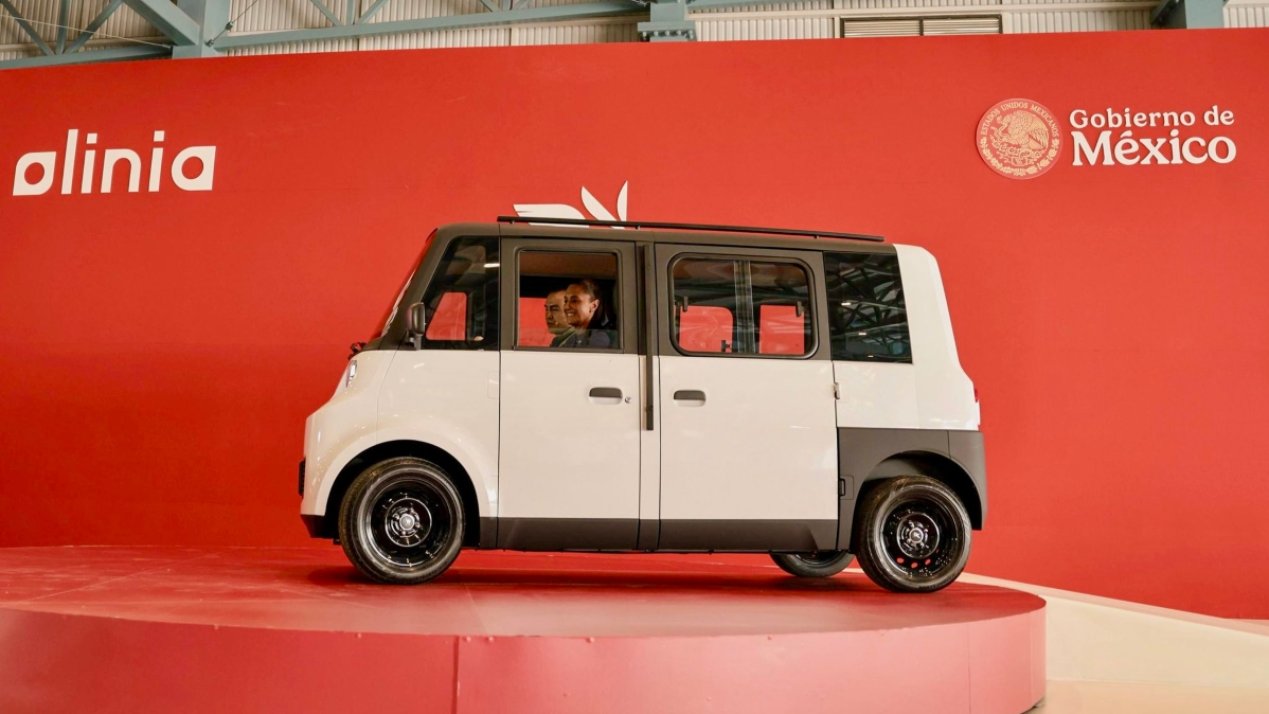
Puebla’s automotive and plastics industries have begun discussions with Mexico’s electric vehicle project Olinia, as approximately 200 local companies seek opportunities to join the initiative’s future supply chain. The effort comes as Olinia advances negotiations with more than 10 national and international business groups to establish a mixed-investment public-private partnership supporting the production of 50,000 electric microvehicles by 2029.
The outreach is being led by the Puebla chapter of the National Chamber of the Transformation Industry (CANACINTRA), which has initiated contact with Olinia executives to better understand the project’s manufacturing requirements, component needs, and supplier integration standards. While no commercial agreements have been signed, industry representatives are positioning Puebla’s manufacturing base as a potential contributor to the program as it moves toward operational definition.
Carlos Sosa Spínola, president, CANACINTRA Puebla, said the organization has already begun arranging meetings with project leaders to determine “what type of supply will be required and under what conditions local industry could be integrated.”
Puebla’s automotive sector is supported by decades of integration with global automakers such as Volkswagen and Audi. This experience has enabled the development of certified manufacturing processes across auto parts, metalworking, and plastics production.
According to Sosa Spínola, the state’s industrial ecosystem retains the capacity to support large-scale automotive manufacturing programs and continues to benefit from a skilled technical workforce developed through its long-standing automotive presence. However, he emphasized that Olinia is not yet in a supplier contracting phase and that current discussions remain exploratory.
“The project is still not in a hiring or procurement stage,” Sosa Spínola said, explaining that conversations are focused on aligning technical and economic expectations before any commercial relationships are established.
The Puebla automotive industry’s approach has therefore been proactive rather than transactional. Nearly 200 companies have expressed interest in participating in different segments of the future supply chain, ranging from component manufacturing to assembly-related activities.
The discussions are taking place as Olinia advances its own industrial planning process. The project, promoted by the Mexican government, aims to create a domestically developed electric microvehicle platform designed for urban mobility and commercial transportation services. Commercial deliveries are expected to begin in summer 2027, with a starting price of MX$150,000 (US$8,400).
Roberto Capuano, director, Project Olinia, said the initiative is structured as a public-private partnership that separates government support from manufacturing operations.
“The government provides resources, access to clients, and facilities, while the private partner contributes capital and operational expertise,” Capuano said. “The structure recognizes that operations are more efficient under private management than public administration. That allows us to compete and operate more effectively.”
Capuano confirmed that the project has attracted interest from multiple investors. “We have several active conversations with different business groups that have expressed interest,” he said. “We are already in the low double digits and definitely have more than 10 interested parties.”
One of Olinia’s principal industrial objectives is achieving a domestic content rate of 75% for vehicle components. Project executives say reaching that target required an 18-month process to identify and evaluate manufacturing capabilities across Mexico.
For Puebla suppliers, the localization strategy represents a potential opportunity. However, industry representatives acknowledge that not all companies currently possess expertise in battery production or advanced electric propulsion systems.
Sosa Spínola noted that several companies have begun adapting their operations to support electromobility applications, although the transition remains gradual. He also acknowledged that information on local suppliers capable of manufacturing batteries at industrial scale remains limited, highlighting a technological gap that may require external partnerships or long-term industrial development.
Olinia’s battery strategy currently relies on lithium iron phosphate (LFP) technology. While battery cells will initially be imported, the project plans to establish domestic battery pack assembly operations.
“The battery is still in a prototype stage; however, the technological decisions have already been made,” said Capuano. “The lithium iron phosphate cell we are currently using is the same cell that will be incorporated into production vehicles.”
He added that battery integration activities will be expanded through a dedicated manufacturing facility. “We are going to build a battery assembly plant,” Capuano said. “We will import the cells, manufacture our own battery management system, and integrate the entire battery pack in Mexico using locally sourced components.”