The artificial intelligence boom is doing more than reshaping software, it’s cracking the foundations of America’s power grid. As data centers multiply to feed the compute needs of large language models, utilities are scrambling for new sources of baseload power, and increasingly they’re turning to an unlikely partner: fusion startups. The latest beneficiary is Realta Fusion, which just landed a partnership that signals how desperate the energy sector has become.
The grid is buckling under a weight nobody quite planned for. Data centers built to train and run AI models are pulling electricity at a pace that’s outrunning the slow, steady growth curves utilities have used to plan capacity for decades. That mismatch has turned fusion energy, a technology critics have joked is perpetually “30 years away,” into an unlikely darling of the power industry, and Realta Fusion is the newest company to cash in on that anxiety, according to TechCrunch.
This isn’t happening in a vacuum. Over the past two years, hyperscalers like Microsoft, Google, and Amazon have been signing power deals at a clip that would have seemed unthinkable a decade ago, locking down nuclear, solar, and now fusion capacity years before a single reactor produces commercial electricity. The logic is simple: AI workloads run around the clock, they don’t care about weather, and they need power that’s both massive in scale and stable in supply. Fusion, at least on paper, checks those boxes better than almost anything else on the horizon.
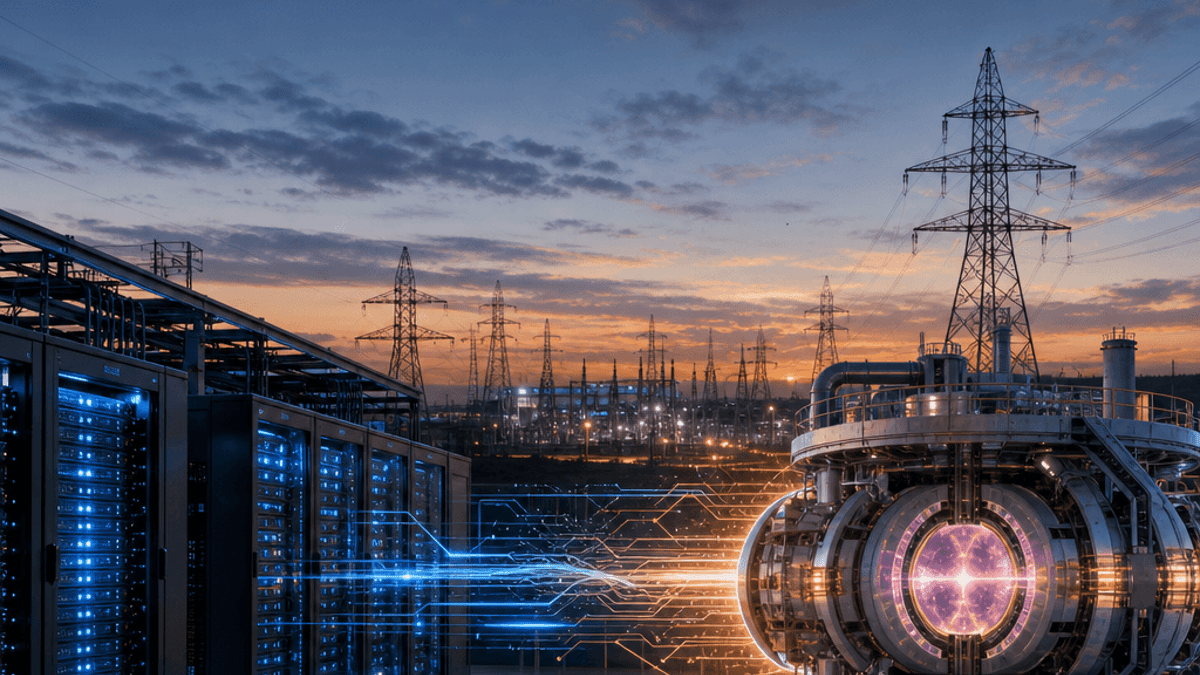
[embedded image: illustration of a fusion reactor facility with power transmission lines]
Utilities, for their part, have historically been the most conservative players in the energy conversation. They plan in decade-long cycles, they hate stranded assets, and they’ve watched plenty of fusion promises come and go without a working commercial reactor to show for it. But the calculus has shifted. Data center electricity demand in the U.S. is climbing at rates that regional grid operators are struggling to model, and utilities that fail to secure new generation now risk losing the AI infrastructure gold rush to rivals willing to take a bet on emerging technology.
That’s the opening companies like Realta Fusion are stepping into. The startup, which has been developing its own approach to fusion confinement, is now positioned as a supplier utilities are willing to court directly rather than wait on through traditional procurement channels. It’s a notable shift from the funding-round-driven narrative that’s dominated fusion coverage for years, where progress was measured in venture capital raised rather than customers signed. A direct utility partnership suggests something closer to commercial validation, even if actual power delivery remains years out.
The competitive landscape here is getting crowded fast. Commonwealth Fusion Systems, Helion Energy, and TAE Technologies have all inked their own utility and hyperscaler agreements in recent years, each racing to prove their reactor design can scale before rivals lock up the best sites and power purchase agreements. Realta’s move puts it firmly in that same conversation, competing not just for capital but for the far more valuable currency of a signed offtake deal.
What makes this moment different from previous fusion hype cycles is the urgency driving it. Previous waves of fusion enthusiasm were largely climate-driven, framed around decarbonization timelines stretching to 2050. This time, the pressure is immediate and commercial. AI companies need power now, or at least within the next five to seven years, and they’re willing to underwrite risk that utilities alone wouldn’t touch. That’s translating into faster permitting conversations, earlier-stage partnerships, and utilities effectively acting as venture-style bettors on technology that hasn’t yet produced net energy gain at commercial scale.
There’s real risk in that bet. Fusion has a long history of missed timelines, and no company, Realta included, has demonstrated a reactor producing more energy than it consumes in a sustained, grid-ready fashion. If the technology stalls, utilities that have restructured planning around fusion capacity could find themselves scrambling again, right back where they started with the AI power crunch.
Still, the direction of travel is clear. As long as AI infrastructure keeps expanding and grid operators keep warning about capacity constraints, expect more utilities to follow this playbook, forming early partnerships with fusion startups in hopes of locking in tomorrow’s power today. The next few years will show whether that bet pays off or whether it’s just the latest chapter in fusion’s long history of promising more than it can deliver on schedule.
For readers tracking the collision between AI’s insatiable power appetite and the slow-moving energy sector, this deal is a signal worth watching closely. Utilities aren’t known for taking technology bets, yet the AI-driven demand crunch is pushing even the most cautious power providers toward speculative partnerships with companies like Realta Fusion. Whether this marks the beginning of fusion’s real commercial arrival or just another overpromised timeline will shape how the industry plans power infrastructure for the next decade, and it’s a story that touches everyone from hyperscalers to the households whose electricity rates ride on how this all plays out.