The Tech Buzz may earn a commission when you buy through links on this page. This never affects which products we recommend or what we say about them.
A Toronto-based startup just cracked one of prosthetics’ biggest problems – making bionic arms that actually work intuitively. smartARM developed a vision-first prosthetic that uses Meta’s open-source DINOv2 AI model and Ray-Ban glasses to automatically select the right grip for any object, eliminating the clunky manual switching that’s plagued traditional prosthetics for decades.
smartARM just solved a problem that’s frustrated amputees for generations. The Toronto startup’s bionic arm doesn’t just move – it thinks, sees, and adapts in real-time using AI that would make sci-fi writers jealous.
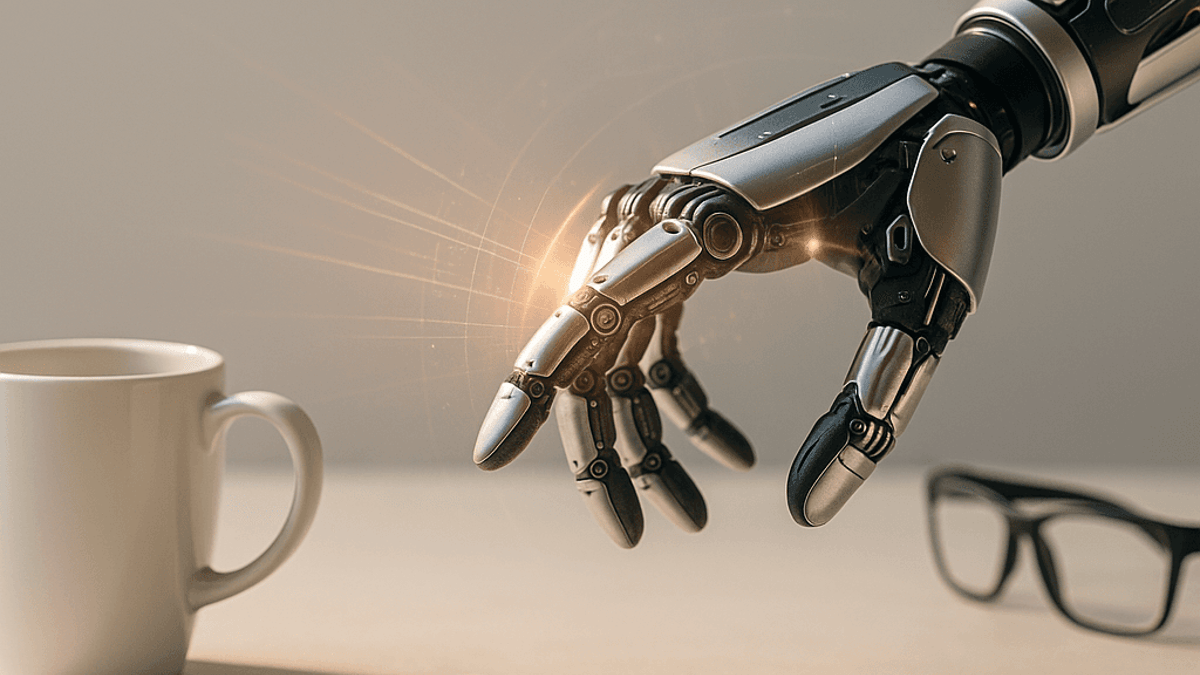
Traditional prosthetic hands force users into a frustrating dance of manual grip switching. Want to pick up a coffee mug, then grab a spoon? That’s two separate procedures, each requiring conscious thought and finger gymnastics. smartARM’s approach flips this entirely – their prosthetic arm literally sees what you’re reaching for and configures itself automatically.
The secret lies in a camera embedded in the palm that feeds visual data to Meta’s DINOv2 open-source vision model. This isn’t just object detection – it’s contextual understanding that lets the arm recognize everyday items from just a few reference photos and select appropriate grips without any programming. What used to take weeks of training now happens instantly.
“Building a capable hand is only part of the challenge. Making it intuitive to use matters just as much,” smartARM Founder and CEO Hamayal Choudhry explained to Meta Newsroom. “By helping the arm recognize everyday objects and select a suitable grip, we’re working toward an experience where people can focus more on what they want to do and less on how to operate their prosthetic.”
The integration with Meta AI glasses adds another layer of sophistication. The Ray-Ban smart glasses provide egocentric vision data that gives the prosthetic additional context about what users are trying to interact with. Through Meta’s Wearables Device Access Toolkit, the system creates a more complete picture of the user’s environment and intentions.
But the real innovation happens in the community aspect. Users can add new objects through a smartphone app, creating a shared database that benefits everyone in the smartARM ecosystem. This crowdsourced approach means the prosthetic gets smarter with every user, learning to recognize an ever-expanding catalog of everyday items.
Former NFL linebacker Shaquem Griffin, who’s been testing the smartARM system, captures the life-changing impact perfectly. “Of all the tech packed into it, scalability and accessibility matter most to me. This is the future of consumer prosthetics,” Griffin told Meta in a recent interview.
The technical achievement here can’t be overstated. Meta’s DINOv2 model, originally designed for general computer vision tasks, proves remarkably effective at the split-second object recognition that prosthetic control demands. The system processes visual data, identifies objects, selects appropriate grip patterns, and executes movements faster than conscious thought.
This represents a fundamental shift in how we think about assistive technology. Instead of asking users to adapt to their devices, smartARM built a device that adapts to users. The prosthetic works from the first try, with zero training required – a stark contrast to traditional systems that can take months to master.
The timing couldn’t be better. As AI vision models become more sophisticated and edge computing more powerful, we’re seeing assistive technology finally catch up to the promises we’ve been making for decades. smartARM’s approach proves that the most transformative applications of AI aren’t always the flashiest – sometimes they’re the ones that quietly restore human capability.
smartARM’s vision-first prosthetic represents exactly the kind of AI application that matters most – technology that disappears into the background while dramatically improving human capability. By combining Meta’s computer vision expertise with thoughtful hardware design, they’ve created something that works intuitively from day one. As AI continues evolving, expect more assistive technologies to follow this playbook of making complex systems feel effortlessly simple.