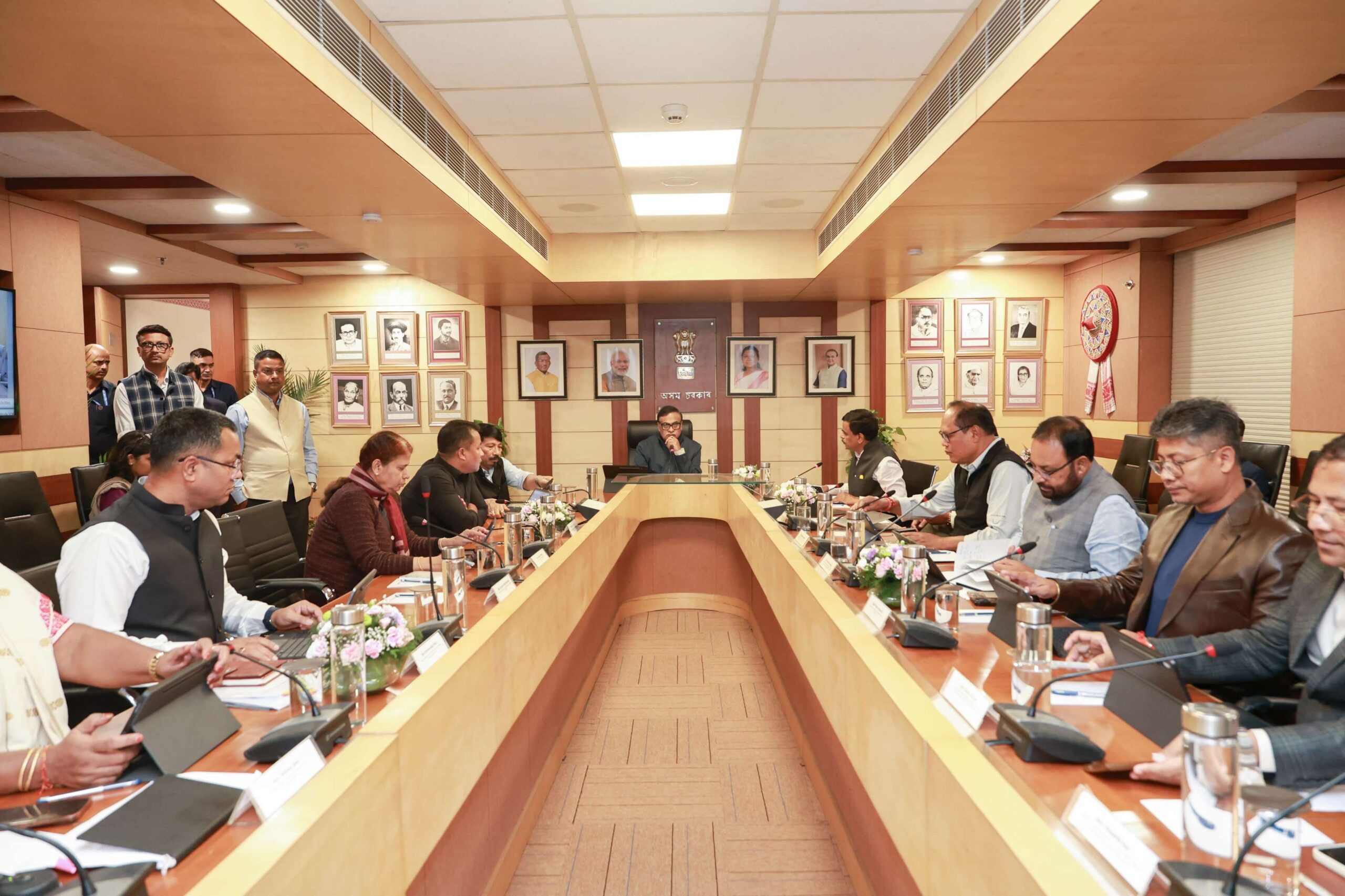
Guwahati, Nov 19: Strengthening urban governance, the Assam Cabinet on Thursday approved the creation of six new municipal boards, besides expansion and ward delimitation in 23 existing urban local bodies.
Addressing a press conference at Assam Bhawan in New Delhi after the Cabinet meeting, Chief Minister Himanta Biswa Sarma said the new municipal boards would also help promote entrepreneurship in educational institutions and address land-related concerns.
“We have approved six new municipal boards: Laluk Municipal Board and Harmoti-Bandarduwa Municipal Board; Majuli Municipal Board in Majuli; Udharbond Municipal Board in Cachar; and Mirza Municipal Board and Bijoynagar Municipal Board in Kamrup,” he said.
The Cabinet also approved the expansion of areas and ward delimitation in 23 existing Urban Local Bodies.
“The decisions are part of the state government’s efforts to strengthen the functioning of urban local bodies and improve urban governance,” Sarma said.
Innovation & startup policy for higher education
In another significant decision, the Cabinet approved the “Innovation and Startup Policy in Higher Educational Institutions” to encourage entrepreneurship and innovation across the state.
Sarma said the policy would facilitate the development of innovation and startup incubation centres in colleges and universities, while strengthening the broader ecosystem required to support emerging entrepreneurs.
The initiative is expected to provide institutional support to students and young innovators seeking to develop entrepreneurial ideas into viable ventures.
New definition of urban areas for land benefits
The Cabinet also approved decisions concerning land-related issues discussed during recent meetings with representatives of different indigenous communities of Assam.
Under the revised approach, the government has decided to consider areas within one kilometre of a town’s boundary as urban for the purpose of extending the relevant benefits under the Basundhara scheme, instead of treating the entire area covered by a town’s master plan as urban.
Sarma said areas falling within an urban master plan but beyond the one-kilometre limit would continue to be treated as rural.
“We have decided that only the town area and the one-kilometre belt beyond its boundary will be considered urban. The remaining areas, even if they fall under the urban master plan, will be treated as villages. This relaxation will not apply to Kamrup Metropolitan and Kamrup districts,” he said.
Higher honorariums for panchayat representatives
The Cabinet also approved an increase in the monthly honorariums of elected representatives at the Zila Parishad, Anchalik Panchayat and Gaon Panchayat levels.
At the Zila Parishad level, the monthly honorarium of presidents has been increased from Rs 10,000 to Rs 15,000, while vice-presidents will now receive Rs 10,000 instead of Rs 7,500. Members will receive Rs 5,500, up from Rs 4,000.
For Anchalik Panchayats, presidents will receive Rs 10,000 instead of Rs 7,500, while the honorarium of vice-presidents has been raised from Rs 5,000 to Rs 7,000. Members will now receive Rs 6,000, compared to the earlier Rs 3,000.
At the Gaon Panchayat level, presidents will receive Rs 6,500 instead of Rs 5,000, while vice-presidents will get Rs 4,000, up from Rs 3,000. The honorarium of members has been increased from Rs 2,000 to Rs 2,600.
The revised honorariums are aimed at enhancing financial support for elected representatives involved in grassroots governance.
Land pattas for ICAR and Army
The Cabinet also approved the allotment of land-related rights for two institutions.
At Gogamukh, 1,568 bighas of land under the Indian Council of Agricultural Research (ICAR) will be granted miyadi patta. In Sonitpur district, 75 bighas of land at Missamari will be allotted to the Army.
Seven-day window for Moran, Motok council polls
The Cabinet also decided to reduce the period for filing claims and objections in the electoral process for the Moran and Motok Autonomous Councils from 15 days to seven days, paving the way for the elections to be held within December.
“Normally, the claims and objections period is 15 days. However, since there was a demand to hold the elections this year, we have reduced it to seven days so that the Moran and Motok Autonomous Council elections can be conducted within December,” Sarma said.