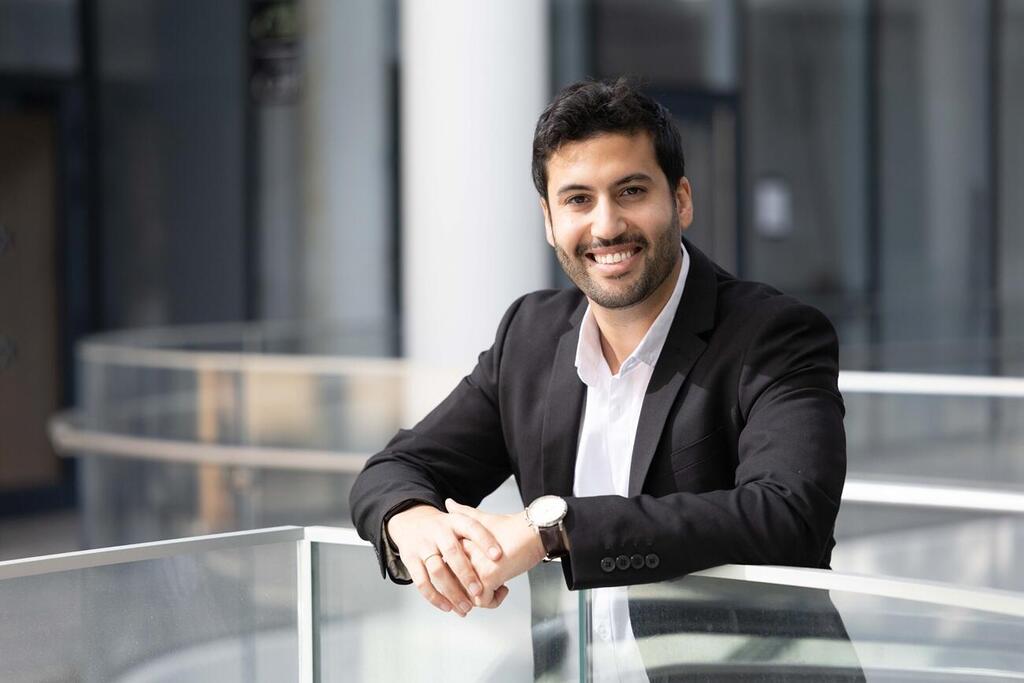
“When I finished my PhD at the Technion, my father just said, ‘Good.’ When he visited my office and saw a refrigerator full of dairy desserts, he was more excited,” says Maor Fried, who holds a doctorate in mechanical engineering and recently founded an artificial intelligence startup with an unexpected employee: his father, who lost his job during the pandemic.
“For my father,” Maor explains, “a full refrigerator is the real status symbol. There is something deeply symbolic about that, because what is the point of education and a career if not to provide for a happy family? A full refrigerator means you are taking care of your family. Ultimately, they don’t eat diplomas. They eat the food you put in the fridge.”
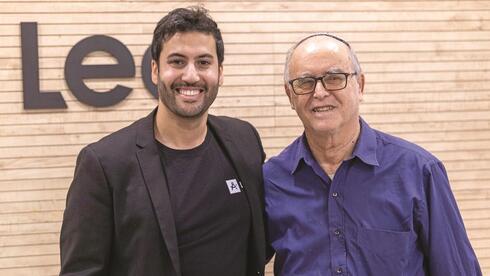
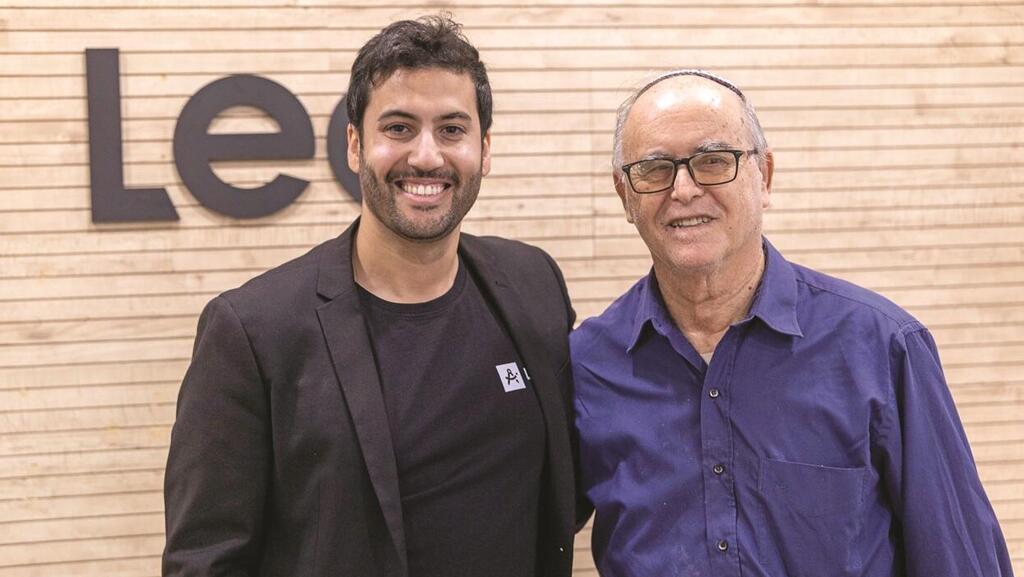
Dr. Maor Fried with his father, Yosef
(Photo: Tal Shahar)
Fried, 34, is married with two children, ages 5 and 18 months, and lives in Rosh Haayin. Once you hear how his story began, founding a startup, completing a doctorate and even finishing high school seem far from inevitable.
His father, Yosef, 73, grew up in an immigrant transit camp in Ness Ziona. His mother, Mazal, grew up in transit camps in Be’er Yaakov and in Holon’s Jesse Cohen neighborhood.
“As a child, my father lived in a shack with a leaking roof and an outdoor toilet, and all the siblings slept in one room. My mother started cleaning stairwells with her own mother before she was 10. Three of her siblings died in the transit camp, and another was killed in the Yom Kippur War.”
After completing eight years of schooling, his parents were sent to learn trades: his mother sewing, his father metalworking. They settled in Ness Ziona after marrying. His father later worked as a secretary and bookkeeper, “working around the clock,” while his mother worked as a seamstress and kindergarten assistant. They tried for 10 years to have children before Maor arrived.
As a little boy, Maor would go to work with his father. “I would spend hours drawing and making chains out of paper clips.” As the eldest son of parents who had not finished high school, he struggled to understand the point of school: “You go to a gray building and have to stay quiet for hours.”
Today, he knows that ADHD, diagnosed only after he became a student at the Technion, made it difficult for him to concentrate on what his teachers were saying.
“Everything distracted me, and I found it very hard to stay focused,” he recalls. “I would make a comment in class and only afterward realize I had shouted it. The teacher would throw me out, and one day she even told me, ‘I promise you, you’ll never amount to anything.’
“Once, in the middle of the day, they called my father to school to take me home. He came into the classroom, grabbed me by the collar, leaned toward my ear and said, ‘Look how you’re embarrassing me.’ When I remember it, it brings tears to my eyes.”
One evening brought a defining moment.
“I waited for him to come home from work, and he walked in around midnight. I had always known him as a strong man, but that evening I saw someone exhausted. He noticed me looking at him, came over, put his hands on my shoulders and said words that stayed with me for years: ‘Study so you won’t end up like me.’
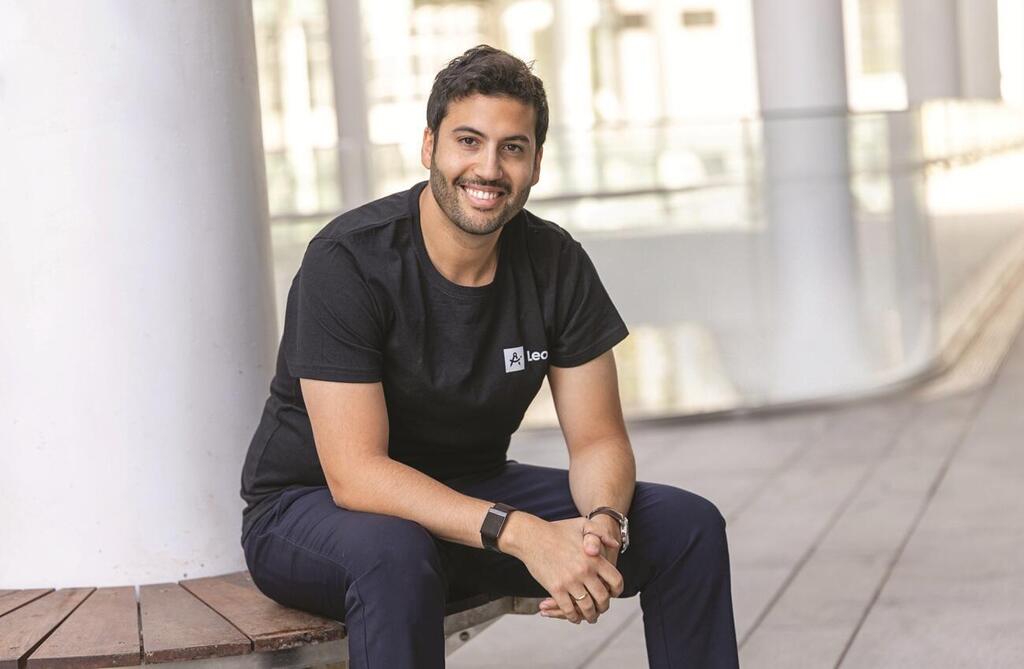
Dr. Maor Fried
(Photo: Tal Shahar)
“A child understands a parent’s pain. I didn’t know what studying meant, but I understood that if I studied, my father would smile more. From that moment, I began studying as though my life depended on it. I moved to the front row and had to find ways to overcome the difficulty.
“I noticed that I couldn’t absorb anything in class because it went in one ear and out the other. So I began writing down everything the teacher said, and if I couldn’t keep up, I would ask a question to slow her down. It was like going through withdrawal, because my body was saying, ‘Look out the window, get up, talk,’ but I forced my hand to keep writing.
“Before long, I had the best grades in the class, and then in the entire grade. My father didn’t openly show his happiness, and that made me even more motivated because I wanted to make him happier. I told myself, ‘Great. I’ll do more.’
“When I scored 100, I ran to show my parents. A test with a score of 99? That went into the drawer. I felt responsible for their happiness.”
A second defining moment came when he was 17.
“One day, someone hit me in the shoulder as I was leaving school. The next thing I remember, I was leaning over the guy who had hit me, and his face was covered in blood. I realized I had lost control, and I was terrified of what my father would say.
“I ran home, and after a while I heard loud knocking at the door. I looked through the peephole and saw three armed police officers. They shouted, ‘Maor, we know you’re in there. Open up, or we’ll force the door open.’ I opened it, and within minutes I was in a police car.
“We lived in long apartment blocks arranged in a U-shape, and everyone knew everyone. I got into the police car with all the neighbors watching. I wasn’t thinking about myself, but about the look in my father’s eyes. At the station, a policewoman sat down opposite me. She loved her job, was delighted to have fresh meat and explained how she was going to ruin my life.”
So what did you do? “I told her, ‘Officer, I’m a good kid. I have good grades. This was a one-time thing.’ She replied, ‘Everyone who sits in that chair says the same thing.’ After three hours of this, she went out for a cigarette break. She came back looking disappointed, put a piece of paper on the table and said, ‘Get out of here. I never want to see you again.’
“I looked at the paper. It was my grades: math, 100; physics, 100. Almost everything was 100. She was very frustrated, but she let me go.
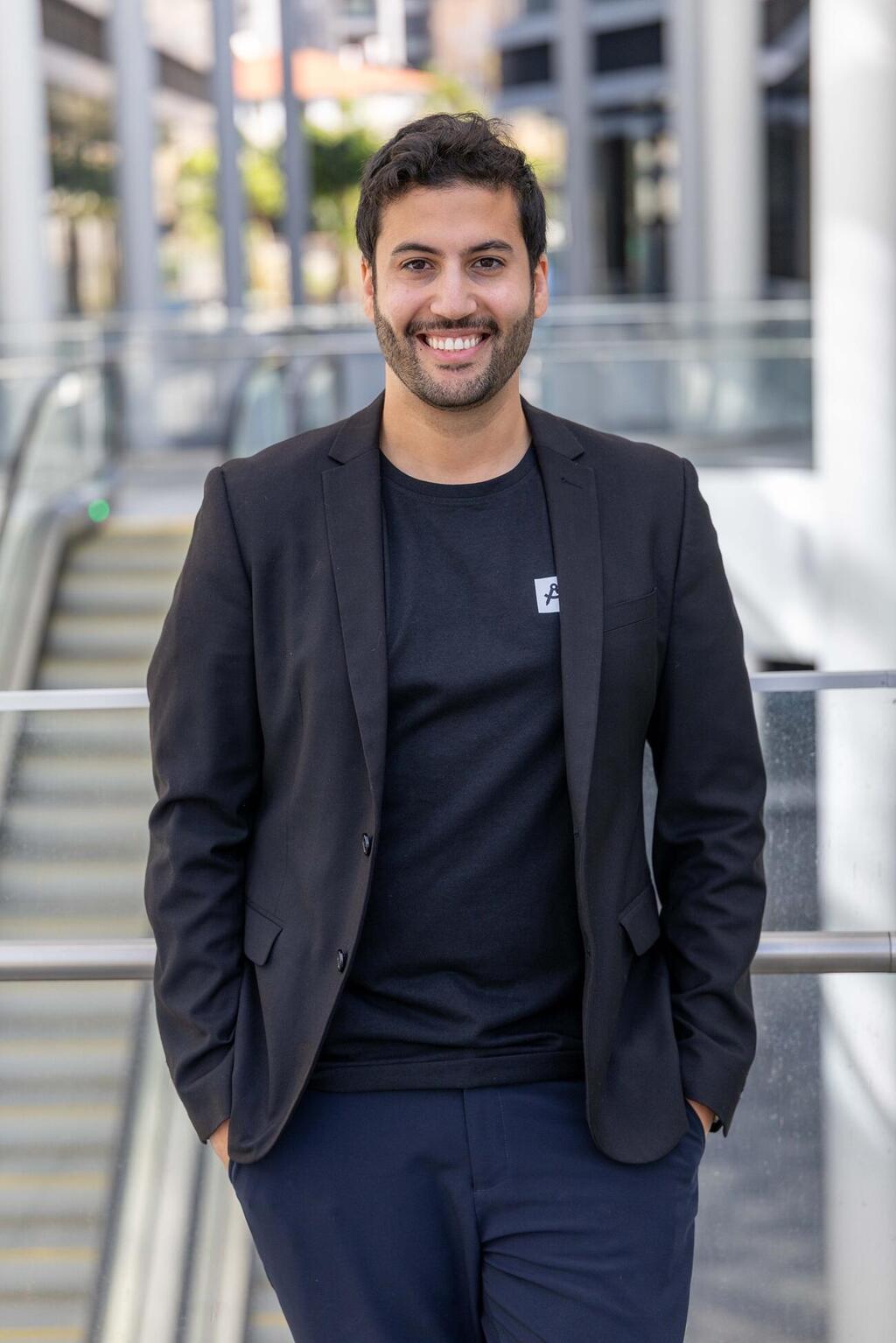
Dr. Maor Fried
(Photo: Tal Shahar)
“My father was waiting outside, pale, and didn’t say a word. At that moment, I decided to keep studying as far as I could, until I had a doctorate. I never ended up at a police station again. And I made myself another promise: I would do everything I could to keep other children from ending up in that situation.” We will return to that promise.
Maor graduated with outstanding matriculation results from the software engineering track at Ben-Gurion High School. He immediately began studying at the Technion through the Israeli military’s academic reserve program, joining Military Intelligence’s Barakim program to pursue bachelor’s and master’s degrees in mechanical engineering, specifically nonlinear dynamics, chaos theory and artificial intelligence.
“I woke up every morning like a child going to Disneyland. I would say to my friends, ‘Do you realize where we are?’ I was deeply grateful, and I felt I wasn’t alone because I was doing it with my parents and siblings.
“At my master’s graduation ceremony, I decided my father would wear the cap and gown and go up to receive the degree in my place,” he recalls. “He resisted, but eventually I persuaded him. He was incredibly embarrassed, but he smiled. I waited for him below the stage and hugged him.”
He went straight on to a doctorate at the Technion while beginning his military service in a classified unit. During that service, he ventured into pilot training: “I did the selection course with 17-year-olds.” He later moved to the renowned Unit 8200, becoming an AI researcher and an outstanding commander.
“I would come home exhausted from the army and work on my doctorate. When you’re working toward something bigger than yourself, fatigue isn’t a factor.” He completed his PhD at just 24 and says he was the Technion’s youngest doctorate recipient that year.
That was also the year he married Michal, a mechanical engineer. At 27, he completed his military service, received a Fulbright scholarship and traveled with Michal to the United States for postdoctoral research at MIT, followed by a leadership program at Harvard.
The boy you were in third grade must have been pinching himself to believe he was there. “Yes. And what was on my mind wasn’t that teacher who said I would never amount to anything. It was my father, who had always been there for me. A child doesn’t understand big words like self-fulfillment. He understands a mother’s and father’s love.”
After returning to Israel, he lectured at the Technion for a year. In May 2023, he and his close friend Moti Moravia founded LEO AI, which he describes as the first artificial intelligence system for physical products.
“Just as you use ChatGPT to write an email, you can say, ‘Hey Leo, design me a pacemaker that will last 50 years.’ Leo will do all the design work until you have a product ready for manufacturing. The process from idea to product has never been shorter,” he says proudly. “I’ve filed three patents for it.”
Dr. Maor Fried
(Photo: Tal Shahar)
He also founded a nonprofit called Learning to Succeed, which aims to help at-risk young people from disadvantaged communities advance, “so no one tells them, ‘You’ll never amount to anything,’ and so they don’t end up at a police station,” he explains.
Since his father’s layoff, Maor had been worried about him.
“He was used to working from morning until night and had no hobbies. Older people can begin to decline after retirement, and because my father is the most important person in the world to me, I didn’t want to wait for that to happen. Everyone needs a sense of purpose.
“So one day, I invited him to have lunch with me at the office. Dad came home excited and couldn’t stop telling my siblings about the experience, the young employees, the snacks in the cupboards and, yes, the refrigerator.
“I asked myself how I could make him feel like the most needed person in the world while also asking him to help with things we genuinely needed. I asked whether he would be willing to do some light office work, and he was delighted. Now he comes in once or twice a week, makes photocopies and files everything meticulously. And I’m happy to have time to eat lunch with him.”
So you’re your father’s boss? “No. He doesn’t work for me. He works alongside me. I don’t manage him. He does ask me what to do that day, but it doesn’t change the fact that he is my father and that I hold him in great awe and respect. That relationship doesn’t reverse.
“When I was a child, I made paper clip chains in his office and was the happiest person in the world because I was with him. Now he comes to my office, and I’m the happiest person in the world.”
You wrote a post about this that received 1,500 likes. “Only after we become parents do we understand how much our parents sacrificed for us. Remember how important you are to your parents and how you can help them feel a sense of purpose. Call them, sit down with them for coffee, ask their advice. And if you can work with them? All the better.”
Source link

