The Week in Short
The public markets pullback hasn’t hit privates yet, but inference startups could become a bellwether. Jensen Huang’s return to Nvidia trades short-term stock bumps for longer-term rot in American business. A mathematician cracks the Riemann hypothesis with the help of Claude. Defense tech deal value hits new records. Decart becomes the latest reverse acquihire target, this time to Amazon. Bret Taylor lands over $1 billion for Sierra’s latest funding round.
The Main Item
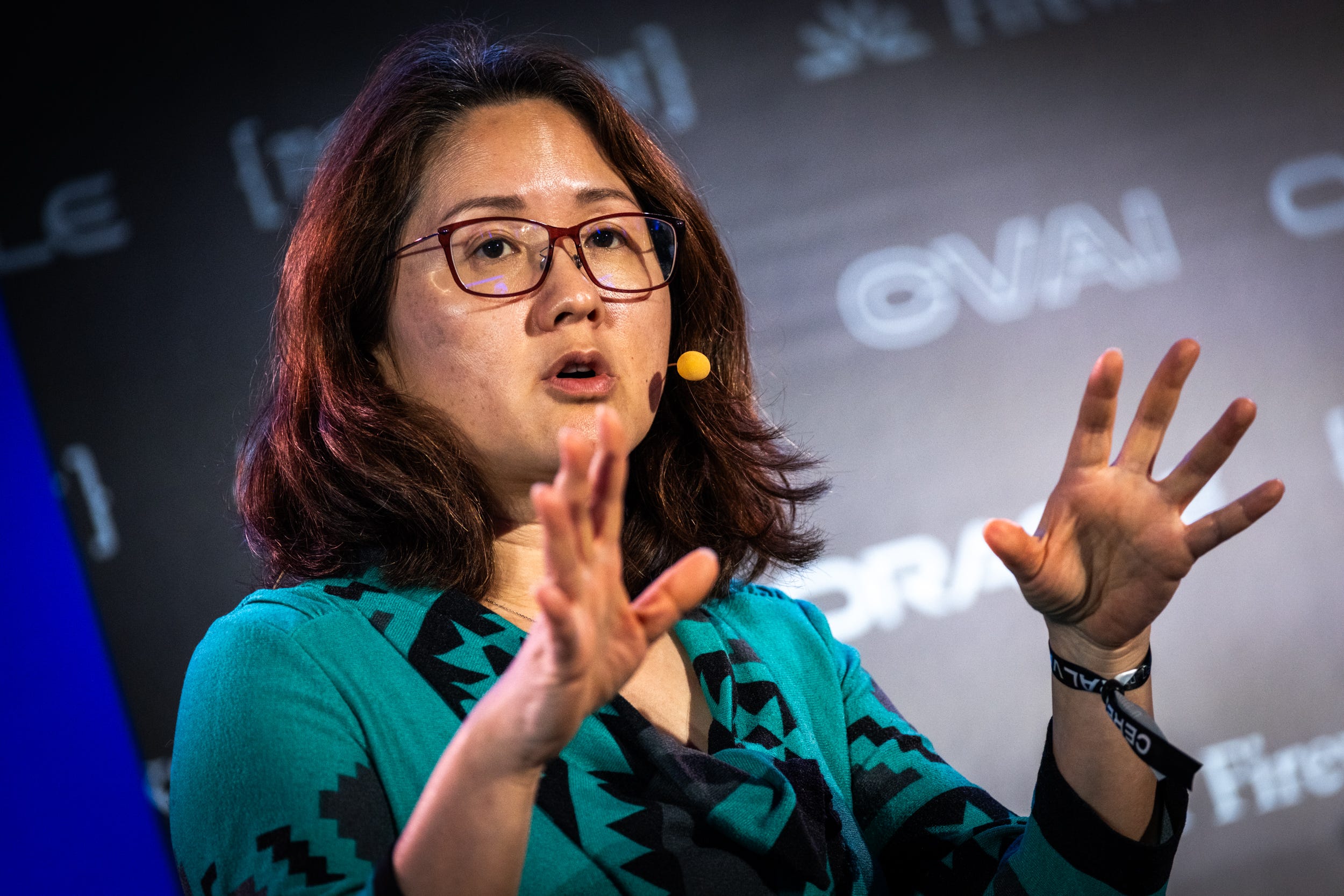
It’s hard to overstate how bad the sentiment was around AI in the public markets last week.
The fear was that the money train that had powered so much of the industry was grinding to a halt and a doom loop had taken over. Interest rates kept climbing, making debt expensive. The public pushback against data centers made the infrastructure buildout far more challenging, squeezing supply and potentially strangling AI startups’ surging revenue growth.
Meanwhile the circular investments that Nvidia had been making in AI startups — namely in open source model makers like neolabs — felt unlikely without Jensen Huang. One investor worried that Nvidia’s investments in the ecosystem could go down to zero.
“Rome is burning,” he said.
On Monday morning Huang was back and the optimism returned — but only for a day. The overriding negativity among public investors seeped back in and stocks slid. Anthropic is now trading below its IPO price.
And yet, in the private markets things are chugging along. Sierra announced a round that valued it at $30 billion. Cognition was reportedly discussing a $75 billion valuation with investors.
The question is when — or if — the public market panic crosses over into the private sector.
So far, we haven’t seen a pullback on private valuations. “There’s a lot of dry powder among VCs,” said the co-founder of one multibillion-dollar AI startup, who said he wasn’t worried yet. Another investor said he’s seen some softness at the seed-stage level, though there are still rounds with outsized valuations getting done.
But the numbers aren’t adding up in more and more AI verticals.
One of the hottest startup sectors, the AI inference market, is under new pressures. Businesses like Fireworks, which is reportedly seeking a nosebleed $40 billion valuation after reporting just over $1 billion in annualized revenue this summer, run on compute rented from neoclouds like CoreWeave, the very companies public investors have been dumping.
Squeezed by rising interest rates, falling share prices, and nervous lenders demanding more collateral, the neoclouds are now asking inference providers to pay as much as 50% of a contract up front to lock in compute, according to three sources. Until recently, they often required no upfront payment at all, and inference companies could buy capacity on demand. “It’s ridiculous,” said one CEO of an inference startup.
This shift turns what had been a capital-light business into one that needs to raise billions just to secure supply, at the exact moment the money is getting harder to find.
We’ve seen public and private market divergence before. In early 2022, as the Nasdaq slid and software stocks lost much of their pandemic-era gains, there was a flurry of stories about VCs pulling term sheets and the party being over. But private valuations didn’t reset overnight. As one founder explained to us, venture and growth funds run on multi-year fundraising cycles, and firms that have already raised money from their LPs can keep writing checks through a few bad weeks or months in the public markets.
What changes behavior, he said, is when a downturn drags on long enough — roughly nine months by his estimate — that investors start to doubt they’ll be able to raise their next fund. That’s eventually what happened in 2022, when private funding dried up and down rounds became more common well into the following year. By that measure, a several-month selloff isn’t enough to break the private markets.
The larger question of whether we’re in for a prolonged and ultimately broad-based bubble-bursting that triggers a recession, à la 2001, remains very hard to answer.
It will be instructive to see in the next few months what a tighter-money era means for the AI startup world. How will the neolabs like Reflection fare without Nvidia bankrolling much of the sector? Can the inference companies keep getting compute capacity if the public pushback on data centers constrains supply? Has the messiness of Anthropic’s post-IPO performance shut the window for going public indefinitely?
This moment of reckoning was a long time coming and will likely serve to strengthen the industry as the weaker businesses die off. But what it will look like on the other side is still very unclear.
Rule of Law
It was the recklessness of CEO Jensen Huang that caused the mess at Nvidia. Now the recklessness of the company’s board, aided and abetted by President Trump and his powerful allies in Silicon Valley, is creating an even bigger problem.
The board erred in the first place with its hasty dismissal of Huang. An obvious alternative course would have been to put him on a leave of absence while the skilled outside lawyers they’d hired completed their investigation.
Now, though, by reversing its decision under pressure before either its own probe or the federal national security investigations are complete, the board, and Huang’s backers, have sent the world a simple headline message: sufficiently rich and powerful US tech CEOs can act with impunity, even on national security matters, so long as they kiss the Trump ring.
We thought this banana-republic dynamic was over after the recent election. It’s pretty obvious to us that rule-of-law government is foundational to American prosperity and the incredible economic engine that is entrepreneurial capitalism. The blue tsunami laid bare broad and deep popular resentment of Trump’s corruption and the tech moguls who have partaken in it — just look at Texas’ verdict on Elon Musk — and that in turn is part and parcel of the backlash against data centers and AI in general.
The return of Huang, and the implicit accompanying philosophy that there are no ethics outside of money-making, is now stoking popular rage even further.
It was predictable, in a depressing way, that a loud cohort of Huang’s defenders would decide that the real villain of the piece was not the rogue CEO, but rather The New York Times. The discourse on X after the shock reinstatement was an all-too-familiar up-is-down, bad-is-good tableau of nonsensical Trump-era rhetoric that boiled down to the fact-free formulation that Huang did nothing wrong, therefore journalists who write about what he did must be corrupt.
A related line of argument insists that Huang was brought down by a deep-state cabal — one which evidently includes Treasury Secretary Scott Bessent and Secretary of State Marco Rubio. There’s no doubt that a split in the Trump administration, with Commerce Secretary Howard Lutnick in a pitched battle with his cabinet colleagues, is central to the whole fiasco.
But all of that is largely irrelevant to the question of whether Jensen Huang facilitated chip smuggling or engaged in other undisclosed sins. Based on what we already know, Huang did in fact do a number of very bad things, none of which were invented by The New York Times or his enemies in Washington.
Huang’s resurrection came in the form of a White House intervention that any VC or CEO in Silicon Valley would have denounced as nothing short of the end of capitalism as we know it just a few years ago. Maybe there’s a short-term win for some investors in exploiting Trump’s longstanding fixation on stock prices. But it’s a sad state of affairs for the health of the tech industry.
Math Wars
Anthropic mathematician Levent Alpöge announced this week that he had proved the Riemann hypothesis with the help of Claude, toppling mathematics’ most famous problem. Arguments have already begun about what Alpöge’s achievement means for the future of math and human endeavor in general.
The machine proof, which runs to about 17 million lines of code, has been validated by academic experts and key certifying bodies. But fissures have formed between big tech researchers and academics, who disagree on what the result implies about AI’s future capabilities.
Tech executives took the proof as yet another sign of approaching superintelligence, with Meta’s Chief AI Officer Alexandr Wang writing that “In the same way that the math community has not fully digested the proof of the Riemann Hypothesis, nearly every field could be accelerated at a pace beyond what humans can understand or monitor.”
Elon Musk was more declarative: “Unequivocal super intelligence has arrived. Welcome to the Singularity.”
But others have been more measured about the achievement. Former Meta Chief AI Scientist and AMI Labs founder Yann LeCun threw cold water on Musk’s declaration: “TIL: We have superintelligence, but we still don’t have level-5 autonomous driving.”
And while Alpöge waxed poetic about the powers of AI in his announcement, saying that “Claude flew, and danced, and sparkled near that finish line,” NYU visiting math professor Nestor Guillen told the AFP that Alpöge’s back-and-forth with the chatbot showed it was “more like a tool” than a “machine god.”
Alpöge’s announcement has put a bow on months of mathematics pageantry among the frontier labs, which have plowed millions of dollars into cracking these problems to show off the capabilities of their best models.
This exercise has been fraught. It has featured inter-lab accusations of plagiarism and eminent professors crying on podcasts about AI’s potential destruction of human-led mathematics. Terence Tao, perhaps the world’s most famous living mathematician, said Anthropic’s formal machine proof of the Riemann hypothesis is technically correct but without elegant natural-language explanations understandable to humans, making it tantamount to “toxic waste.”
It’s unlikely that solving another math problem will capture nearly as much media attention, especially as Anthropic begins a new stage of corporate life as a public company. Some outlets have claimed solving the Riemann hypothesis might mark a turning point for mathematics. Now comes the next frontier: solving novel problems that don’t already have 150 years of academic papers in the training set. We’re a long way from the end of math history.