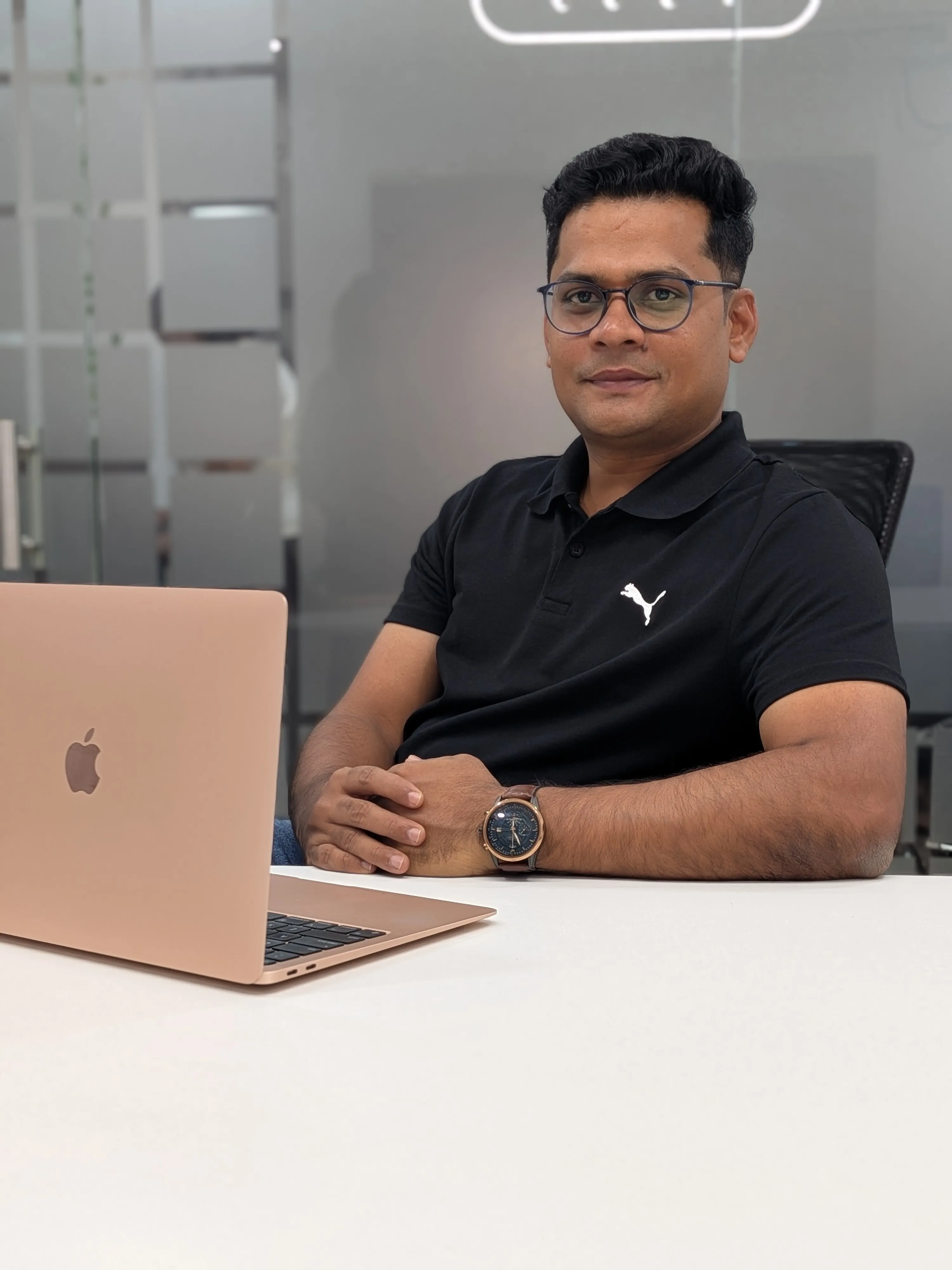
India’s healthcare system has long struggled with a paradox. On the one hand, it offers relatively fast access compared to many developed nations. On the other hand, gaps in responsiveness, last-mile delivery, and real-time care still leave millions underserved. In an exclusive interview with Startup Pedia, 35-year-old entrepreneur Praveen Gowdru said this gap is not just a problem, but the foundation of his new startup.
His latest venture, Tez Health, is barely a few months old. Yet, it is already attempting to define what he calls a “new category in healthcare”, a model to bring medical services within minutes, rather than hours or days, while making the service convenient for patients and their families.
From VMEDO to Tez Health: a founder’s second act
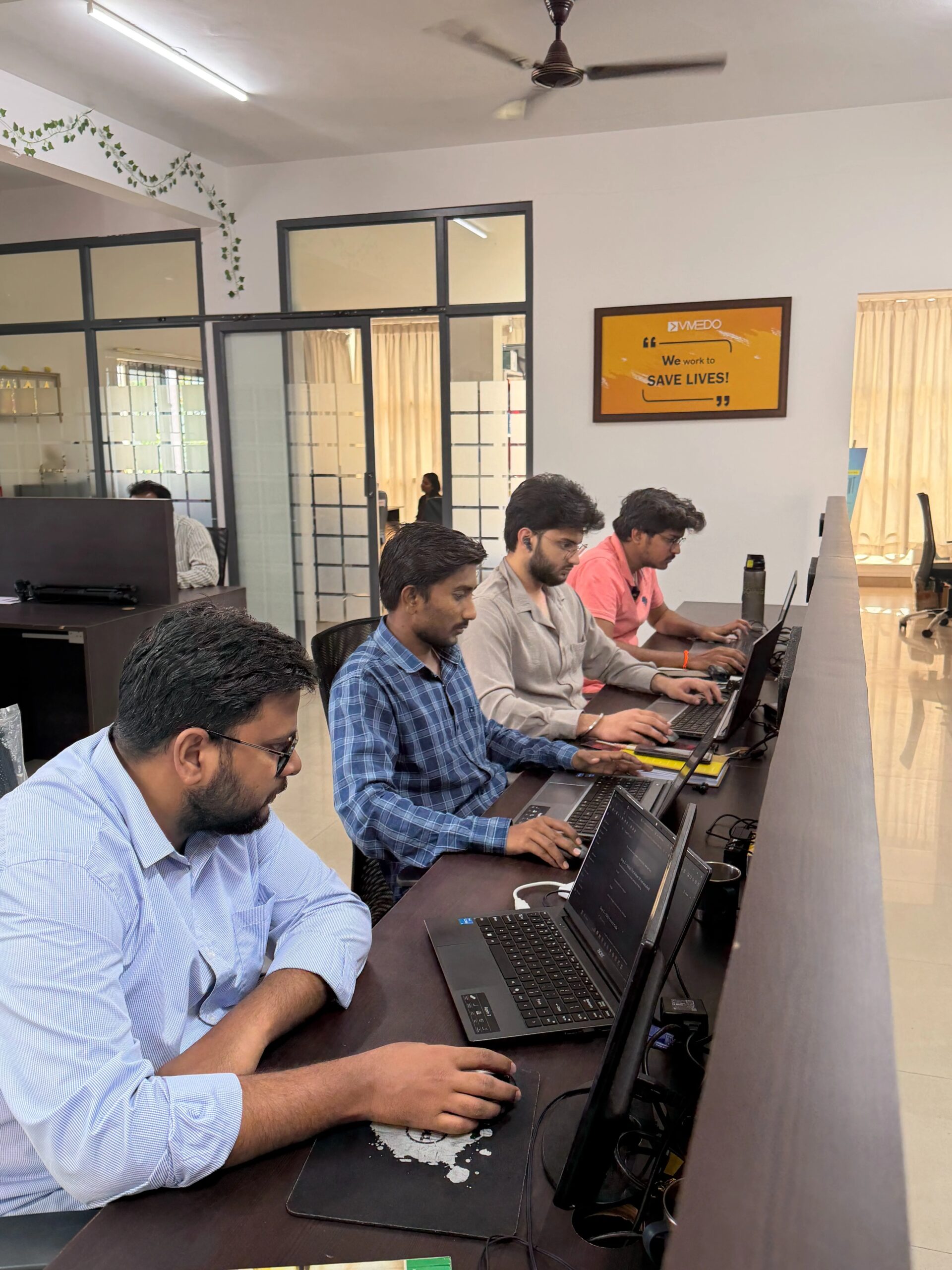
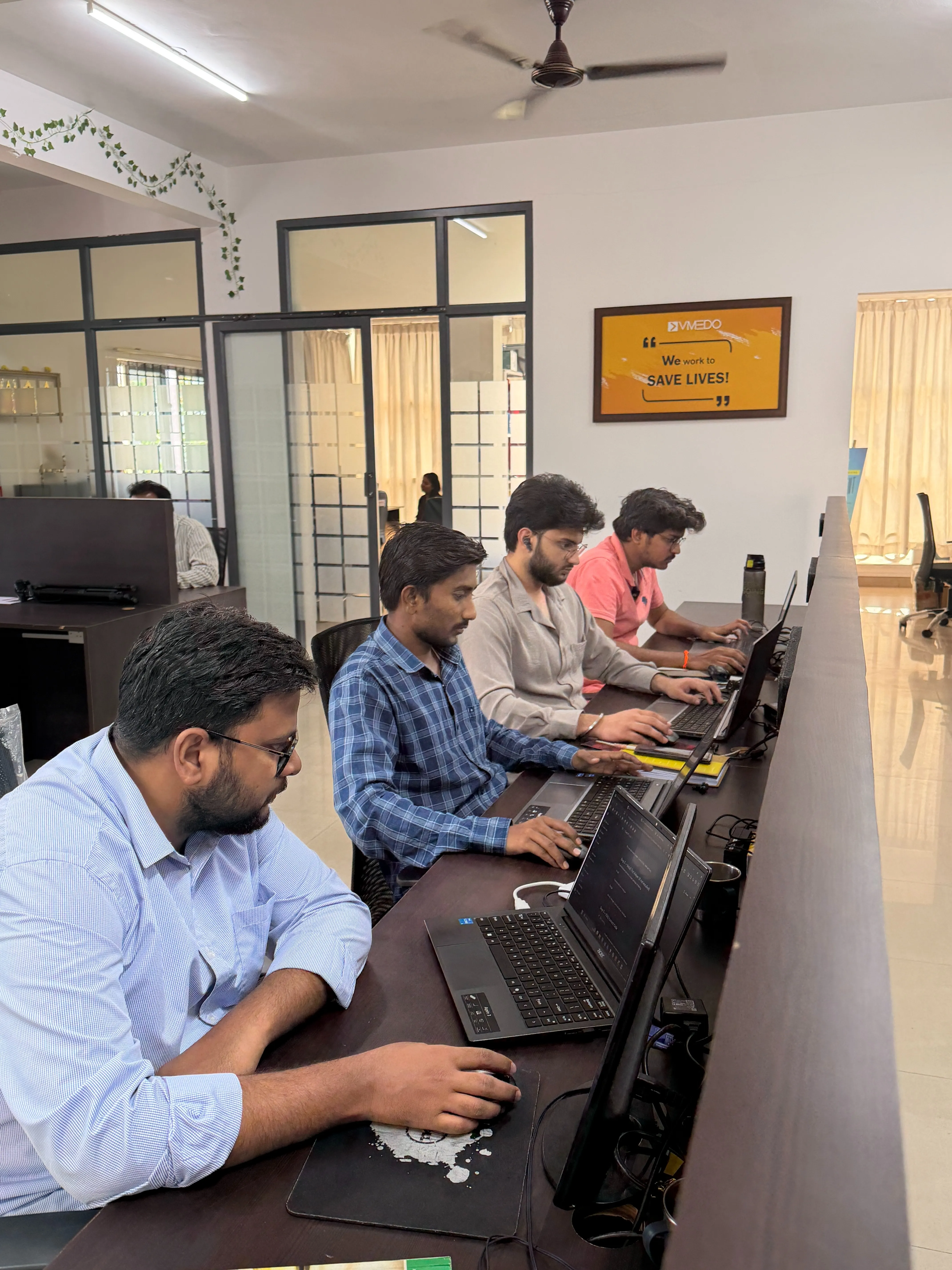
Before launching Tez Health, Praveen Gowdru had already built and scaled a healthcare startup, VMEDO, over nearly a decade. That journey shaped his understanding of healthcare delivery, especially in emergency and occupational health.
In early 2026, he made a strategic shift. VMEDO’s home healthcare arm was spun out and rebranded as Tez Health, marking the beginning of a new, focused venture under his leadership.
This was not a pivot born out of failure, but an evolution. The healthcare startup founder saw a much larger opportunity in reimagining how care reaches patients, especially outside hospital settings.
As he explained in the recent conversation with Startup Pedia, the vision is simple but ambitious – to address the problem that healthcare in India does not move fast enough.
“We’re not building another healthcare service. We’re building a new category of on-demand care that solves the inconvenience issue of Indian patients,” Praveen told Startup Pedia.
The healthcare startup founder further shared that in India, the problem is that healthcare does not move fast enough. It often leaves the patient or their family in an inconvenient situation.
Globally, healthcare systems are grappling with delays—long wait times, overloaded hospitals, and limited access to doctors. Even in India, where access can be relatively quicker, critical gaps remain in speed, convenience, and continuity of care.
Gowdru has been vocal about this issue. In his public commentary, he has emphasised that speed is as important as quality in healthcare delivery, noting that delays can worsen outcomes or even cost lives.
This belief forms the backbone of Tez Health.
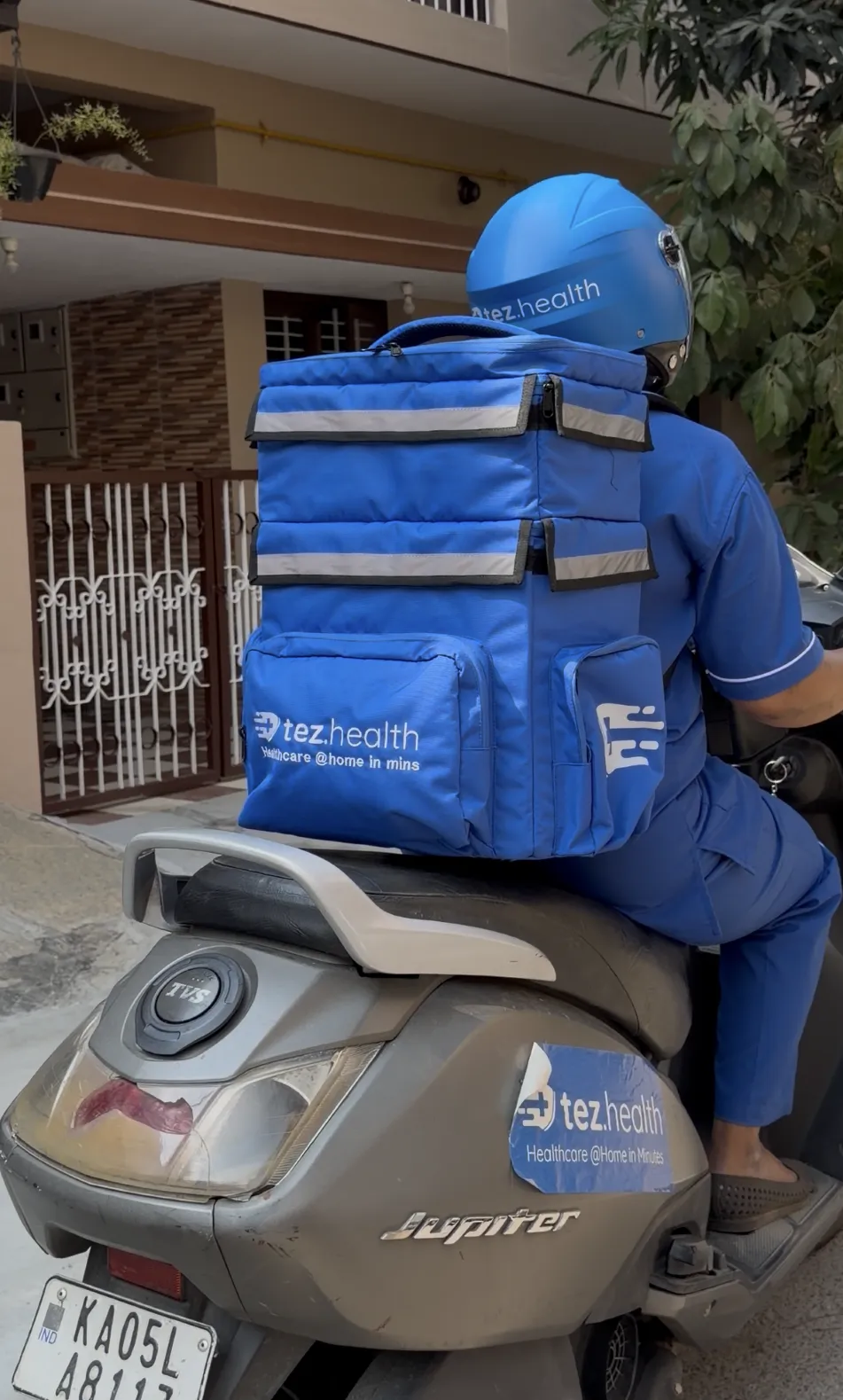
Instead of asking patients to travel, wait, and navigate complex systems, the startup flips the model – care comes to you, when you need it, making it more convenient, not just fast.
Also read: This Bengaluru-based deeptech startup launches AX1, a high-altitude UAV designed to transform real-time Earth observation (startuppedia.in)
What is “on-demand care”?
Tez Health’s core proposition is to build a healthcare layer that works like modern consumer services. It is not just about speed but being responsive and accessible at the tap of a button.
“Think of it as the ‘Swiggy or Uber’ of healthcare—but for services that go far beyond consultations,” says the Tez Health founder.
“Though it’s similar, it’s not the same. As the quick commerce platforms have more emphasis on speed, but at Tez Health, it is convenience + speed,” he added.
The platform is designed to offer:
At-home medical services
Urgent care support within minutes
Diagnostics and basic procedures at home
Continuous care outside hospitals
While traditional health-tech platforms have focused on teleconsultations, pharmacy delivery, and diagnostics, Tez Health is positioning itself differently—as a real-world, service delivery network rather than just a digital interface.
“Healthcare shouldn’t start when you reach a hospital. It should start the moment you need it,” Praveen told Startup Pedia.
Services built to solve inconvenience, not just speed issues
At its current stage, Tez Health is focused on building infrastructure for rapid-response healthcare at home.
This includes:
1. Healthcare at home
The company is scaling services that allow patients to receive care without stepping out—ranging from basic medical support to follow-up treatments.
2. Urgent response layer (built for convenience)
One of the startup’s defining features is its ambition to deliver care “in minutes”, a concept Gowdru believes is critical for bridging the gap between emergencies and hospital visits.
3. Decentralised care delivery
Instead of relying solely on hospitals, Tez Health is building a distributed network of healthcare providers, enabling faster response times and better accessibility.
4. Tech-enabled coordination
While physical service delivery is key, technology acts as the backbone of coordinating caregivers, managing requests, and ensuring real-time response.
Why this model matters now
Healthcare is undergoing a structural shift. Tez Health enters the evolving ecosystem with a different thesis:
The future of healthcare is not just digital. It is instant and decentralised.
Gowdru believes that home healthcare, urgent response services, and decentralised models will define the next phase of the industry.
“Access is not just about infrastructure, it’s about responsiveness,” the Tez Heath founder told Startup Pedia.
Founding Tez Health
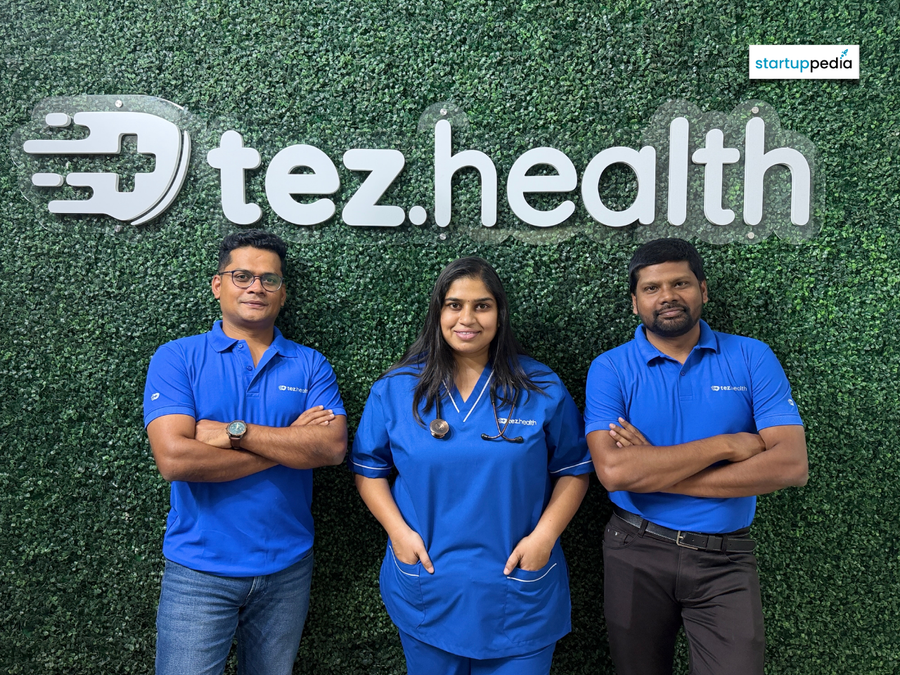
Founded in January 2026 by Praveen Gowdru, Ramesh Yadav and Dr Haripriya, the startup has been bootstrapped with intent. ₹1.5 crore was invested by the founders themselves, along with an additional ₹1 crore raised from angel investors.
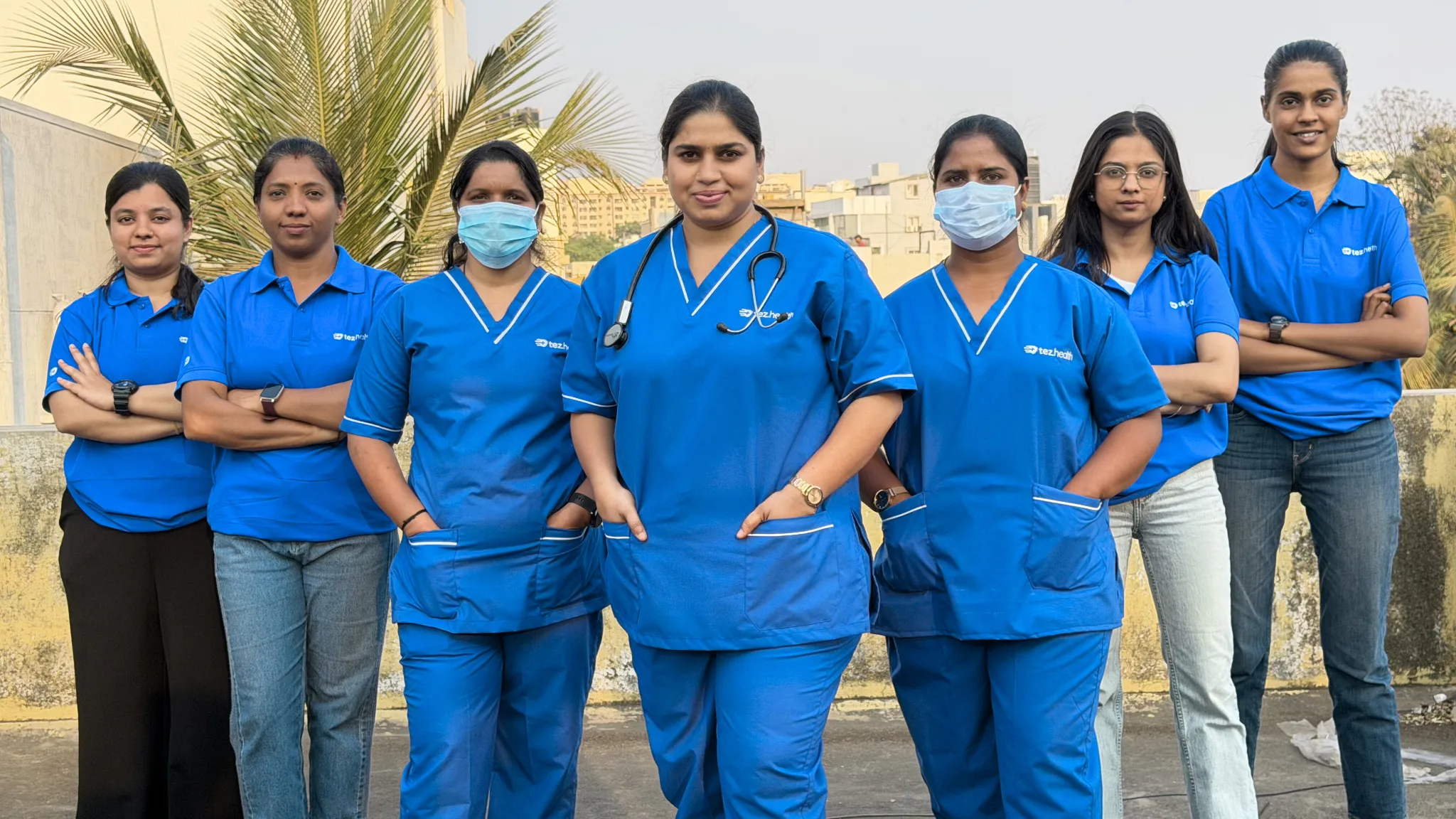
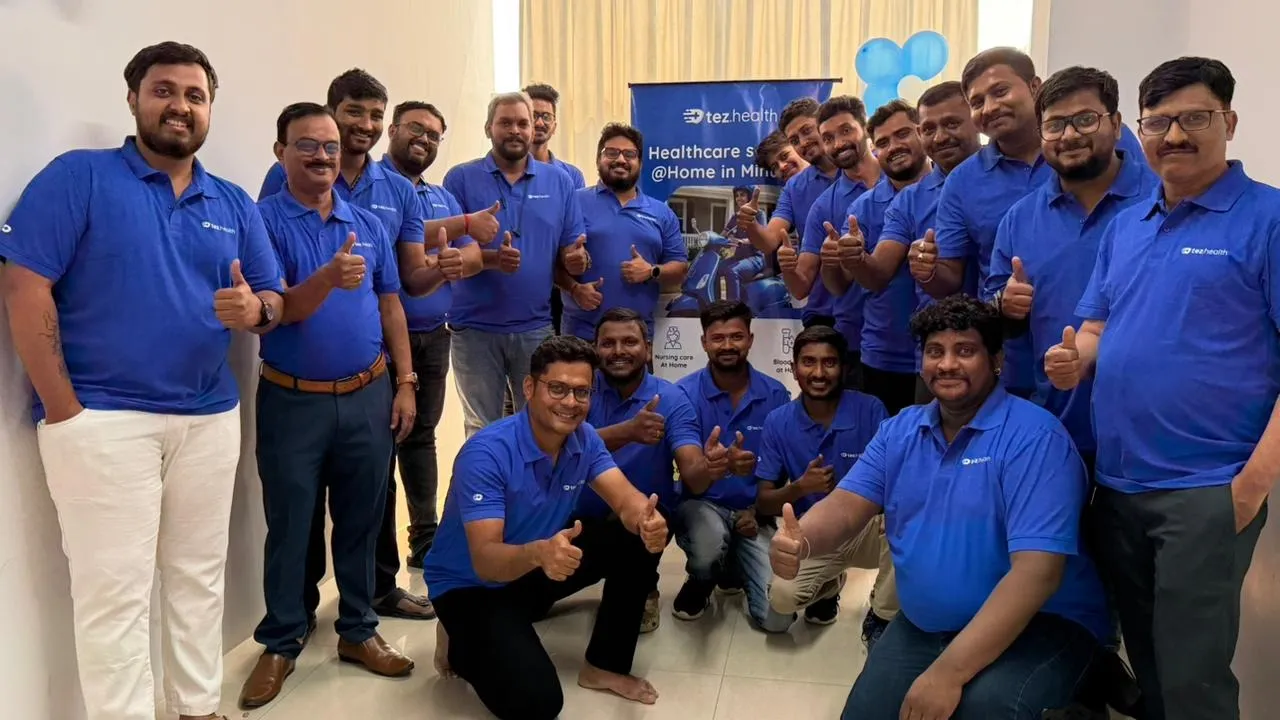
Behind the scenes is a 20-member core team supported by a vast network of on-ground partners—10 full-time partners dedicated exclusively to Tez Health, along with an extended network of 500+ doctors, nurses, physiotherapists, and ambulance service providers.
But what stands out is not just scale, but it’s control.
Every single care delivery is actively monitored. From booking to service completion and even post-care follow-ups, the experience is designed to be seamless and accountable. Patients receive follow-up calls to address concerns or complications, closing a gap that often exists in traditional healthcare delivery.
Praveen himself brings a unique perspective. A Biomedical Engineer and entrepreneur for nearly a decade, he is focused on optimising both access and efficiency. His approach blends technology with an “outsourced but fully monitored” model. This brings flexibility without compromising quality.
And the economics are just as interesting.
Pricing & payments
Healthcare services start at standardised pricing, like ₹499 for an injection at home, making care more predictable and accessible. At the same time, Tez Health is creating strong incentives for its workforce. Nurses on the platform are earning a minimum of ₹60,000 per month, backed by a promise of consistent bookings.
“We promise a minimum number of bookings to our partners,” Praveen noted.
Early-stage, high ambition
At just around two months old, Tez Health is still in its early stages. But its ambition is unmistakably large.
The startup plans to:
Expand across major Indian cities
Build a dense network of healthcare providers
Integrate technology for real-time coordination
Raise external funding to accelerate growth
Today, Tez Health is serving around 30 patients a day.
But the ambition is far bigger.
The goal is to scale to 10,000 patients daily across 5–6 metro cities within the next five years.
Praveen Gowdru has already indicated that Tez Health will pursue capital to scale faster, leveraging his experience from VMEDO to build a more aggressive growth strategy.
The founder’s mindset: speed, clarity, and execution
What sets Tez Health apart is not just the idea, but the founder’s clarity.
Praveen is not new to healthcare. His first startup journey taught him lessons in resilience, capital discipline, and staying close to real-world problems.
Now, with Tez Health, he is applying those lessons with sharper focus.
“This isn’t an exit. It’s an evolution,” he noted while announcing the transition to Tez Health. That mindset is reflected in the company’s approach—moving quickly, focusing on execution, and targeting a clear gap in the system.
Challenges ahead
While the opportunity is massive, the road ahead is far from easy.
Building an on-demand healthcare network comes with challenges such as:
Operational complexity in managing real-time services
Quality control across distributed providers
Regulatory compliance in healthcare delivery
Unit economics in a high-touch service model
Unlike purely digital platforms, Tez Health must balance both technology and physical infrastructure, making execution significantly harder.
A glimpse into the future of healthcare
Tez Health represents a broader shift in how healthcare is being reimagined—not as a place you go, but as a service that comes to you.
If successful, the startup could redefine patient expectations:
Instead, healthcare could become immediate, accessible, and continuous.
“The future of healthcare is not hospitals versus home—it’s a seamless layer that connects both,” Praveen told Startup Pedia.
The bigger vision
At its core, Tez Health is not just a startup, but an attempt to build infrastructure for a new healthcare paradigm.
A system where:
Care is proactive, not reactive
Access is instant, not delayed
Delivery is decentralised, not centralised
In a country as vast and complex as India, such a model could have a far-reaching impact, not just improving convenience but potentially saving lives.
As Praveen sees it, the goal is simple yet transformative:
“Healthcare should respond when the patient needs it—not hours later, not days later, but now,” he said.
Final word
In a crowded health-tech ecosystem, Tez Health is betting on one powerful idea that speed is care.
And if that idea scales, it may well create a new category where healthcare finally moves at the pace of human need.
Also read: This Bengaluru startup built a tiny AI camera that scans farms 30 times per second, making millimetre-accurate decisions for each plant (startuppedia.in)
FAQ
Founded by Praveen Gowdru, it falls in a new category of on-demand medical care that solves the inconvenience issue of Indian patients.
What problem is it solving?
It is bringing care at home, when the patient needs it, not hours later, not days later, but in minutes.
Is it similar to quick-commerce platforms?
The quick commerce platforms have more emphasis on speed, but at Tez Health, it is convenience + speed.
What is the startup’s goal?
Tez Health aims to scale to 10,000 patients daily across 5–6 metro cities within the next five years.
Source link