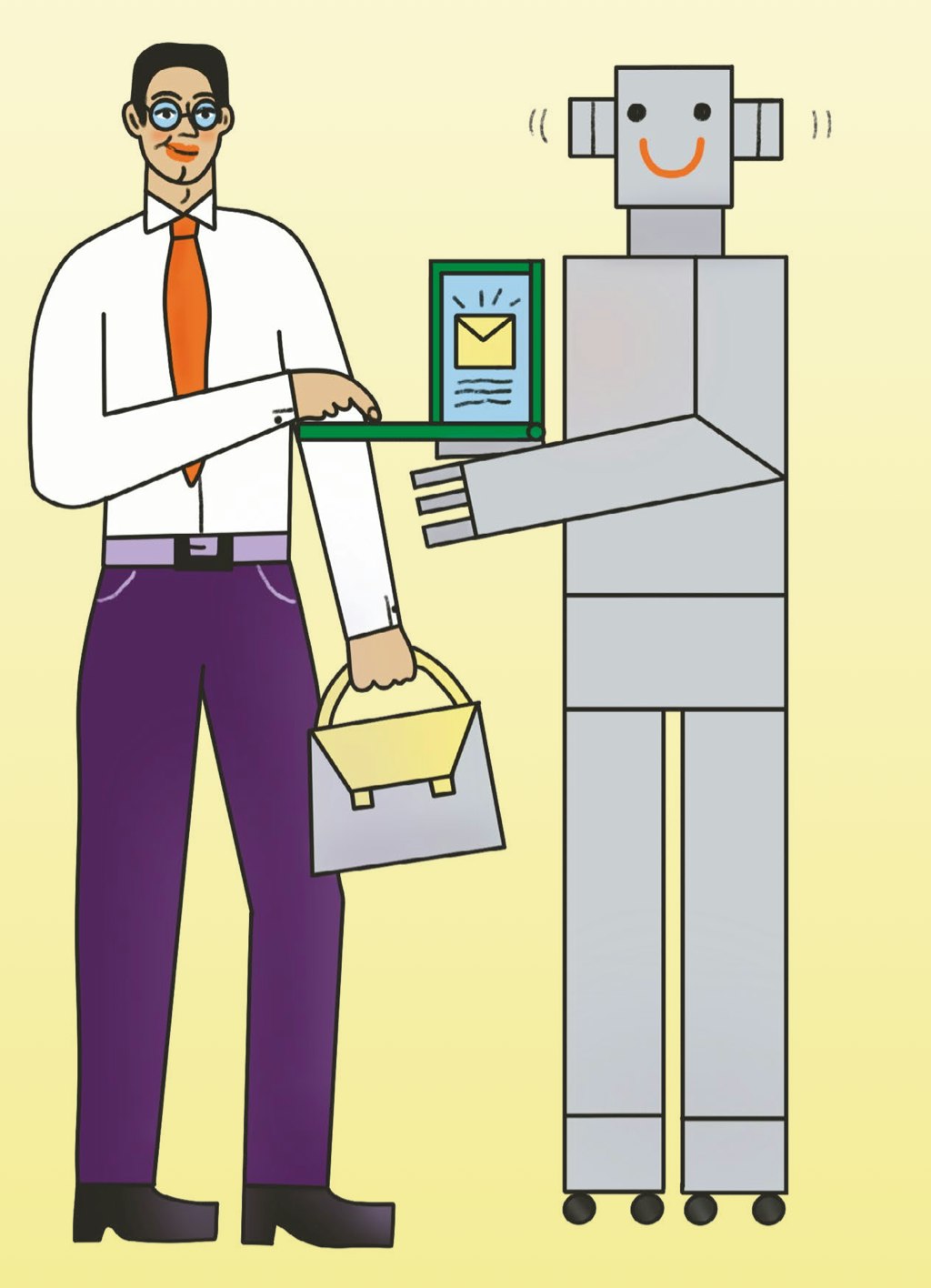
Finding a job in tech has rarely been this hard.
AI has disproportionately hit entry-level roles, some companies have stopped hiring interns or other junior positions altogether and certain companies have announced layoffs tied to automation plans.
Companies that are still hiring are doing so cautiously, while automated recruitment systems mean candidates can also send hundreds of applications into the void without receiving a single human response.
The industry feels precarious. Even the computer programmer is an endangered species, with many companies happily reporting that Claude does 90% of their coding now.
So what should tech workers actually do to remain relevant when AI is always improving? Whether you’re a university student just starting out or an established worker feeling the heat from these powerful AI gizmos, how do you prepare for an AI-driven future?
Many are living through versions of this dilemma. At work, it certainly seems wise to acquaint yourself with the tools that are changing your field. But it’s like an arm’s race: there’s that niggling feeling the competition is doing more.
Sifted polled 17 techies to help make sense of it all. Here are the skills and traits they see mattering over the next 5-10 years.
Bianca Zwart, chief strategy officer, Bunq (fintech company)
The most important traits in the future: critical thinking, resilience and no ego. AI is making knowledge more accessible, while more of the execution can be automated.
What cannot be automated is someone who spots a flawed assumption in a data model, changes course when a product bet does not land or brings human empathy to a complex decision.
It might actually be a great time for us introverts. We are used to observing before speaking, spotting patterns and asking the question that changes how everyone sees the problem.
Lara Kennedy, head of marketing, Ivee (AI upskilling platform)
Thriving now means being an early-adopter of AI tools and staying in the AI conversation. In the long-term, I believe it will come down to a few key factors: education, enthusiasm, critical thinking, creativity and strategic positioning.
I think there are three fundamental AI skills that will remain relevant:
1) Natural language prompting
2) AI agents: know how to manage them, prompt them and run them in parallel
3) Foundational models: connecting your model (for example, Claude) to all of your context, tools and data, and essentially building and utilising it as a second brain.
Jed Rose, partner, Antler (VC firm)
Lean into the AI tools and master them. That’s my best advice. See them as empowering, rather than replacing, jobs.
Rupert Small, CEO, Egregious.ai (AI startup)
Doing something in the real world, in spaces where AI doesn’t have much data, easy access or a good understanding, will increasingly be where humans do their best work and thrive.
David Erhun, head of comms and research, AENU (VC firm)
For knowledge workers like me, it’s too late. So go become a baker.
My brother runs one of Europe’s best bakeries, Juno in Copenhagen. Think about what that craft actually is. The attention in every batch, the satisfaction of watching a happy customer eat a cardamom bun you shaped by hand. No agent is touching that (yet?), and I genuinely hope it won’t, ever.
The more of my own day that runs through agents — Claude Code tells me I’m just shy of 190k conversations since mid-March — the clearer the unglamorous truth gets. The skill keeping me employed is being able to point at exactly what the agent got wrong and send it back to fix it. Again. And again. And again.
So my answer to “what should we be learning?”: either go make something with your hands, or get very good at catching the machine’s mistakes.
Jack Davies, VP of European marketing and PR, Antler
I don’t think we have to worry about young people. I was at a hackathon recently and there were 18 and 19 year-olds doing things with Lovable, the vibe-coding platform, that Lovable people didn’t know you could do. Instead, it’s going to be tough for people entrenched in the non-AI ways of doing things. They have a lot more to do to stay relevant in the future.
Stan Marchand, CEO, Rocapine (mobile app creator)
The most vulnerable people may not be juniors but seniors who confuse experience with knowing the best way to work. For seniors, the challenge is to put your guard down and be ready to be humbled on AI. For juniors, the opportunity is not just to be good at AI, but to learn how to teach.
Renée Shaw, brand and social, tl; dv (AI startup)
The thing worth getting good at is pattern recognition. For example, everyone reads the same newsletters and lands on the same takes, so being able to look at another industry and work out what that means for your own corner, that’s what I think is a valuable skill. So I’d say get good at zigging where others zag, and connecting two things that don’t obviously go together.
Caitriona Staunton, VP of people, Primer (fintech)
I’d encourage people to shift their framing from AI being a threat to your job and start treating it as the most capable, tireless teammate you’ll ever have — one that’s brilliant at the first 80% and unreliable on the last 20%.
Forecasting far out on anything right now is hard, but some bets feel clear to me. Firstly, the need for many specific skills is shrinking. The ‘meta’ skill of learning fast and being comfortable unlearning is the one that will survive every wave of change. Then, AI fluency and judgement are important: knowing when to trust the output, where the tools tend to fail and how to keep a human accountable for quality. AI can generate options endlessly, but deciding, committing and owning the outcome is still very human.
Leandro Olivia, AI researcher, University of Amsterdam
Learn the AI tools and don’t believe for a second they’ll still matter in five years. French AI chief Yann LeCun’s argument — that “the AI in your office five years from now behaves nothing like today’s chatbot” — is a live possibility, not sci-fi. Which means operational fluency with this specific architecture is useful now and possibly worthless later.
Laura Gonzalez Florez, chief of staff and head of people, Synthesia (AI company)
People who stay curious — who read, experiment and talk to customers — will outpace people who learned one thing deeply five years ago.
Mike Taylor, head of tech consulting, Every (AI consultancy)
AI will hire us as gig workers for tasks it is not good at, or where it’s too expensive to use a frontier model to solve. It sounds dystopian but I don’t think it is — it’s probably going to be a relatively high quality of life compared to your average DoorDash-er today. The elite jobs outside of the gig economy will be people who pore over logs of AI actions and identify areas where there are gaps that require further training, something like a cross between a data scientist, a journalist and a detective.
Harish Malhi, CEO, Goodspeed (AI company)
The people who get replaced won’t be the ones who picked the “wrong” AI tool. They’ll be the ones who only ever learned tools, and never the judgment underneath.
Olivia Segsworth, head of growth, Seccl (fintech)
If you want a job — or to keep a job for that matter — start future-proofing your personal data. Please. I highly recommend using aliases when doing anything personal on LLMs: do you really want your future employer finding out what you typed at 2am? A clean reputation is the starting point before anyone can start talking about becoming a tastemaker or building an audience in the time of slop.
Ilya Drozdov, CEO, Dwelly (AI startup)
What AI cannot manufacture is the feeling that someone actually gives a damn about you. In any service business, that feeling is the product. Learn to operate in the physical world and maintain real relationships over time.
Wouter Durville, CEO, TestGorilla (HR tech company)
The adage of “garbage in, garbage out” will be the mantra of AI-human offices. Use AI to clear your admin but don’t outsource your point of view. It’s the bit no machine can replace.
Laura Rosenberger, AI consultant, Superposition (Consultancy)
The people everyone assumes are most automatable — the process and operations crowd — are going to be among the last ones standing. To use AI, you need to get clear about what you want AI to do. Ops people are naturally very good at defining this and working out what the solution could be.