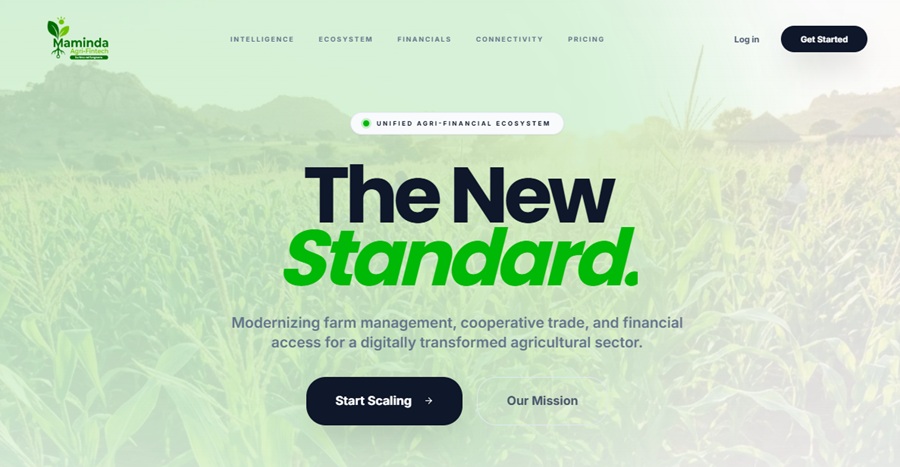
Zimbabwean startup Maminda Agri-Fintech is helping smallholder farmers access finance, agricultural advisory services and markets through a single digital ecosystem.
Founded last year, Maminda Agri-Fintech combines AI-powered farming support, digital financial services, satellite crop monitoring, cooperative financing and market access tools designed specifically for underserved farming communities.
Farmers can access personalised crop recommendations, monitor crop health using satellite data, participate in digital savings and financing groups through its Smart Digital Mukando system, build alternative credit profiles, and connect directly with buyers and input suppliers.
“Maminda operates across the entire agricultural value chain, supporting farmers from season planning and input financing through production, monitoring and post-harvest marketing,” Maminda Edward Gandanzara, the startup’s founder and CEO, told Disrupt Africa.
Smallholder farmers produce a significant proportion of Africa’s food, but remain among the most financially excluded groups. Many lack formal credit histories, limiting access to financing, quality inputs and profitable markets.
“Most existing solutions address only one challenge at a time, whether agronomic advisory, agricultural financing or market access. Maminda’s approach is to integrate these services into a single platform designed around the realities of smallholder farming,” said Gandanzara.
Competitors include agricultural financing and advisory platforms operating across Africa, such as Apollo Agriculture and other regional agri-fintech providers. In Zimbabwe, however, there are currently few platforms combining cooperative financing, AI-driven credit profiling, crop monitoring and marketplace services within a single ecosystem.
The bootstrapped Maminda, which is preparing for a pre-seed fundraising round to support product development, pilot expansion and market growth, has won a host of awards already. Yet it is still at the pilot stage, working with a small group of farmers in Zimbabwe to validate product-market fit and refine the platform’s financial and agronomic models.
“The company currently has fewer than 100 active users. At this stage, the focus is on learning, validation and measurable farmer outcomes rather than rapid user acquisition,” said Gandanzara.
Maminda currently operates in Zimbabwe, with pilot activities concentrated in farming communities in Mashonaland and Manicaland.
“The company’s medium-term expansion strategy targets neighbouring agricultural markets including Zambia and Malawi, before broader expansion into Southern and Eastern Africa,” said Gandanzara.
Maminda’s planned revenue streams include transaction fees on marketplace activities, financing-related income, software subscriptions for agricultural organisations and data analytics services for agribusinesses and financial institutions. The company is currently pre-revenue as it focuses on product validation and pilot deployment.